What Is a Good Hydraulic Decoiler Maintenance Schedule?
- Share
- publisher
- David Park - Senior Stamping Engineer, FANTY Machinery
- Issue Time
- Sep 6,2026
Summary
A practical hydraulic decoiler maintenance schedule: daily checks, weekly lubrication, monthly hydraulic tests, and yearly overhauls that prevent unplanned stops.
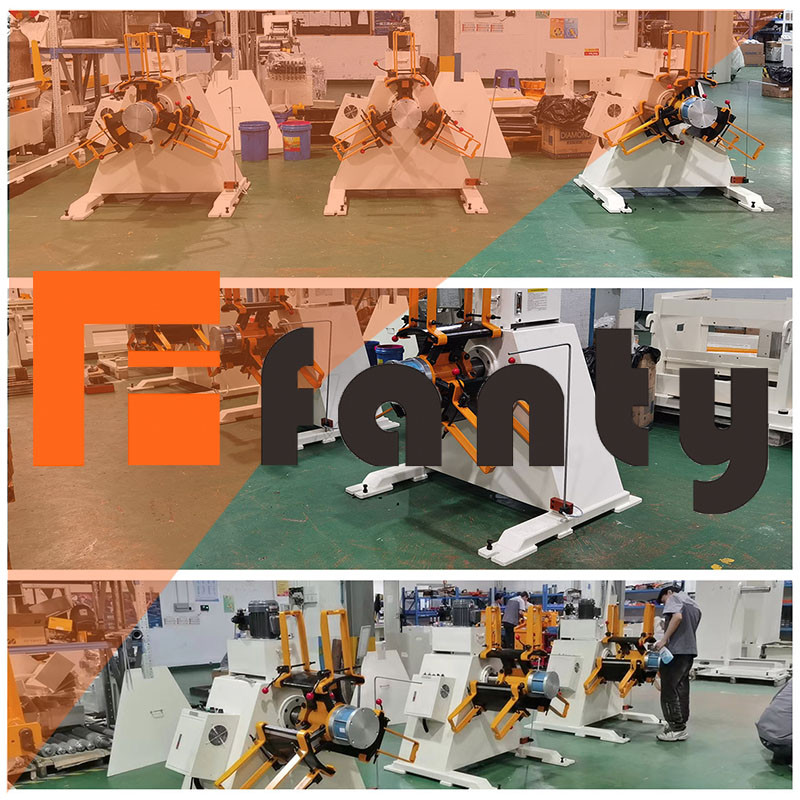
A hydraulic decoiler is a study in quiet reliability: it sits at the start of the coil line, expands to grip a coil, pays out strip for hours, and asks for nothing until something stops working. That silence is deceptive. The hydraulic system, the expansion mechanism, and the brake all wear according to their own schedules, and the failures arrive without warning only when the maintenance was skipped. A structured maintenance schedule turns those surprises into planned work, extends the machine's life, and keeps the line running through the shifts that matter. This guide sets out a practical maintenance schedule for a hydraulic decoiler, from the daily checks an operator can do in five minutes to the yearly service that an engineer should perform.
The schedule below follows the intervals used on the hydraulic decoilers that FANTY builds for NC straightener feeder lines. Your machine's manual is the final authority, but this structure gives you the framework to build your own schedule and the reasons behind each task.
A well-kept maintenance log becomes a planning tool over time. When you record every check, every part change, and every repair with the date and the meter reading, patterns emerge: a seal that fails every eleven months, a brake pad that lasts exactly one quarter, an oil that degrades faster in summer. Those patterns let you schedule replacements just before the failure instead of after it, which is the whole point of preventive maintenance. The log also protects you when you buy a used machine or sell your own, because it is the only honest record of how the machine was treated.
Why a Hydraulic Decoiler Needs Its Own Schedule
A hydraulic decoiler differs from a mechanical one in one important way: it has a hydraulic power unit with oil, filters, hoses, and seals, all of which age whether the machine runs or not. Oil oxidizes, filters clog, seals harden, and hoses weaken with time and temperature. The expansion system that grips the coil depends entirely on hydraulic pressure, so a slow leak that would be an annoyance on a press is a safety issue on a decoiler, because a coil that loses grip during payoff can shift or drop.
The maintenance schedule exists to catch these aging processes while they are cheap. Replacing a filter at the scheduled interval costs minutes; replacing a pump damaged by contaminated oil costs hours and parts. The disciplines are simple, but they must be followed by someone with a name and a date, which is what a written schedule provides.
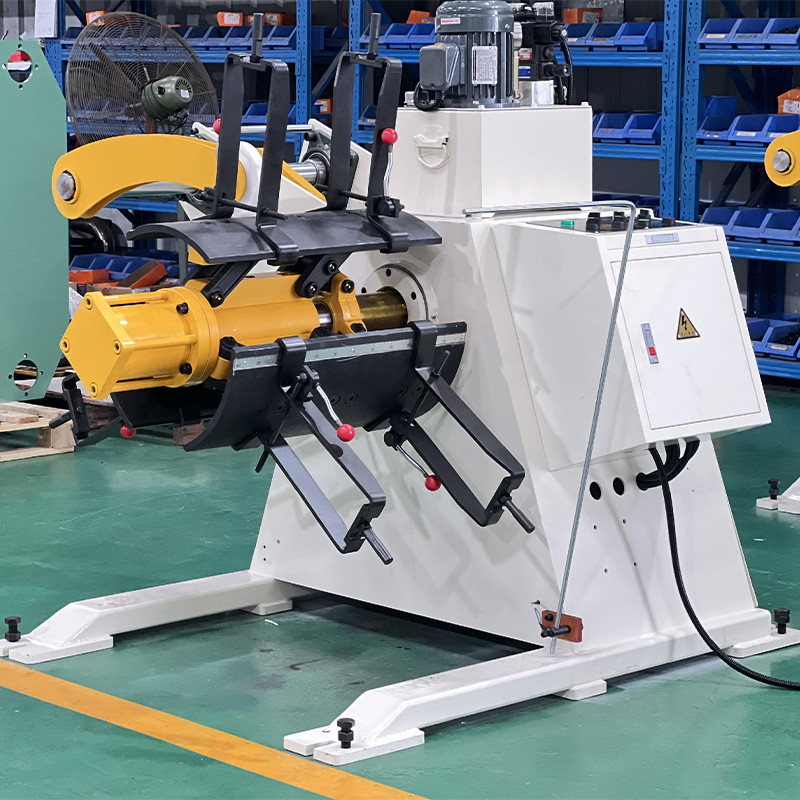 Checking the hydraulic power unit during a decoiler production.
Daily Checks: Five Minutes Before the First Coil
The daily check is an operator task, done at the start of the shift before the first coil is loaded. It takes five minutes and catches most developing problems.
| Check | What to look for | Action if abnormal |
|---|---|---|
| Hydraulic oil level | Oil between the min and max marks on the sight glass | Top up with the specified oil; investigate if it drops repeatedly |
| Oil leaks | Fresh oil under the power unit, hoses, or cylinder | Wipe and trace the source; report for repair |
| Pressure reading | System pressure at the specified value when expanding | Adjust or report if low |
| Expansion grip | The head grips the coil firmly with no slippage | Do not run with a loose coil; check pressure and segments |
| Unusual noise | No knocking or whining from the pump | Report for diagnosis |
The daily check is also the moment to confirm the machine area is clean. Coil dust and oil on the floor around a decoiler are not just housekeeping issues; they hide leaks and create slip hazards for the operator loading the next coil.
Weekly Tasks: Lubrication and Brake Check
Weekly maintenance covers the lubrication points and the brake, the two areas that wear fastest on a working decoiler.
- Grease the expansion slides. The moving segments of the head need grease at the specified points to expand smoothly and evenly.
- Check the brake pads or discs. Measure wear and confirm the brake holds the coil firmly when the line stops.
- Inspect the belt or chain drive. Look for wear, tension, and alignment on the payoff drive.
- Verify the limit switches. Confirm the expansion and rotation limits are still switching correctly.
The weekly brake check deserves emphasis. The brake is what stops the coil from over-running when the press stops, and a brake that fails during a sudden stop can pay out loose strip that tangles or damages the line. Test the brake by stopping the line from running speed and confirming the coil stops without excessive over-run.
Monthly Tasks: The Hydraulic System
Monthly service goes deeper into the hydraulic system, where the expensive failures live.
- Inspect the oil. Check for cloudiness, darkening, or a burnt smell, all signs of contamination or overheating.
- Check the filter indicator. Replace the return filter if the indicator shows blockage, and record the change.
- Tighten and inspect the hoses. Look for chafing, bulges, or hardening at the fittings, and replace any hose that shows cracking.
- Test the relief valve setting. Confirm the system pressure is within specification and the relief valve opens cleanly.
- Check the expansion timing. Time a full expansion cycle and compare it with the original specification; slower expansion signals wear or low flow.
Record every monthly result in the machine log. The trend across months tells you more than any single reading: a filter that needs changing every month instead of every quarter points to contamination entering the system, and the source should be found rather than accepting the frequent changes.
Quarterly and Yearly Service
The longer intervals handle the work that needs the machine down for more than a shift, so plan them around production holidays.
Quarterly, an engineer should check the pump coupling and alignment, inspect the cylinder seals for weeping, verify the electrical connections and the control voltage, and test the emergency stop and the safety interlocks. Once a year, plan a deeper service: change the hydraulic oil if the manufacturer specifies it, replace the filters, overhaul the expansion segments and check their wear, inspect the bearings on the main shaft, and verify the whole machine against the original alignment and leveling. The yearly service is also the right moment to update the machine log and review the wear trends from the year's monthly checks.
A hydraulic decoiler that receives this schedule typically runs for fifteen or twenty years with only planned component changes. A machine that runs on breakdown maintenance alone reaches the same age with a string of emergency repairs, each one more expensive than the scheduled service that would have prevented it.
Frequently Asked Questions
How often should the hydraulic oil be changed?
Most hydraulic decoiler manufacturers recommend an oil change every one to two years, or sooner if oil analysis shows contamination or degradation. Follow the manual's interval and the monthly inspection results, whichever comes first.
Can the operator do the monthly hydraulic checks?
The monthly checks are simple enough for a trained operator or a maintenance technician, but they need the discipline of a schedule and a log. The deeper quarterly and yearly work should be done by a qualified maintenance engineer.
What is the most common cause of hydraulic decoiler failure?
Contaminated or low oil is the most common root cause, damaging the pump and causing erratic expansion. The second is neglected brake wear. Both are prevented by the routine checks in the schedule above.
How do I know when the expansion segments are worn?
Signs include difficulty gripping the coil, a head that expands unevenly, visible wear or ridging on the segment faces, and coils that slip during payoff. Measure the segment surfaces at the yearly service and compare with the wear limit in the manual.
Should maintenance be done with a coil on the machine?
No. Maintenance involving the hydraulic system, the expansion head, or the brake should be done with the machine empty, isolated, and locked out. Only the most superficial daily visual checks are appropriate with a coil loaded.
Keep Your Hydraulic Decoiler Running for Decades
FANTY supplies hydraulic decoilers with a documented maintenance schedule and a recommended spare parts list, so your maintenance team knows exactly what to do and when. Ask us for the service documentation when you request a quotation for a coil line.
Request Decoiler Documentation