What Roll Pressure Should an NC Straightener Feeder Use?
- Share
- publisher
- David Park - Senior Stamping Engineer, FANTY Machinery
- Issue Time
- Aug 13,2026
Summary
Learn how to set straightener roll pressure for coil thickness and material. Optimize flatness with an NC Straightener Feeder from FANTY Machinery.
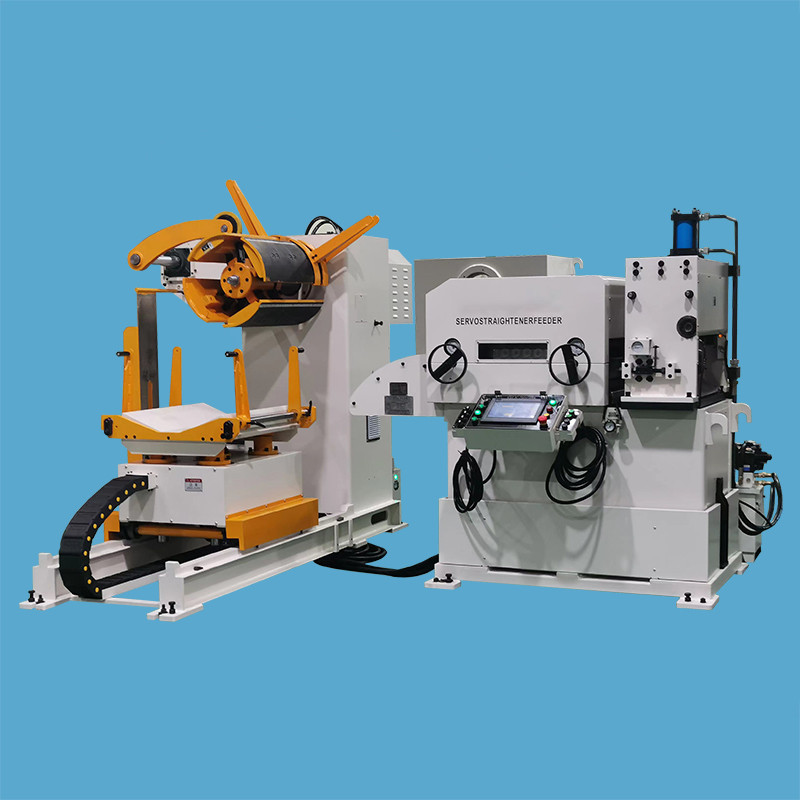
Roll pressure is the most misunderstood setting on any coil line. Set too low and the strip passes through with its coil set intact, and the press feeds wavy material that produces scrap. Set too high and the strip is overworked, work-hardened and stressed, with visible roll marks that ruin surface quality.
The right pressure is neither a fixed number nor a "set it once and forget it" value; it is a function of material thickness, tensile strength, roll diameter and the amount of coil set you need to remove.
This guide gives you the method FANTY's engineers use to set up NC Straightener Feeder lines in more than 60 countries, including reference tables, a step-by-step procedure and the failure modes that come from getting the pressure wrong.
What Roll Pressure Actually Does to the Strip
A straightener works by bending the strip over alternating rolls. Each roll pair imposes a controlled curvature, and the cumulative effect removes the coil set — the residual curvature the strip acquired when it was wound on the coil.
The key principle is that the strip should be bent past its yield point and back, once per roll, without being bent so far that it work-hardens. If the pressure is right, the strip exits flat and stress-relieved, with the fibres on both surfaces relaxed.
If it is too high, each roll imposes excessive strain, the material strain-hardens, and you get a strip that looks flat but springs, bows or cracks in the die. This is why experienced press shops say that a straightener set too aggressively is worse than no straightener at all.
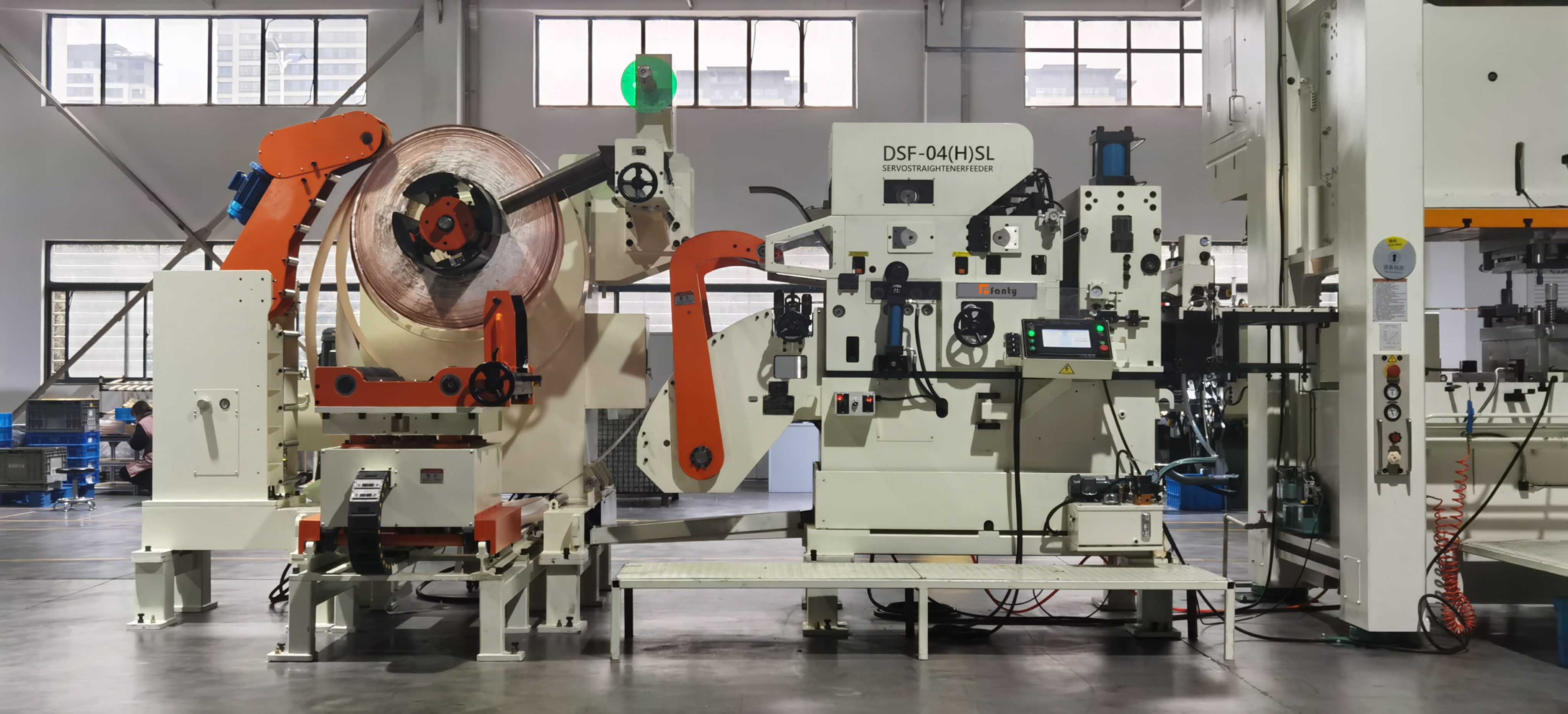
For a 3-in-1 decoiler straightener feeder, roll pressure also interacts with the feed. The straightening rolls and feed rolls share the strip path, and the pressure profile determines how much the strip wants to run straight. A correctly set straightener makes the servo feeder's job easier, because a flat, stable strip feeds with repeatable friction and no wander.
Reference Roll Pressure by Material
| Material | Thickness Range | Tensile Strength | Pressure Setting (relative) | Notes |
|---|---|---|---|---|
| Aluminium 5052 | 0.5-1.5 mm | ~230 MPa | Light | Soft; light penetration, watch for roll marks |
| Aluminium 6061-T6 | 1.0-3.0 mm | ~290 MPa | Light to medium | More coil set; increase rolls engaged |
| Cold-rolled steel | 0.5-2.0 mm | ~310 MPa | Medium | Standard stamping material; medium pressure |
| Galvanized steel | 0.8-2.5 mm | ~350 MPa | Medium | Protect coating; avoid excessive work hardening |
| Stainless 304 | 0.5-2.0 mm | ~600 MPa | Medium to high | Hard, springy; more rolls and firm pressure |
| High-tensile steel | 1.5-4.0 mm | 600-900 MPa | High | Deep penetration needed; verify flatness on exit |
| Spring steel | 0.3-1.5 mm | 1,200+ MPa | Highest, multi-pass | May need repeated passes; watch edge stress |
*Values are starting points for setup, not final settings. Always verify with a flatness check and trial feed before production.
Step-by-Step Procedure for Setting Roll Pressure
- Identify material grade, thickness and tensile strength; record them before touching any adjustment.
- Set the pass line and engage the entry and exit rolls with light contact pressure first.
- Increase pressure on the work rolls gradually, from the entry side toward the exit side.
- Run a short strip and check flatness on a granite plate or known-flat surface; look for bow, camber and twist.
- Adjust in small increments; a half turn of a roll adjustment can change flatness noticeably on thin material.
- Verify the strip is stress-relieved by cutting a short sample; it should remain flat when cut free.
- Save the final settings in the machine recipe for that material and thickness.
Signs Your Roll Pressure Is Wrong
Too much pressure leaves visible clues. The strip may show faint transverse roll marks or a slightly dull finish where rolls touched hard. Cut samples will curl or twist after cutting, a sign of work hardening and residual stress rather than coil set. In extreme cases the strip edges crack or the material jams in the die, and the straightener rolls themselves develop grooving from the constant hard contact.
Too little pressure is easier to miss because the symptom looks like a material problem: the strip enters the feeder wavy or with visible coil set, feed length scatters, and parts show bend or twist.
Operators often blame the die or the feeder, when the real cause is upstream straightening that never removed the coil set. The rule in our service department is to check the straightener first whenever feed accuracy drops and the die is proven good.
There is also a material-specific trap. On galvanized or coated steel, excessive pressure can crack the zinc coating along the bend lines, which turns into corrosion and rejects weeks later. On stainless, overwork-hardening causes edge cracking on subsequent forming.
On very thin material, pressure that is barely too high produces a strip that looks flat but has a memory of its own, springing in the die. When in doubt, run the least pressure that produces flat, stress-free strip; that is the sweet spot every time.
Roll Pressure, Roll Wear and Maintenance
Roll pressure and roll condition are inseparable.
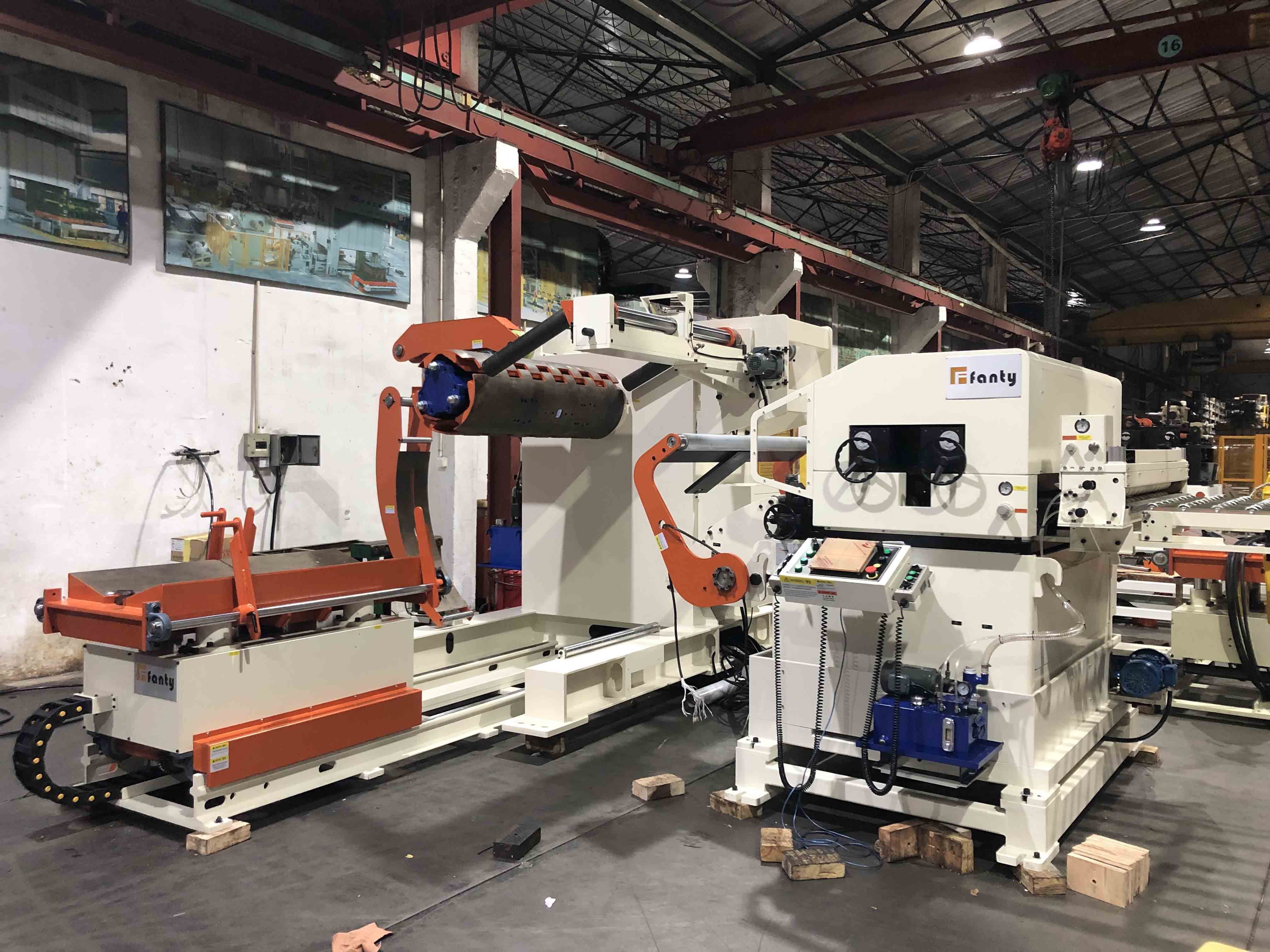
Bearings on the work rolls also matter. Because roll pressure applies continuous load, a failing bearing introduces vibration that shows up as intermittent flatness defects. Listen for rumbling and check bearing temperature with the same quarterly discipline you apply to the decoiler.
And keep the roll surfaces clean: debris carried in from the coil, or dried lubricant, creates hard spots that mark the strip even at correct pressure.
Finally, remember that pressure settings belong in the machine's recipe memory, not in the operator's head. When a FANTY engineer sets up a line, every material and thickness used by the customer is saved as a recipe, so a die change or coil change restores known-good settings in seconds.
That is the practical difference between a straightener that is tuned once and a straightener that is tuned every time it is used.
Why Correct Roll Pressure Protects the Whole Line
The straightener sits between the decoiler and the feeder, and its output quality sets the ceiling for everything downstream. Flat, stress-free strip feeds at consistent friction, which lets the NC servo feeder hold ±0.05 mm at 200 SPM.
It is also an energy and cost issue. Over-straightening wastes the energy invested in bending the material, and the work-hardened strip is harder on dies, shortening die life and increasing sharpening frequency.
A line running with correct roll pressure produces better parts, longer die life, lower scrap and higher effective speed — which is why FANTY's 80+ R&D engineers treat straightener setup as a core competency, and why our installed base of 200+ lines includes some of the most demanding precision stamping applications in the world.
Frequently Asked Questions
Is there a universal roll pressure setting for all materials?
No. Correct pressure depends on material grade, thickness, tensile strength and roll diameter. Use the reference table as a starting point, then verify flatness and stress relief on a test strip. What is right for 1 mm cold-rolled steel is wrong for 2 mm high-tensile.
How do I know if my roll pressure is too high?
Cut a short sample; if it curls, twists or bows after cutting, the strip is work-hardened and over-straightened. Other clues are visible roll marks, dull strip finish, edge cracking and premature die wear. Reduce pressure until samples cut flat.
Why is my strip still wavy even though I increased pressure?
If increasing pressure does not improve flatness, check the number of rolls engaged, roll condition and roll diameter. Worn or scored rolls cannot flatten strip at any pressure, and too few engaged rolls cannot remove deep coil set from thick, hard material.
Does roll pressure affect NC servo feeder accuracy?
Yes, significantly. Flat, stress-free strip feeds with consistent friction, letting the feeder hold ±0.05 mm. Wavy or stressed strip makes the feeder fight the material, causing feed-length scatter and premature feed-roll wear. Correct straightener setup is part of feeder accuracy.
Related reading
- why pass line height matters
- five-roll straightening up to 4 mm
- how to hit a flatness spec on a coil line
Part of the 3-in-1 decoiler straightener feeder — the full library of coil handling, straightening and feeding guides from FANTY.
Get flat, stress-free strip — every coil, every shift
FANTY's NC Straightener Feeder and 3-in-1 decoiler straightener feeder lines combine precision straightening with servo feeding, holding ±0.05 mm at 200 SPM. CE-certified, built by 370 specialists, trusted in 60+ countries since 2012.
Request Straightener Setup Guide