What Should You Audit in an NC Straightener Feeder Plant?
- Share
- publisher
- David Park - Senior Stamping Engineer, FANTY Machinery
- Issue Time
- Sep 21,2026
Summary
A plant audit is the cheapest two days in a coil line order, or the most expensive theatre. This covers what the visit costs, the seven floor checks that separate a builder from an assembler.
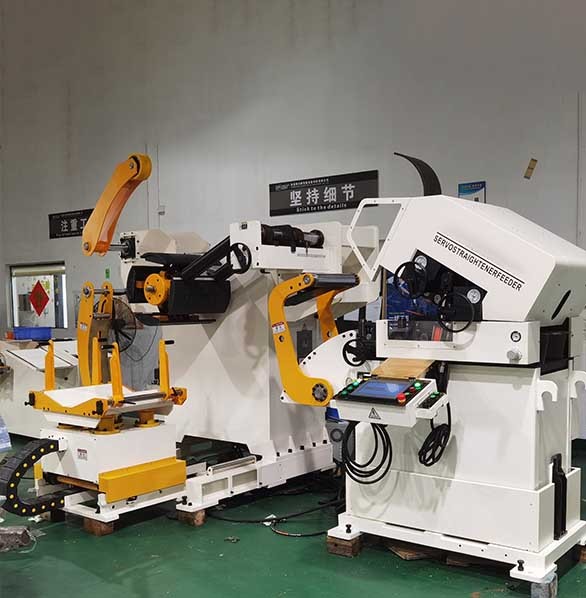
A plant audit is the cheapest two days in a coil line order — or the most expensive theatre you will ever pay for.
Buyers who walk a floor with a camera and a checklist of vague questions come home with photographs and no decision.
The plants that deserve the order and the plants that merely look busy separate on a short list of things you can measure, ask to see and write into a contract.
What follows is the checklist I would hand a buyer who is about to place an order for an NC straightener feeder, written from the side of the table that gets audited.
It covers what the visit actually costs, what to inspect on the floor, which records are worth reading, and where a two-day visit stops being evidence.
The money side of the same decision — what each specification line really adds to the price — sits in our coil line cost breakdown, and the machine range is in the product range.
The Audit Cost Is the Smallest Number in the Deal
Two engineers, two days, flights and hotels: on a mid-size coil line that runs to a few thousand dollars.
Set that against what a wrong machine costs.
A line that cannot hold the flatness your customer specified becomes rework, air freight, a second roll set, or a machine that sits idle while you argue about whose specification was wrong.
The audit does not exist to catch a dishonest builder. Most builders are honest about what they can do and quietly optimistic about what they have not yet tried.
The audit exists to find the gap between those two statements before the deposit leaves your account.
| What you spend on the audit | What it protects | Where it fails to protect you |
|---|---|---|
| Two engineers, two days, travel and hotels | Confirms the builder can machine, grind and align the parts it claims to make in house | Nothing. It cannot detect a builder that sub-contracts roll grinding to a good shop today and a poor one next quarter |
| One witnessed run-off with your material, one day | Ties the flatness and feed accuracy figures to a physical test you watched | A two-metre sample at one speed on one coil does not predict month three of production |
| Your engineer's time writing the acceptance clause | Converts a verbal promise into a measurable, payable milestone | Only if you name the grade, thickness, width and speed in the clause |
What to Inspect on the Floor in Two Days
Walk the production route in the order the machine is built. Every stop answers one question: can this plant hold a tolerance without help from outside?
- Machining capability. Look for a boring mill or a large machining centre that can take the base casting in one setup. If the roll housings are welded and then bored, ask whether the bore is cut after welding or before.
- Roll grinding. Hardened work rolls are ground after heat treatment, never before. Find the cylindrical grinder, and check its capacity against the longest roll the builder sells.
- Roundness and hardness measurement. A grinder without a roundness gauge and a hardness tester is grinding to feel. Ask to see the instrument and its calibration sticker.
- Assembly and alignment. Watch how a base is levelled. Dial indicators and laser alignment on the shop floor tell you more than any brochure claim about accuracy.
- Run-off before shipment. Every machine should run with strip, not dry. Ask to see the test bay, the strip stock and the record sheet from the last machine tested.
- Panel build. Open a control cabinet. Ferrules on every core, printed wire numbers, a schematic in the door pocket, drives labelled with their parameter file reference.
- Spares on the shelf. Ask for the bearing and seal part numbers of the machine you are buying, and how long a replacement roll set takes to ship.
A builder with a 45,000 m² plant and a dedicated roll cell will show you all seven in an afternoon without being asked twice.
A builder that assembles imported weldments will show you three and change the subject on the fourth.
Which Records Separate a Builder From an Assembler
Paper is where the difference shows. Every serious builder keeps records because the shop needs them, not because a buyer asked.
Ask for each record on this list and watch how long it takes to produce. A record that appears in ninety seconds came from a system.
| Record | What it actually proves | Where it can mislead you |
|---|---|---|
| Roll inspection sheet with runout and hardness | The roll was measured after grinding, at a stated tolerance | A clean sheet from last year says nothing about the roll being fitted to your machine this week |
| Material certificates for frame and roll steel | The steel grade and heat number were controlled on receipt | Certificates are inexpensive. The heat number must be traceable to a physical stamp on the part |
| Run-off test report | The machine held flatness and feed accuracy on real strip | A short sample at one speed on one grade is a demonstration, not a production guarantee |
| Calibration certificates for shop instruments | The micrometers and indicators used on your machine read true | An instrument out of calibration invalidates every measurement taken with it, including the ones you were shown |
| CE declaration and technical file | The machine was assessed against the machinery directive | The file must name your model and serial number, not a product family with a generic annex |
| As-built electrical schematic | Your maintenance team can work on the machine in year three | A generic drawing with no revision block is a liability disguised as documentation |
Where a Two-Day Audit Stops Working
Be clear about the limits before you book the flights, because an audit is easy to over-read.
It cannot test durability. Bearing life, roll wear and servo drift appear after six to twelve months of production. No visit compresses that.
It cannot test behaviour under a claim. How a builder responds when a machine fails in year two is a cultural question, and it does not show up in a showroom visit.
It shows up in the spare parts desk and in the response time on your first email, six months after the invoice is paid.
It checks the builder, not the fit. A well-run plant can still build the wrong machine for your job if the specification is wrong.
A good audit of a badly specified order confirms only that the mistake will be well made.
It rewards preparation. A builder who knows the visit date will tidy the floor, stage the best machines and brief the foreman.
Ask for a second, shorter visit on a different day, and ask to see the machine in build for another customer.
It does not compare. One audit is an opinion. The same checklist run at two or three plants is a decision.
Three questions carry more weight than the rest of the visit combined, and all three are commercial rather than technical.
How much should a 2-day plant audit cost?
Budget two engineers for two days plus travel, typically well under 1% of the machine price, and add one day for a witnessed run-off.
If a builder refuses a witnessed run-off at any price, that refusal is worth more than the audit fee.
How large a run-off sample proves flatness: 2 m or 20 m?
Two metres of strip with five readings along it is the minimum I would sign. Ask for the readings in millimetres per metre, on your grade and thickness, at your production speed.
A single reading at the machine exit tells you almost nothing about the strip that reaches the die.
How much of the price should be held until acceptance, 10% or 30%?
On a coil line, hold at least 30% until the acceptance test is signed on your floor, and never less than 10% until the operators have run a full shift unaided.
A 90% payment before installation leaves you with no leverage on the last, most expensive problems.
How many machines should you see in build?
Two or three, at different stages. One finished machine tells you what the builder wants you to see; a machine in mid-assembly tells you how it actually works.
Does a CE declaration cover the whole machine or just the panel?
The declaration covers the machine as supplied, including the guarding, the control system and the integration of any bought-in units.
Check that the serial number on the declaration matches the plate on your machine, and that the file lists the standards applied.
Write the Acceptance Test Into the Contract, Not the Email
Everything the audit found has to survive the gap between the quotation and the shipment. Only the contract survives that gap.
- Name the material. Grade, thickness and width range in writing. "Mild steel" is not a specification, and flatness results move with yield strength.
- Name the numbers. Flatness in millimetres per metre at the machine exit, feed accuracy in millimetres, and the press speed at which both are measured.
- Name the witness. State whether the run-off is attended by your engineer or recorded on video with your material, and who signs the report.
- Name the documents as deliverables. As-built schematics, parameter backups, spare parts list and the CE file should be line items, not favours.
- Fix the spare parts prices. A price list valid for five years, with stated delivery times for rolls, bearings and drives, removes the worst surprises in year two.
- Start the warranty at acceptance. Not at invoice, not at shipment. The clock should start when the machine makes good parts on your floor.
When the Audit Says No
A failed audit is a result, not a wasted trip. Write down which of the seven floor checks failed and how badly.
If the gap is roll grinding or alignment, it is structural: the builder will not buy a grinder because you asked. If the gap is documentation or panel build, it is usually fixable inside the order.
The useful move is to re-audit the same checklist four to six weeks later. A builder that closes three of the four findings is telling you something about the next two years of ownership.
With more than 200 active lines installed across 60-plus countries, the builders worth your deposit are the ones who treat the audit as a normal part of the order rather than an interruption to it.
Where to go next
This article covers the audit itself. The other half of the buyer's decision — which specification lines are worth paying for and which ones you are buying by habit — is worked through in the guide library.
our coil line knowledge base