What Should a Coil Line FAT Record Before It Ships?
- Share
- publisher
- David Park - Senior Stamping Engineer, FANTY Machinery
- Issue Time
- Nov 23,2026
Summary
A factory acceptance test is only as useful as its record. This walks through the six entries worth measuring, the strip and speed conditions that decide whether the numbers transfer, and the four limits a short test cannot cover, with the retention terms that keep open items moving after shipment.
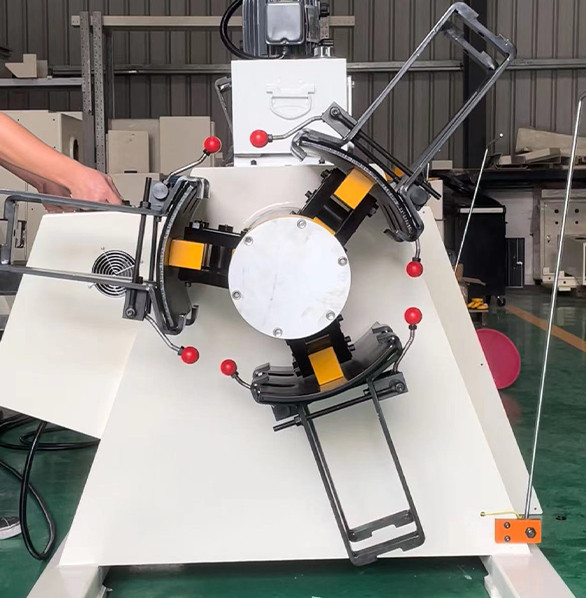
A coil line FAT is the last hour in which you can watch the machine run on load and still refuse it. Most buyers leave with a certificate confirming that the line ran.
That certificate will not help in month four, when strip starts drifting at the far end of a coil and nobody can say whether the fault arrived in the crate.
A useful record is narrower and more boring than the ceremony around it. It names the strip, the speed, the sample count and the person who measured each figure, and it states plainly what nobody tested.
Who Signs Each Figure, and in What Order
A factory acceptance test fails more often from unclear ownership than from a bad machine. Three signatures cover the whole event, and each one should sit on its own sheet.
Sequence matters. The builder signs the mechanical and electrical sheets. Your inspector, if you send one, signs the performance sheet. The future operator signs the changeover sheet.
That last signature is the one buyers skip. A line that takes forty minutes to thread is a different machine on your floor than it was on the test floor, and only the operator knows it.
Keep the sheets separate in the file. A single page signed by one person at the end tells a warranty discussion nothing about who verified what, or on which strip.
Which Entries Turn a Test Sheet Into Evidence
Six entries carry almost all of the value. The other forty lines on a typical checklist are formalities that a careful technician can complete from memory before lunch.
- Strip identity: grade, gauge, width, coil weight, and the mill certificate number if you supplied the coil.
- Feed length and accuracy: ten consecutive strokes at three lengths, measured at the die rather than at the feed rolls.
- Line speed at test: metres per minute and strokes per minute, both written down, because the two are not proportional.
- Straightener setting: gap per roll pair, penetration, and the flatness reading on a one-metre sample in I-units.
- Motor current per drive against nameplate, read under load rather than at idle.
- Open items: every defect found, with an owner and a date, signed by both sides on the same page.
Six entries look thin for a machine of this size. They are enough because each one is a measurement rather than an observation, and a measurement can be argued with.
"Line runs smoothly" is an opinion. "0.04 mm variation across ten strokes at 300 mm" is evidence, and it survives the departure of everyone who watched the test.
The Strip You Test On Decides Half the Result
A line tested on 0.8 mm mild steel says very little about the same line running 2.5 mm hot-rolled pickled. Thickness changes the torque at the uncoiler and the load on every roll in the stack.
It also changes the inertia the feed has to stop inside a single press stroke. That figure, not the servo rating, decides whether the line holds length at 200 strokes per minute.

Test on the gauge and grade you will actually run, or on the worst of them. If the order covers a range, ask for two coils and record which coil produced which number.
Width matters for a different reason. A 1,250 mm strip hides tracking faults that a 300 mm strip exposes within ten strokes, and the reverse holds once crown enters the picture.
Coil weight belongs on the sheet as well. A five-tonne coil at full diameter asks the brake for a different torque than the same coil near its core.
A test that never leaves the first diameter has not tested the brake at all. It has tested the brake at the one point where it works least.
| Entry | What the figure proves | Where a thin version costs you |
|---|---|---|
| Feed length, ten strokes | The loop, brake and feed hold together at test speed | One stroke hides the drift that appears after 200 |
| Motor current under load | The drive was sized for this strip, not for the catalogue | Trips at your ambient temperature, not the builder's |
| Flatness in I-units | The roll stack reaches spec on this gauge | You inherit a setting that only works on 0.8 mm |
| Brake torque at core | Back tension stays stable as the coil empties | Loose coils in the last 15 percent of every coil |
| Open items with dates | Both sides agree on what is still wrong | Each side remembers a different verbal promise |
What a Ninety-Minute Run Cannot Prove
A factory test is short by design. The line is warm, the strip is clean, the operator is the builder's best technician and the tool in the press is a simple blanking die.
Thermal drift. Hydraulic oil reaches working temperature in about forty minutes.
A fault that appears at hour three, when the oil is thin and the cabinet is hot, will not appear in a test that ends before the oil warms.
Foundation and power. The machine sits on a certified floor with a stiff supply. Your building may have a 150 mm slab and a transformer shared with a spot welder, and neither is on the sheet.
Your die. Clearance, pilot release timing and scrap drop belong to the tool, and the tool is still in your plant.
A line that holds length on a single-station die can lose 0.3 mm on a progressive tool with eight pilots.
Long-run wear. Ninety minutes does not wear a roll. The flatness reading at hour one and the reading after 40,000 strokes are two different numbers, and only the second one is your production reality.
Write those limits into the record itself. A page that states which conditions the test did not cover is more credible in a warranty dispute than one claiming the machine was proven.
Photographs and the Two Files Nobody Keeps
Photograph the serial plate of every unit, the cabinet with the door open, and the die area at the moment the strip is threaded. Ten photographs in the right places settle most arguments about what was supplied.

The two files that go missing are the parameter backup and the wiring diagram as built. Ask for both in the same session, on a stick, before the crate is closed and the technician moves to another job.
- Parameter backup for every drive, plus the recipe file and the login level that unlocks it.
- As-built wiring diagram carrying the terminal numbers actually used, not the drawing revision.
- Hydraulic circuit diagram with pressure settings marked at test, not at nominal.
- Spare parts list with part numbers and lead times, so the first breakdown is not a quotation.
Holding Ten Percent Until the Line Runs on Your Floor
Payment terms are the only part of a FAT that keeps working after you leave the factory. A retention of 5 to 10 percent, released on installation acceptance, keeps the open-items list alive.
Attach the retention to named items rather than to a general promise of support. "Ten percent when the line holds ±0.05 mm at 200 strokes per minute on our strip" is enforceable.
Where the builder refuses retention, ask for the open-items list to be closed by a dated addendum. It is a weaker instrument, but it still leaves a document that a claim can point at.
Do not accept a retention released on shipment. The moment the crate leaves, the only leverage left is goodwill, and goodwill does not travel well across an ocean.
Matching the Sheet Back to What You Ordered
Before the last signature, put the test sheet beside the order and read down both columns. Options that were quoted and never fitted appear at this point more often than anyone expects.
Guard doors, extra roll pairs, a second mandrel, a coil car, a tension transducer, a recipe memory for eight part numbers: each one is cheap at order stage and awkward after the crate is packed.
Every option that can be added later is listed in the machinery specification index, which makes the comparison a matter of ten minutes rather than a round of emails.
Three questions come up on almost every acceptance visit, and each one has a short answer worth settling before the flight home.
Should a loaded FAT run for 3 hours or 4?
Long enough to reach thermal steady state: three to four hours, or 600 strokes, whichever comes last. Two coils minimum, three if the order covers two gauges.
How many feed-length samples prove a 0.05 mm claim?
Thirty consecutive strokes at three lengths, read at the die. A capability index above 1.33 on those thirty is defensible. Ten strokes is a demonstration.
Should 5 or 10 percent be held back until installation?
Five to ten percent of machine value. On a 180,000 USD line that is 9,000 to 18,000 USD of leverage, enough to keep an open-items list moving.
Can the test be witnessed by video only?
Partly. A fixed camera plus a close-up on the measuring instrument covers the performance sheet. Interlocks and stop time need a person beside the press.
Where to go next
Acceptance is the last step of a purchase that begins at the specification table. The decisions taken there are the ones a test sheet cannot recover.
The coil line guide library works through what each specification line costs to buy, ship and commission.
Compare spec lines against their real cost