What to Check in an NC Straightener Feeder Factory Audit?
- Share
- publisher
- David Park - Senior Stamping Engineer, FANTY Machinery
- Issue Time
- Sep 3,2026
Summary
A practical factory audit checklist for buyers of an NC Straightener Feeder: what to inspect in machining, quality control, and live test runs, plus the warning signs that justify walking away.
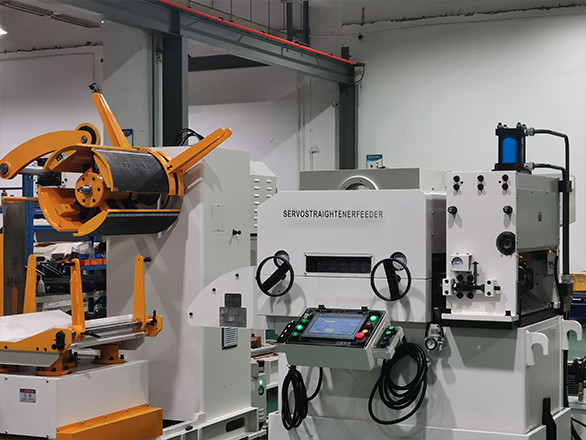
A factory audit is the single most reliable way to confirm that the machine on the quotation will actually perform at the promised accuracy, hold up under three-shift duty, and arrive on the delivery date.
Marketing brochures and video calls can hide a lot; a structured walk-through of machining capacity, quality control, and a live test run cannot.
This guide gives you a practical, checklist-style audit framework built from experience with stamping plants in more than sixty countries, so you know exactly which workshop details matter and which red flags justify walking away.
Whether you are buying your first NC Straightener Feeder or adding a third line to an existing press shop, the same audit logic applies: verify the people, verify the processes, and verify the machine under load. Read on for the full walk-through, the exact documents to request, and the test procedures that separate a real builder from an assembly workshop.
Why a Factory Audit Matters for an NC Straightener Feeder
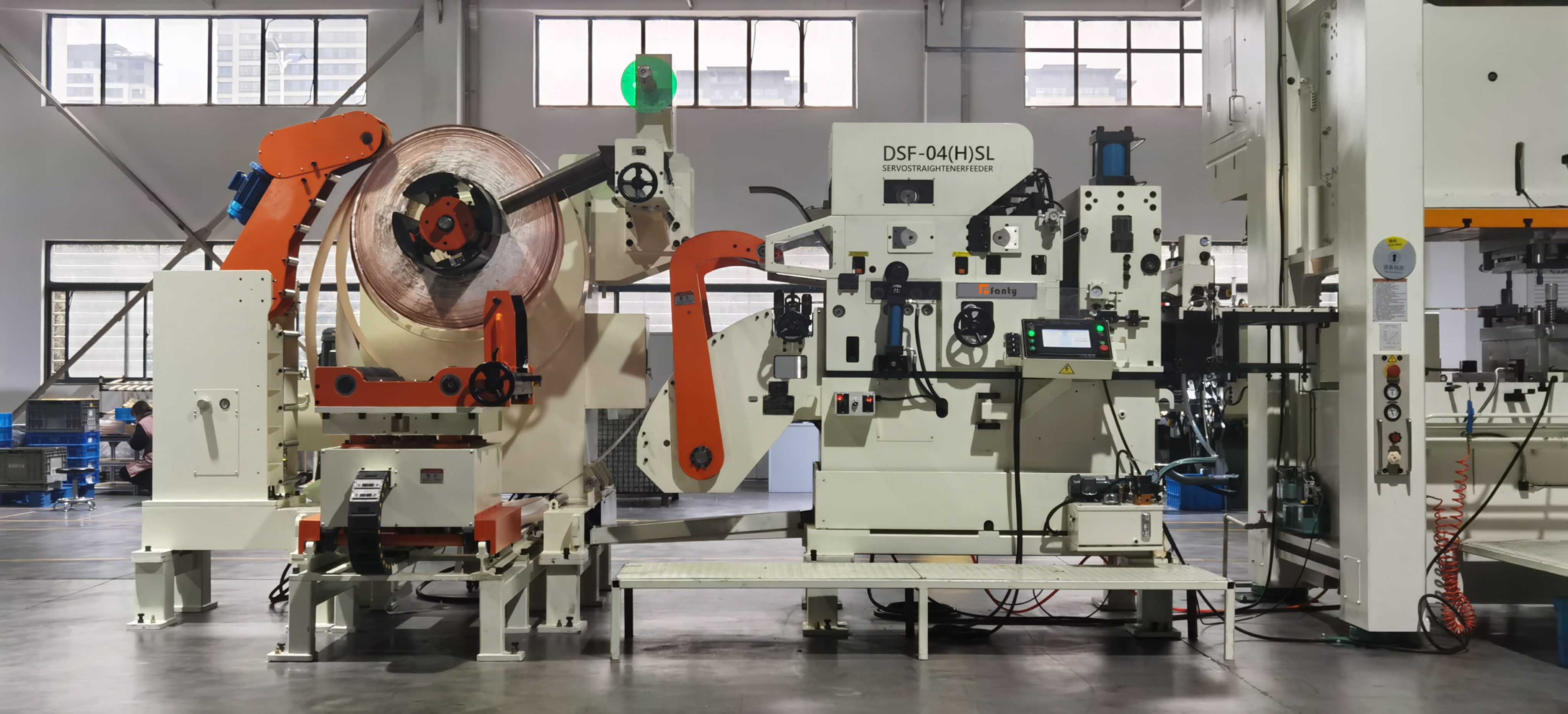
An NC Straightener Feeder is a precision machine: it combines a coil payoff unit, a straightening head with multiple work rolls, and a servo-driven feed mechanism that positions strip inside a press die with tolerances around ±0.05 mm at speeds up to 200 strokes per minute.
When you audit a supplier, you are really answering three questions. First, can this factory physically produce the precision components in-house or do they depend on uncontrolled subcontractors? Second, do they have documented quality gates that catch defects before painting, or do they rely on final inspection alone?
Third, can they demonstrate a machine feeding real material in front of you? A supplier that passes all three checks with clear evidence is far more likely to deliver a machine that performs as quoted than one that only shows a showroom and a PowerPoint file.
Audit Step One: Machining and Manufacturing Capability
Walk the workshop first. The frame, slideways, and roll carriers of an NC Straightener Feeder must be machined on rigid CNC equipment, because the straightening head alignment depends on the geometry of the machined casting or steel plate fabrication.
Pay attention to housekeeping and measurement discipline. A clean workshop with dedicated tooling, calibrated instruments on benches, and parts protected from dust usually indicates process control.
Check the welds on heavy-duty frames for consistency, and inspect a straightening roll for the ground finish: rolls for a serious machine show a uniform, fine surface with no grinding chatter marks.
If a supplier cannot show you the machining line for the core components, ask precisely who machines them and request their quality certificates.
Audit Step Two: Quality System, Certification, and Documentation
Ask for the factory management system certificate, the CE declaration for the machine model you are buying, and the inspection records of a recently completed NC Straightener Feeder.
Also look for evidence of experience: how many years has the company built coil feeding equipment, how many engineers sit in the R&D department, and how many complete lines are running in the field?
These are not vanity numbers; they predict how quickly the supplier can solve an application problem or a spare-part issue after commissioning.
During our own audits of partners, we look for a builder with a decade or more of continuous production, an in-house R&D team, and reference installations that can be contacted directly.
The Complete NC Straightener Feeder Audit Checklist
- Confirm the straightening head is machined in-house with documented roll alignment checks, not assembled from bought-in frames.
- Verify servo drive and PLC brands are stated in the quotation and visible on the electrical cabinet during the audit.
- Request the CE certificate, the factory management system certificate, and the electrical schematic of the control cabinet.
- Inspect spare parts stock: gears, bearings, rollers, and seals for the model you intend to buy, plus average dispatch time.
- Ask for at least three reference installations in your industry and contact two of them for a candid reference call.
- Demand a live test run with your strip width and thickness, and measure the feed pitch accuracy yourself on the control screen.
Audit Zone Reference Table: What to Look For and What to Worry About
| Audit Zone | What a Real Builder Shows You | Warning Signs |
|---|---|---|
| Machining workshop | CNC mills and grinders, in-house head frames, calibrated tooling, clean part flow | Only assembly benches; core parts bought from unnamed subcontractors |
| Quality control | Signed run-test reports with real values, roll hardness certificates, traceable material certs | No test data available, "we test everything at the customer site" |
| Electrical cabinet | Known servo brand, tidy wiring with numbered conduits, clear PLC program backup policy | Unlabeled wiring, mixed unknown brands, no spare parts for drives |
| Straightening rolls | Case-hardened or alloy rolls with fine ground finish, documented hardness 58-62 HRC | Soft or chrome-only rolls, visible grinding marks, no hardness test |
| Documentation | CE declaration, factory certificate, drawings, manuals, spare parts list | Vague delivery terms, no electrical schematic, no manual in your language |
| After-sales structure | Dedicated service engineers, overseas commissioning records, stocked spares | No service engineer, spare parts only made to order, slow email response |
Audit Step Three: The Live Test Run You Should Demand
The most valuable twenty minutes of your audit happen on the test floor. Bring your own strip specification, or at least agree in advance on the width, thickness, and material grade to be used. Watch the operator load a coil, thread the strip through the straightening rolls, and set a feed length on the touch screen. Run the machine at the speed you plan to use, and measure the actual feed pitch against the programmed value over a sequence of fifty or more strokes; a well-tuned NC Straightener Feeder holds pitch error well inside ±0.05 mm.
Listen and feel as well as measure. A smooth straightening head produces an even hiss, not knocking or vibration, and the strip exits flat with no edge wave or center buckle. Ask how many complete lines the factory has installed and where the nearest reference plant is located.
If the supplier hesitates to run material in front of you, treat that as the strongest possible red flag, because a machine that cannot demonstrate accuracy on its own test floor will not suddenly become accurate in your factory.
How FANTY Structures Its Factory and Its Audits
FANTY Machinery has manufactured coil feeding equipment for more than twelve years inside a 45,000 m² factory with around 370 employees, of whom more than 80 work in research and development.
How long should a full NC Straightener Feeder factory audit take?
Plan for at least half a day. Two to three hours covers the machining floor, the assembly area, and the quality office; a further one to two hours is needed for the live test run and the commercial discussion. If the supplier cannot give you that time, reconsider the visit entirely.
Can I audit the factory remotely instead of traveling?
A live video walk-through is a useful pre-screen but not a substitute for a physical audit. Insist on a video call from the actual workshop with unscripted questions, then send a trusted local agent or your own engineer for the final inspection before shipment.
Which documents must the supplier hand over during the audit?
At minimum: the CE declaration, the factory management system certificate, the electrical schematic, the general arrangement drawing, the test report of the machine you inspected, and a recommended spare parts list with prices.
What if the factory refuses to run a live test on material?
Treat it as a serious red flag. Every credible builder has test material on site. If they will not demonstrate accuracy, feed pitch, and strip flatness in front of you, the risk of receiving an under-performing machine is high.
Should I audit before or after the commercial negotiation?
Audit before you sign the final contract. Use the audit outcome to fix the payment schedule, the acceptance criteria, and the warranty terms in writing, including the measured feed accuracy that the machine must achieve during acceptance.
Related reading
- what import cost to expect
- how much floor space a coil line needs
- what each specification line really costs
Part of the the coil line guide library — the full library of coil handling, straightening and feeding guides from FANTY.
Ready to Source from a Factory That Passes Its Own Audit?
FANTY Machinery invites you to inspect our machining floor, meet our R&D engineers, and run your own coil through an NC Straightener Feeder before you commit. Tell us your strip width, thickness, and press speed and we will prepare a technical proposal with a transparent factory-visit plan.
Request a Proposal and Factory Visit