Which Air Supply Fault Makes a Servo Feeder Slip?
- Share
- publisher
- David Park - Senior Stamping Engineer, FANTY Machinery
- Issue Time
- Oct 27,2026
Summary
A feed error that comes and goes with the weather is not an encoder problem. On three of the last five servo feeder slip complaints we traced, the clamp was not holding because supply pressure fell mid-stroke. This article covers the gauge logging that separates an air fault from everything else, four faults that look identical at the die, line sizing for 350 litres a minute, and the four observations that rule the air theory out.
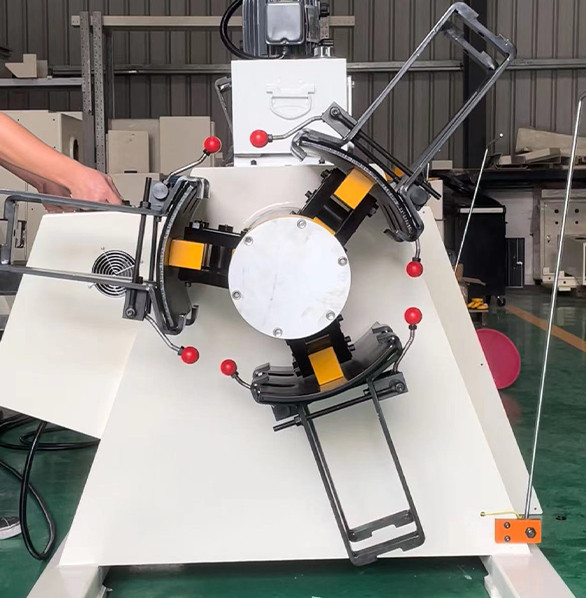
A feed error that comes and goes with the weather is not an encoder problem.
On three of the last five servo feeder slip complaints we traced, the strip was moving because the clamp was not holding, and the clamp was not holding because the air pressure dropped mid-stroke.
Air is the cheapest system on the machine and the least instrumented. That is exactly why it gets blamed last.
The Slip That Only Shows Up on Wet Days
The complaint pattern is consistent. Feed length holds to 0.05 mm on a dry morning and wanders to 0.3 mm after lunch in a humid plant.
It is worse on thin gauge, worse at high stroke rates, and worst on the second half of a coil when the strip is lighter and has less inertia to keep it moving.
Operators describe it as the strip "jumping" a pitch. What they see at the die is a part that is short by half a millimetre and a scrap bin that fills by mid-afternoon.
An encoder fault would be repeatable. A drive fault would follow load. A clamp that loses pressure follows neither, which is why it survives so many service visits.
An encoder fault would be repeatable. A drive fault would follow load. A clamp that loses pressure follows neither, which is why it survives so many service visits.
The weather correlation is not superstition. Warm humid air carries more water into the ring main, and water changes how fast a cylinder fills and how much the seal drags.
Ask the operator two questions before touching the machine: does it happen after a break, and does it happen when the neighbouring press is running. Both answers point at supply rather than at the feeder.
Start at the Regulator, Not the Rolls
Fit a gauge at the clamp cylinder port and log it for one shift. That single measurement separates an air fault from everything else in about an hour.
A healthy system sits at the set pressure and dips maybe 0.2 bar during clamp. A system with a supply problem dips much further and recovers slowly.
On the last case we opened, the regulator was set to 0.5 MPa and the gauge held it at rest. During the clamp stroke it fell to 0.38 MPa and took 1.2 seconds to come back.
At 0.38 MPa the clamp force on an 80 mm bore cylinder is 1,910 N instead of 2,510 N. That is a 24% loss of grip, and 24% is enough to let a 0.8 mm strip slide.
Nothing in the feeder's own diagnostics reports this. The servo holds position exactly; the strip simply is not where the servo thinks it is.
Clamp force on a servo feeder is set by bore and supply pressure, so both numbers belong in the maintenance record rather than in a fitter's memory.

Four Faults That Look Identical at the Die
Every one of these produces a short part, an intermittent pattern and no alarm. The gauge reading and the recovery time tell them apart.
| Fault | What the gauge does | Where it costs you |
|---|---|---|
| Regulator droop | Falls 0.1 to 0.15 MPa under clamp, recovers in over a second | A 60 EUR regulator, but it hides behind a week of scrap |
| Undersized supply line | Steady loss along the run, worse at high SPM | Re-piping a whole bay, and the machine gets blamed in the meantime |
| Water or oil in the air | Gauge is fine, but clamp speed varies | Valve and cylinder rebuilds, plus a dryer you should have bought first |
| Cylinder or rotary union leak | Pressure never reaches set point at all | Air cost you cannot see, and a clamp that fades over the shift |
Regulator droop and line sizing are the two that get misdiagnosed as mechanical. Both are visible on a gauge in under a minute.
Sizing the Line for Clamp and Feed Together
Air sizing is usually done for the biggest cylinder and forgotten. On a servo feeder the clamp fires 200 times a minute, and duty cycle matters more than peak flow.
An 80 mm bore with a 25 mm stroke displaces about 126 cm³. At 6 bar gauge that is roughly 0.9 litres of free air per stroke.
Two cylinders, upper and lower clamp, at 200 SPM come to about 350 litres a minute. That is a continuous demand, not a peak.
Through 15 metres of 8 mm bore tube, 350 litres a minute costs 0.3 to 0.5 bar. Through 12 mm bore the same flow costs under 0.1 bar.
The fix on the case we opened was 12 mm tube from the ring main to a dedicated regulator at the machine. Pressure at the cylinder stopped dipping below 0.47 MPa.
That is a materials cost in the low hundreds. It replaced a plan to change the feed rolls, which would have cost forty times as much and fixed nothing.
That is a materials cost in the low hundreds. It replaced a plan to change the feed rolls, which would have cost forty times as much and fixed nothing.
Size the tube from the ring main take-off, not from the machine inlet. A long 8 mm run followed by a short 12 mm tail still has the 8 mm restriction in it.
Moisture and Oil: The Slow Version of the Same Failure
Water in the air does not usually stop a clamp. It changes how fast the clamp moves, and on a 200 SPM machine timing is the whole game.
A wet cylinder fills with emulsion, the piston seal loses lubricity, and the clamp starts to arrive late by a few milliseconds. The feed starts before the clamp is fully seated.
That is the mechanism behind most "the feeder slipped once an hour" reports. Nothing fails; the sequence simply overlaps.
Refrigerated dryers holding a pressure dew point around +3 °C handle most plant air. A coalescing filter at the machine catches the oil aerosol the dryer passes.
Drain legs matter as much as the dryer. A leg with no automatic drain is a reservoir that releases water into the line every time demand spikes.
Drain legs matter as much as the dryer. A leg with no automatic drain is a reservoir that releases water into the line every time demand spikes.
Oil is the quieter problem. A compressor passing 2 mg/m³ of oil aerosol coats the inside of every cylinder downstream, and a coated bore changes seal friction by enough to shift clamp timing.
Put the coalescing filter within two metres of the machine. Filters upstream of a long run leave the pipework as the last thing the air touches before the valve.
Signs That Point Away From the Air
Not every slip is pneumatic, and chasing air on a mechanical fault wastes a shift. Four observations rule the air theory out.
If the error is repeatable to 0.02 mm, the clamp is holding. Air faults are random by nature because they depend on demand from elsewhere in the plant.
If the slip only appears on one material, it is friction. Change from CR4 to galvanised and the coefficient drops; that is a roll surface question.
If the error appears immediately after a die change and never before, look at the feed height and the pass line. Air pressure does not care which die is in the press.
If the strip marks show a repeating pitch equal to the roll circumference, the roll is slipping continuously rather than losing grip on one stroke.
Air also cannot explain a drift that grows through a shift. A leak big enough to do that would be audible at the machine.
A Ten-Minute Test That Settles It
Run this before ordering parts. It needs one gauge, one tee and a stopwatch.
- Tee a gauge into the clamp cylinder port. Not the regulator outlet, which hides the drop along the tube.
- Run dry strokes at production rate. Two hundred strokes with no strip, watching the gauge minimum.
- Record the dip and the recovery time. More than 0.1 MPa or over one second points at supply, not at the cylinder.
- Repeat with the machine isolated. If the dip disappears, another consumer on the ring main is stealing the flow.
- Drain the filter leg into a glass. Any free water means the dryer is not doing its job at this duty.
If the gauge passes all five checks, the problem is downstream of the clamp and the error budget in the coil line guide library is the better place to start.
How much clamp force does a servo feeder lose at 0.38 MPa?
On an 80 mm bore cylinder, about 24%. Clamp force falls from 2,510 N at 0.5 MPa to 1,910 N, which is below the friction margin on 0.8 mm strip.
What bore size should the air line to a feeder be?
12 mm internal diameter for runs over 10 metres at 200 SPM. An 8 mm tube costs 0.3 to 0.5 bar over 15 metres and is the most common single cause of droop.
At what stroke rate does air demand become the limit?
Above roughly 150 SPM on a two-cylinder clamp, the continuous demand passes 250 litres a minute and line sizing starts to matter more than regulator quality.
Can a 0.05 mm repeatable error still be an air fault?
Unlikely. Air faults vary with plant demand, so they produce random errors. A repeatable 0.05 mm points at the servo, the coupling or the roll surface.
What pressure dew point should plant air hold for a feeder?
+3 °C at the dryer outlet is enough for most plants. Below 0 °C is only needed if the pipework runs through an unheated area.
How often should the coalescing filter element be changed?
Every 6 months, or at 8,000 running hours. A saturated element passes oil aerosol, and oil on the clamp bore is what makes the seal sticky.
Where to go next
Air supply is one of six error sources between the coil and the die, and it is usually the cheapest to rule out. The full error budget is worked through in our coil line knowledge base.
The Coil Line Guide Library