Which Coil Car Suits a 5-Tonne Uncoiler?
- Share
- publisher
- David Park - Senior Stamping Engineer, FANTY Machinery
- Issue Time
- Nov 20,2026
Summary
Three loading methods lift the same 5 t coil and differ by 4,000 to 18,000 USD in price and by 4 minutes per change. The article compares rail, floor-running and lift-table options by cycle time, floor demand and the bore damage each one prevents, then sets the changeover count where each one stops paying.
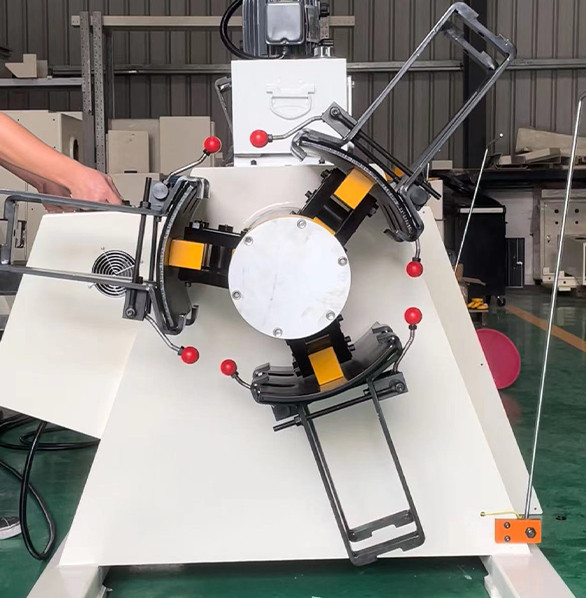
A coil car for a 5 t uncoiler costs 4,000 to 18,000 USD, and the spread has almost nothing to do with capacity.
All three common designs lift 5 t. They differ in how long the change takes, how much floor they occupy, and which failure each one prevents.
This is the comparison we walk through with buyers who have already chosen the decoiler machine and are now deciding how to load it.
Three Ways to Get a 5 t Coil Onto the Mandrel
The rail-mounted car runs on two floor rails set parallel to the mandrel axis. It carries a V-deck cradle, travels sideways, and lifts on a hydraulic ram.
The floor-running car does the same job without rails. It steers, which means it can serve two decoilers from one aisle, and it needs a flat floor rather than a trench.
The third option is not a car at all. A forklift places the coil on a fixed lift-and-turn table beside the mandrel, and the table raises it to height.
Each one solves the same problem and creates a different set of constraints. The choice usually comes down to how often the coil changes and how much room the aisle can spare.
Cycle Time Is the First Filter
Time a coil change from the moment the empty mandrel stops to the moment the new coil is expanded and turning.
On a rail car with a powered V-deck, that is 45 to 70 seconds with a practised operator. The travel is short and the lift is a single lever.
A floor-running car lands at 60 to 90 seconds, because it has to approach, align and settle. The extra 20 seconds is steering, not lifting.
A forklift and a lift table take 3 to 6 minutes. The forklift has to be fetched, the coil set down, the table raised, and the forklift moved clear before the mandrel can expand.
Multiply by the changes per shift. At 10 changes a shift, the rail car saves 45 minutes over the forklift, which is half a shift of production a week.
At two changes a shift, it saves 8 minutes, and no one will ever notice.
Time the change yourself before accepting a supplier's figure. Ask them to demonstrate with a full coil, not an empty one, because the lift is slower and the alignment takes longer under load.
Count the walk as well. If the operator has to leave the press, fetch a remote, and come back, that is another 40 seconds that never appears in a cycle-time table.
Aisle Width and Floor Prep Decide More Than Capacity
A rail car needs two rails set into the floor, 200 mm deep, with a tolerance of 2 mm over the travel length. Grouting them after the floor is poured is a two-day job with a concrete saw.
It also needs a clear travel corridor of about 2.2 m plus the coil diameter. A 1,250 mm coil on a 5 t mandrel leaves 1.6 m of car travel, which is why the rail option often fits where nothing else does.
A floor-running car needs 3.5 m of turning space and a floor with joints no higher than 3 mm. It will not cross an expansion joint without a bump, and a bump under a 5 t coil is a shock load on the mandrel.
The lift table needs the least floor of the three, about 1.8 by 1.4 m, but it needs a forklift route that reaches it. If the aisle is shared with a press line, that route is often the real constraint.
Measure the aisle before comparing prices. A car that does not fit is not a cheaper option, it is a returned order.
| Option | Time per change | Floor it needs | Where it costs you |
|---|---|---|---|
| Rail-mounted V-deck car | 45 to 70 seconds | 2 rails, 2.2 m corridor | 9,000 to 14,000 USD, plus a floor cut and grout that cannot move later |
| Floor-running car | 60 to 90 seconds | 3.5 m turning circle, flat joints | 12,000 to 18,000 USD, and it blocks the aisle while it turns |
| Forklift and lift table | 3 to 6 minutes | 1.8 by 1.4 m plus a forklift route | 4,000 to 7,000 USD, paid for in changeover time and in bore damage |
What Each Option Protects, and What It Cannot
Bore damage is the failure that costs the most and shows up the latest. A coil entered 15 mm low bends the mandrel shaft slightly, and every later coil then loads off centre.
A car removes the swing entirely. The coil sits in a cradle, the car raises it to the mandrel centreline, and the entry is a straight horizontal move at low speed.
A forklift cannot do that. The coil hangs on the forks with the load centre 600 mm out, and the operator is judging height through a mast that flexes as the load transfers.
What no car can fix is the bore itself. An oval bore, a burr from the slitter or a band of scale inside the coil will still score the mandrel, and a car only delivers it more accurately.
None of the three protects the strip edge either. Edge damage comes from the sling, the cradle width and the first wrap tension, all of which are set by the operator.

Matching the Car to Coil Changes per Shift
Above 8 changes a shift, a rail car pays for itself in a year on changeover time alone. The arithmetic is simple: 8 changes at 4 minutes saved is 32 minutes a shift.
Between 3 and 8 changes, a floor-running car or a rail car both work, and the deciding factor becomes whether the aisle can be given up during a change.
Below 3 changes, the forklift and table combination is the rational choice, provided the bore is inspected and the table is set to the right height.
There is a fourth case that the count does not capture: heavy coils. Above 5 t the forklift option becomes a two-person job with tag lines, and the labour cost enters the arithmetic.
Above 8 t, a car stops being about time. It becomes the method that keeps the mandrel straight, and the price comparison no longer applies.
How much floor does a rail coil car add to a 5 t decoiler?
About 2.2 m of travel corridor plus the coil diameter, so 3.8 m of clear floor for a 1,250 mm coil. The rails themselves sit flush.
At what coil change count does a 12,000 USD car pay back?
Above 8 changes a shift. At 8 changes and 4 minutes saved per change, a 12,000 USD car returns its cost inside 14 months on two shifts.
Can one coil car serve two uncoilers?
Yes, if it is floor-running. A rail car is tied to its rails, so two mandrels need either two cars or one car on a shared transfer rail.
Two Mandrels, One Car: When a Transfer Rail Wins
Plants that run two uncoilers side by side often want one car to serve both, and the answer depends on the travel, not on the capacity.
A rail car can be built on a transfer rail that crosses both mandrel axes. It costs 3,000 to 5,000 USD more than a single-axis car and removes the second car entirely.
The constraint is the crossing point. If the two mandrels are more than 4 m apart, the transfer rail becomes a structural item and the price advantage disappears.
Control interlocks also get harder. One car serving two mandrels needs position feedback at both ends, and a car that stops 200 mm short of the second axis is a car that will eventually be driven into it.
For most plants below 12 coil changes a shift, two lift tables and a forklift beat a transfer rail on both price and simplicity.
Where the Coil Car Stops Helping
A car solves the vertical alignment problem. It does nothing for a mandrel that is already worn, a brake that will not hold, or a decoiler that is out of square with the line.
It also adds a maintenance point. Hydraulic rams, hoses, batteries on floor-running units and rail debris all become items on a weekly check that did not exist before.
Cold shops are a specific problem. Hydraulic oil at 5 degrees Celsius takes longer to build pressure, and a car that lifts in 8 seconds in summer takes 14 in February.
Floor condition is the other limit. A 20-year-old slab with 8 mm steps between pours will destroy a floor-running car's wheels within a year, and no amount of capacity rating fixes that.
Finally, a car does not remove the need for a procedure. The bore check, the cradle width and the expansion pressure still decide whether the mandrel survives, and a car only removes one of the four failure modes.
The Order to Specify It In
Specify in this order and the choice usually makes itself:
- Heaviest coil and largest outside diameter, which set the car rating and the travel
- Coil changes per shift, which decides whether a car is justified at all
- Aisle width and floor condition, measured on site rather than taken from a layout drawing
- Deck type and cradle width against the bore range the plant actually buys
- Control interface, so the car and the mandrel cannot both move at once
The last item is worth a sentence. Interlocked control is what stops an operator from expanding the mandrel while the car is still under the coil, and it is the cheapest safety feature on the list.
A decoiler and a plain uncoiler are sized by the same bore and capacity arithmetic, and the loading method follows the same logic on both.
The coil line guide library works through the capacity, mandrel and brake decisions that come before the car is chosen.
Coil car ratings and deck sizes for each frame are listed in the decoiler data library, which is the page a plant layout engineer should open first.
Where to go next
Loading method is the last decision in a decoiler specification, not the first. Capacity, type and mandrel come before it and constrain it.
The specification pillar runs that chain in order, with the arithmetic behind each step.
Work through the decoiler specification