Which Feed Roll Coating Suits an NC Servo Feeder?
- Share
- publisher
- David Park - Senior Stamping Engineer, FANTY Machinery
- Issue Time
- Sep 14,2026
Summary
How to pick a feed roll coating from the strip you actually run: the four coating families compared, why grip and wear resistance pull against each other, and the six signs that the coating has already failed.
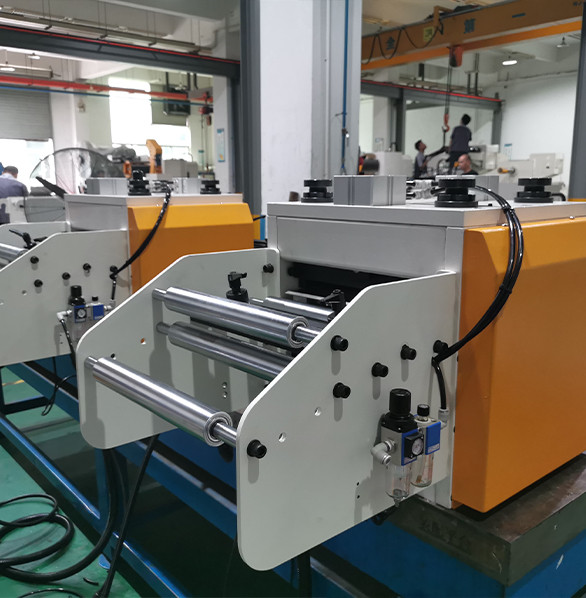
Pull a feed roll out of an NC servo feeder after two years of service and the story is written on its surface. A roll that has failed will show one of three things: a polished band where the coating has glazed and lost friction, a ring of embedded swarf pressed into the surface, or a diameter that has gone oval by 0.2 mm because the coating compressed permanently. All three produce the same complaint from the press line, which is short feed on some strokes and not others.
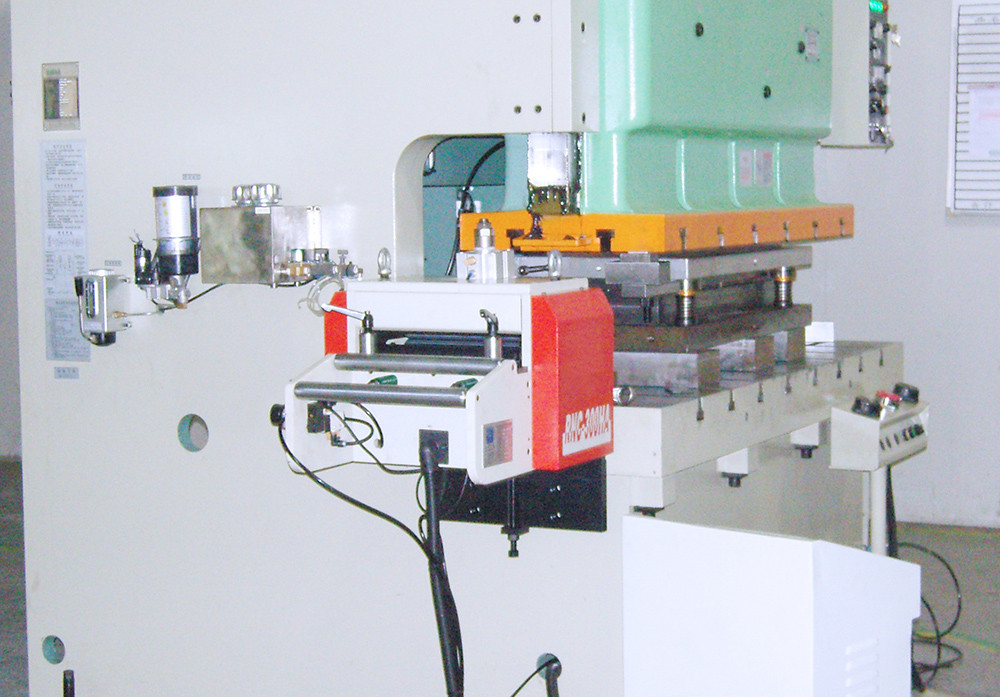
Feed roll coating is the single most consequential consumable on a servo feeder, and it is the one buyers specify least deliberately. Most lines ship with whatever the builder uses as standard, which is usually a reasonable compromise and rarely the best answer for the strip you actually run. Choosing the right coating comes down to three questions about your material: how hard is the surface, how much grip does the move require, and can the surface tolerate contact at all. A line that holds ±0.05 mm on a good day can be pushed to 0.25 mm scatter by the wrong coating, and no amount of controller tuning will recover it. Our coil feeding equipment range shows how the feeder section is configured on the machines we build.
Coating Choice Is a Friction Decision
Strip moves because friction between the roll and the strip converts roll rotation into linear motion. The available force is the coefficient of friction multiplied by the clamping force. Everything else in the feeder, the servo, the ball screw, the encoder, only determines how precisely the roll is commanded to rotate. If the interface slips, the commanded position and the strip position are two different numbers.
That gives the selection problem a clean shape. You need enough friction to transmit the move without slip at the acceleration your cycle demands. You need enough hardness to resist the abrasive action of the strip edge and the embedded debris that travels with it. You need enough compliance to avoid marking the strip surface. Those three requirements pull against each other, and the coating you pick is a position on that triangle.
There is a fourth factor that gets ignored until it bites: thermal behaviour. Polyurethane softens measurably above 60 °C, and a feeder running 200 strokes a minute in an unairconditioned plant will get there. A coating chosen in a cool machine shop in February can behave differently in the same plant in August.
The Four Coatings You Will Be Offered
Almost every feed roll on the market falls into one of four families. Knowing what each one is actually good at shortens the conversation with any supplier.
| Coating | Grip | Wear resistance | Strip marking | Best for |
|---|---|---|---|---|
| Polyurethane (PU) | High on clean dry strip | Moderate, degrades with heat | Low on bare steel | Mild steel, aluminium, general job shop work |
| Nitrile rubber (NBR) | High, tolerant of light oil film | Lower than PU | Low | Oily strip, pre-lubricated coil, stainless |
| Tungsten carbide (TC) coated steel | High, mechanical rather than chemical grip | Very high | Moderate to high | High-strength steel, heavy gauge, high duty cycles |
| Plasma or ceramic-coated steel | Moderate | Very high | Moderate | Hard materials where marking is tolerable and life matters most |
Two notes on this table. First, "grip" and "wear resistance" are not independent. A coating that grips by conforming to the strip surface is by definition softer, so it wears faster. A coating that resists wear by being hard grips through a shallower contact patch and needs more clamping force to transmit the same move. Second, the marking column is the one that decides real jobs. A tungsten carbide roll will run four times longer than polyurethane on 2.5 mm high-strength steel, and it will also leave a visible contact pattern that fails an automotive cosmetic standard. There is no coating that wins on all four columns.
Matching Coating to Strip Surface
Start with what is on the strip, not what is in the catalogue.
Bare cold-rolled steel is the easy case. It has a fine, slightly porous surface and a light oil film, and polyurethane handles it well with a long life because the surface is not abrasive. Move to hot-rolled pickled material and the surface carries a rougher profile plus occasional scale fragments, which act as a lapping compound against a soft coating. Here the useful life of polyurethane drops by roughly a third, and nitrile, despite being softer, sometimes lasts longer because it tolerates the oil film better and does not glaze.
Pre-painted and coated coil is the case where coating choice stops being an optimisation and becomes a constraint. The painted surface is a finished product surface, and any contact mark is a defect. This is where polyurethane earns its place, at reduced clamping pressure and with a larger contact area, accepting lower grip in exchange for a surface that survives. The trade is real: on pre-painted coil, feed accuracy typically relaxes by 0.05 to 0.10 mm compared with the same line running bare steel, because you cannot clamp as hard.
Stainless brings a different problem. It work-hardens at the surface, so repeated contact under high clamping force raises local hardness and the strip can polish the roll rather than the roll marking the strip. Nitrile with moderate pressure is the usual answer, and it pays to keep clamping force at the lower end of the range even when grip allows more.
The Trade You Cannot Avoid
Sooner or later every shop asks whether it can have both long roll life and no marking. The honest answer is that you can have both on a narrow range of materials and not on the rest.
Consider what happens as you increase clamping force to improve grip. Contact stress rises, so the coating deforms more and the real contact area grows, which improves grip further. That is the useful part of the curve. Past a certain point, the deformation becomes permanent, the coating takes a compression set, and the roll diameter changes. Once the diameter changes, the controller's assumption about strip length per roll revolution is wrong, and the feed length error is systematic rather than random. That is the point where operators start adding a correction factor to the recipe, and from then on the machine is being tuned around a worn part.
The practical rule is to find the minimum clamping force that holds your accuracy at your production speed, then verify it after the machine has been running for two hours. A setting found on a cold machine at jog speed is not a production setting.
Signs the Coating Has Failed
Coating failure is gradual, which is why it gets attributed to the controller instead of the rolls. These are the signals that point at the coating.
- Feed scatter that widens with stroke rate but is stable at jog speed, which means grip is marginal
- A polished, shiny contact band on the roll face, which is glazing and can sometimes be dressed rather than replaced
- Visible swarf pressed into the coating, which is both a grip loss and a marking risk for every part that follows
- A diameter difference of more than 0.10 mm between the two ends of the same roll
- A feed length correction factor that keeps growing, which means the effective roll diameter is falling
Measure roll diameter at three points along the face and at both ends. It takes two minutes with a micrometer and it distinguishes a coating problem from a control problem immediately. If the diameter has changed by more than 0.10 mm, replace the roll and reset the recipe before you investigate anything electronic.
Changing Rolls Without Rebuilding the Recipe
Roll replacement is routine, and it should not require re-qualifying the job from scratch. Two habits make it painless.
First, record the roll diameter in the controller when new rolls are fitted, not the nominal catalogue value. The difference between a new roll and a worn one is often 0.15 mm on a 120 mm roll, which is 0.12 percent of circumference and directly translates into feed length. If the controller supports roll diameter as a parameter, keep it current. Second, keep the old rolls and their measured diameters in the maintenance file. When the same job comes back six months later, having the historical diameter lets you separate a machine change from a material change.
There is also a sequencing point worth stating. Replace feed rolls as a matched set, both the top and bottom roll, and on a two-roll-per-axis feeder replace all four if the machine uses them. Mixing a new roll with a worn one creates a diameter mismatch that the strip sees as a step, which shows up as a slight twist or a lateral drift on long feeds.
Specify It at Order Stage
Coating is easiest to get right when it is decided with the machine, not after it. If you know your material mix at quotation stage, tell the builder. A roll set is cheap compared with a rebuild, and the coating specification is a one-line item on the order.
The information to supply is short: strip material and grade, thickness range, width range, surface condition, whether the strip is lubricated and with what, and your maximum stroke rate. With those six facts a builder can recommend a coating and a clamping pressure range rather than shipping a default. On the lines we ship, the feeder section is specified against the customer's material list for exactly this reason, and on 200 SPM production the difference between a default roll and a matched roll shows up in the first week of production rather than the first year.
Questions about feed roll selection
Can glazed polyurethane rolls be recovered instead of replaced?
Sometimes. Light glazing can be dressed with fine abrasive to restore the surface profile, but only if the diameter loss stays inside the controller's compensation range. Once the roll has taken a compression set, dressing removes more diameter and the problem returns faster.
Do coated rolls need a different clamping force than bare steel rolls?
Yes. Coated rolls conform to the strip and need less clamping force to achieve the same grip. Carrying over a clamping setting from steel rolls usually over-compresses the coating and shortens its life without improving accuracy.
How often should feed rolls be inspected?
At every scheduled maintenance interval, and immediately whenever feed scatter widens. Measure diameter at both ends and the centre, and photograph the contact band. A dated photo series makes it obvious when wear accelerated.
Is tungsten carbide worth the extra cost on a job shop machine?
Only if a meaningful share of your work is heavy gauge or high-strength steel. On a shop running mostly 0.8 to 1.5 mm mild steel, polyurethane with a sensible replacement schedule is cheaper over five years and marks less.
Not sure which coating fits your material?
Send us your material list, thickness and width range, surface condition and target stroke rate. We will recommend a roll coating and clamping pressure band, and tell you the feed accuracy you should expect from it.
Ask for a roll specificationFanty · NC Straightener Feeder
Coated, High-Strength or Thin Gauge? Each Needs Different Rolls
Roll finish and pressure setting decide whether you mark the surface or hold flatness. Send your material spec and we size the straightener feeder properly the first time.
Get a Free QuoteFANTY Machinery · 13 years on stamping automation · 2,000+ coil lines installed · engineers reply within 24 hours