Which Feed Roll Surface Suits Thin Stainless Strip?
- Share
- publisher
- David Park - Senior Stamping Engineer, FANTY Machinery
- Issue Time
- Oct 29,2026
Summary
A plant solved slip on oily cold-rolled strip by knurling its feed rolls, then moved 0.4 mm stainless onto the same NC servo feeder and lost 4 percent of output to marks. This compares smooth steel, polyurethane, knurled and carbide-coated surfaces on grip, marking threshold, wear and price, and converts controller bar readings into the kilonewtons the strip actually sees. It closes with a four-hour test that settles the choice on a strip sample.
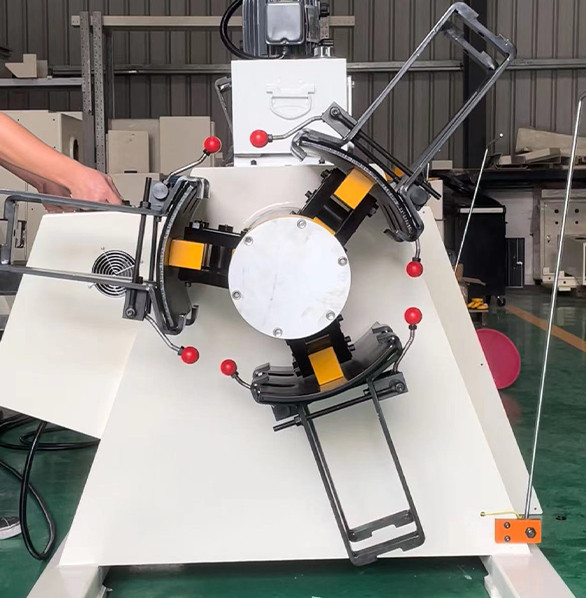
A kitchen equipment plant moved 0.4 mm SUS304 onto a 300 mm wide NC servo feeder and lost 4 percent of the first month's output to two complaints that arrived together: slip on some coils and roll marks on others.
Both complaints traced back to the same decision, which had been made years earlier on a different material. The feed rolls were knurled steel, chosen for oily cold-rolled strip that slipped at 150 SPM.
On stainless, knurling grips beautifully and prints permanently. The plant had solved slip and created a cosmetic defect, then reduced pressure until the marks went away and the slip came back.
Four surfaces are available for this job. They differ in grip, marking, wear and price, and only one of them is right for a given strip finish.
Grip and Marking Pull in Opposite Directions
Every feed roll has one job: move the strip a precise distance without letting it slide. The force available depends on the coefficient of friction and the clamp load.
The mark left behind depends on the same two numbers, divided by the contact area. Raise either one to stop slip and you raise the surface pressure that prints the strip.
That is the whole trade. A surface is good when it gives high friction at low contact pressure, and most surfaces do not.
Stainless makes it harder. SUS304 work-hardens, carries a 2B rolled finish that shows every contact line, and often arrives with a light oil film that drops friction by half compared with dry strip.
What 0.4 mm SUS304 Actually Needs
The strip is 0.4 mm by 300 mm, which is 0.95 kg per metre. At 300 mm of feed and 120 SPM, the feeder accelerates the strip mass and overcomes drag from the die and the coil.
Strip inertia is small: 0.28 kg moving 300 mm in 100 ms needs about 17 N. Die drag and back tension are the real load, typically 400 to 700 N on a progressive tool with a stripper.
With 3 kN of clamp force top and bottom, a friction coefficient of 0.09 moves 540 N. Bare steel on oily stainless gives roughly 0.12 to 0.15, so the margin is thin rather than comfortable.
0.05 mm of slip per stroke is the failure threshold. On a 300 mm feed that is 0.017 percent, which is well inside the noise of most shop measurements and outside the tolerance of most dies.
| Roll surface | Grip on oily SUS304 | Marking risk on 2B | Wear life | Where it costs you |
|---|---|---|---|---|
| Smooth hardened steel, HRC 58 | 0.12 to 0.15 | Low below 1.5 MPa | 3 to 5 years | Slip appears first at high SPM |
| Polyurethane, 80 Shore A | 0.30 to 0.38 | Very low | 12 to 24 months | Creep under load; edge cuts the roll |
| Knurled steel | 0.45 to 0.55 | Severe, permanent | 2 to 4 years | Cosmetic reject on any visible part |
| Tungsten carbide coated | 0.28 to 0.34 | Low, uniform haze | 5 to 8 years | $2,400 per pair, 6-week lead time |

Pressure, Contact Area and the Marking Threshold
Clamp load divided by contact area gives the surface pressure, and for 2B stainless the visible marking threshold sits near 1.5 MPa.
A 300 mm wide roll with a 40 mm contact patch is 12,000 mm². At 3 kN of clamp load the pressure is 0.25 MPa, which is comfortably below the threshold.
Push the clamp to 12 kN to stop slip and the pressure reaches 1.0 MPa, still below the mark threshold but now within range of the oil film breaking down and the strip picking up roll material.
Narrow strip is the trap. The same 3 kN over a 100 mm wide strip raises the pressure to 0.75 MPa, and over a 40 mm strip to 1.9 MPa, which marks. Clamp force has to follow strip width.
Most NC servo feeder controllers allow a pressure setting per recipe. Plants that run one setting across all widths are the ones with marking complaints on narrow work.
Turning Bar Into Kilonewtons on the Setting Sheet
Most controllers show clamp pressure in bar, and the setting sheet records bar. The strip only cares about kilonewtons, so the conversion has to happen somewhere.
Clamp force equals the sum of the cylinder areas times the pressure. A 63 mm bore cylinder has 3,117 mm² of area, so at 5 bar it produces 1.56 kN, and two of them produce 3.1 kN.
Divide that by the contact area to get the pressure the strip sees. At 300 mm wide and a 40 mm patch, 3.1 kN gives 0.26 MPa, which is the figure in the table above.
Now narrow the strip. At 120 mm the same 5 bar gives 0.65 MPa, and at 60 mm it gives 1.3 MPa, which is at the edge of marking 2B stainless.
The correct setting is the one that holds 0.3 MPa on the strip, so the bar value has to drop roughly in proportion to width. At 120 mm that is 2.3 bar, and at 60 mm about 1.2 bar.
Below 60 mm the contact patch shortens as well, and the arithmetic stops working. That is when a narrower roll or a different surface becomes the answer rather than another pressure tweak.
Where None of Them Works
Four cases sit outside the table above, and buying a better roll will not fix any of them.
Mirror finishes. BA and 8K surfaces show a haze from any roll contact, including polyurethane. These runs need film or a non-contact feed, and both cost speed.
Heavy oil. Strip arriving wet with drawing oil drops every friction coefficient by 40 percent. Wipers before the rolls matter more than the roll surface.
Very short feeds. Below 20 mm the strip spends more time accelerating than moving, and slip is governed by control tuning rather than by friction.
Edge-cracked slit coil. A burr on the slit edge cuts polyurethane in a week and scores carbide. Fix the slit quality before blaming the roll.
A felt or rubber wiper 100 mm ahead of the rolls removes most of the oil film and costs $180. It is the cheapest change in this article and the one most often skipped.
Wipers also keep the roll surface clean, which matters more than it sounds: a single particle of slitting burr embedded in a polyurethane roll prints on every stroke until the roll is dressed.
Proving a Surface in One Afternoon
Roll surface decisions are usually made from a catalogue. They can be made from a strip sample in about four hours, which is cheaper than a wrong pair of rolls.
- Run 200 strokes at production speed with the candidate surface and mark the strip every 50 strokes. Measure feed length on a shadowgraph, not a caliper.
- Check the strip under 60-degree gloss at the exit, before the die. Shop lighting hides a haze that a customer's gloss meter will find.
- Repeat with the strip wiped dry to separate friction from oil. If dry strip passes and wet strip fails, the answer is a wiper, not a roll.
- Log clamp pressure per width so the recipe carries the number. A surface that works at 300 mm will mark at 80 mm on the same setting.
Record the surface in the machine history. Roll diameter, surface type, hours run and the pressure used at each width belong in the same log as the feed settings, because a re-dressed roll behaves like a new one.
Regrinding removes 0.2 to 0.3 mm from the diameter each time, and a carbide coating cannot be reground at all without stripping it. Plan for a replacement pair rather than a regrind on coated rolls.
The kitchen equipment plant fitted tungsten carbide rolls at 3.2 kN for the 300 mm strip and dropped to 1.4 kN for 120 mm work. Marks fell to 0.3 percent and slip to zero over six months.
The pair cost $2,400 against $9,000 a month in combined rework and scrapped strip. Wear life is the part that takes years to prove, and the coating is the only surface in the table rated beyond five.
How roll grip fits into the total tolerance between coil and die is covered in the coil line guide library.
Roll options, clamp pressure ranges and width capacity for each model are listed in the NC servo feeder range, which is where the pressure figures above come from.
What clamp pressure should a 0.4 mm stainless strip run at?
0.2 to 0.3 MPa of surface pressure, which is 3 kN over a 300 mm wide roll. Keep it under 1.5 MPa, the point where 2B finish starts to show contact lines.
How much does a tungsten carbide feed roll pair cost?
$2,200 to $2,600 for a 300 mm wide NC servo feeder, with a five to six week lead time. Polyurethane is $600 to $900 and lasts 12 to 24 months.
Does polyurethane really stop slip at 150 SPM?
Not reliably. Its friction is high but it creeps under sustained load, and creep shows up as 0.03 to 0.08 mm of error per stroke above 120 SPM.
Why do marks appear on narrow strip but not on wide strip?
Same clamp force over a smaller area. A 3 kN load is 0.25 MPa at 300 mm wide and 1.9 MPa at 40 mm wide, which is above the marking threshold.
Where to go next
This belongs to the accuracy cluster, where grip, roll condition and control tuning are treated as one budget rather than three fixes.
If your marks appear only on narrow work, the pillar page will show you which term in the budget is actually moving.
Read the feed accuracy error budget