Which Feeder Drive Suits 300 SPM: Servo or Cam?
- Share
- publisher
- David Park - Senior Stamping Engineer, FANTY Machinery
- Issue Time
- Oct 18,2026
Summary
A cam feeder and a servo feeder both feed strip at 300 strokes a minute, and they get there by different routes. One is mechanical and repeatable, the other is programmable and forgiving.
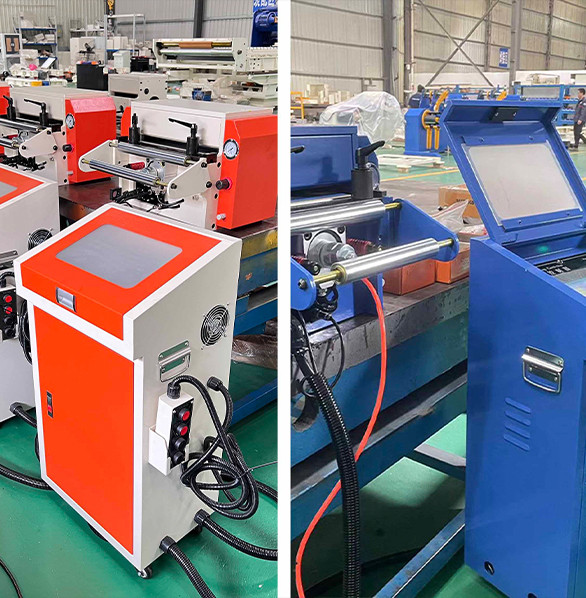
Two machines, both rated at 300 SPM, both able to hold 0.05 mm. One costs a third of the other, and the cheaper one is not the compromise people assume.
(A servo feeder drives the feed rolls from a motor under program control. A cam feeder takes its motion from the press crankshaft through a linkage.)
Which one suits a given plant depends on a single question that has nothing to do with speed: how often does the feed length change?
Two Machines That Both Feed 300 Times a Minute
The cam feeder inherits its timing from the press. Every stroke delivers the same feed at the same point in the cycle, with no control loop involved.
The servo feeder generates the motion itself and synchronises to the press through a resolver or an encoder signal.
Mechanically, the cam version is simpler and has fewer failure modes. Electronically, the servo version can change what it does between one stroke and the next.
Both are legitimate answers. The mistake is buying one for a job the other was designed for.
Feed force is where the two diverge mechanically. A cam linkage multiplies press torque, while a servo motor supplies its own.
That difference shows on wide thick strip, where a servo may need a larger motor than the frame size would suggest.
Comparison on the Criteria That Decide It
| Criterion | Cam feeder | Servo feeder | Where It Costs You |
|---|---|---|---|
| Feed length change | Change gears or a cam, 30 to 90 minutes | Recipe recall, under 2 minutes | A cam feeder loses a shift on every product change |
| Repeatability at 300 SPM | Excellent, mechanically fixed | Excellent, closed loop | Neither has an advantage here |
| Maximum feed length | Limited by cam stroke | Limited by roll diameter | Long feeds point to servo |
| Capital cost | About one third of servo | Full programmable cost | You pay for flexibility whether you use it or not |
| Maintenance | Linkage wear, lubrication | Encoder, drive, brake | Cam needs a fitter, servo needs a technician |
| Pilot release timing | Fixed by cam profile | Adjustable per job | Fixed timing hurts on dies with tight pilots |
The first and last rows are where most of these decisions actually land. Feed length change frequency and pilot timing tolerance.
| Duty | Cam feeder | Servo feeder | Where It Costs You |
|---|---|---|---|
| One die, two years | Best fit | Overpaid | Programmability that never gets used |
| Six dies a month | Changeover dominant | Best fit | Thirty to ninety minutes lost per change on cam |
| Thick wide strip | Torque from the press | Needs a bigger motor | Capital climbs on the servo option |
| Thin narrow strip | Linkage inertia too high | Best fit | A cam cannot accelerate small masses accurately |
Strip width matters as much as thickness here. Above about 600 mm the roll assembly and its inertia start to dominate acceleration demand.
At 300 SPM the feed has to complete in roughly 90 milliseconds, so any control loop lag eats directly into the window available.
Repeatability is usually quoted as one figure, which hides the question that matters: does it hold across the speed range?
Ask for the figure at 100, 200 and 300 SPM separately. A machine that holds 0.05 mm at 150 SPM may not hold it at 300.
The same test applies to a cam feeder. Linkage wear shows up as length variation that grows with speed rather than as a flat error.
Neither machine should be judged on a single-speed demonstration, and the buyers who have done this before never allow one.
Bring your own strip to any demonstration. A machine that performs on clean 1 mm mild steel says nothing about your 0.7 mm coated coil.
Ask what the feed length tolerance is at the shortest feed in your schedule, which is where acceleration limits show first.
Why 300 SPM Is the Number Where They Cross
Below about 200 SPM the servo feeder's acceleration demands are modest and the cam's mechanical simplicity rarely pays for itself in a mixed-die plant.
Between 200 and 250 SPM both work well, and the decision is usually made on flexibility rather than on capability.
Above 300 SPM the cam feeder starts to win on repeatability at the very top of the range, because there is no control loop to lag.
That advantage is narrow and only matters on a dedicated die running the same feed length for months at a time.
For anything resembling a job shop, 300 SPM is firmly servo territory, and the reason is changeover rather than speed.
Where the Cam Still Wins
A dedicated line running one product for years should not pay for programmability it will never use.
Cam feeders also tolerate a dirtier environment. There is no encoder to lose signal and no drive to fault out on a hot afternoon.
They are simpler to repair in a plant without an electronics technician, and the failure modes are visible rather than coded.
And at the very top of the speed range, mechanical timing has no following error to eliminate. On a single-die contract that can be worth real money.
A badly tuned servo feeder shows following error at the top of the speed range and nowhere else, which is easy to miss during a low-speed trial.
A cam feeder with worn linkage shows feed length variation that changes with press speed, which is easy to misdiagnose as a material problem.
Where Servo Is Bought for the Wrong Reason
Plants sometimes buy servo because it looks modern, then run one die on it for a year. That is an expensive way to feed strip.
Others buy it for speed they never achieve, because the press or the die limits the line long before 300 SPM.
And some buy it expecting the control to fix a mechanical problem, such as a badly aligned pass line or worn guides. Servo compensation hides those faults rather than repairing them.
A servo feeder earns its price on changeover count. Count how many feed length changes happen in a month before deciding.
Pilot release timing is the quiet advantage of the servo. On a die with 0.02 mm pilot clearance, five degrees of timing is the difference between clean and marked.
A cam profile can be changed, but the change is a mechanical rebuild rather than a parameter, and it is priced accordingly.
Choosing in Five Questions
Ask how many different feed lengths the plant ran last year. That single number predicts the answer better than any technical comparison.
Plants running under three a year rarely recover the servo premium. Plants running twenty will not tolerate a cam changeover.
The press feeder range lists feed length range and motor rating per model, which is where this comparison should start.
- How many feed length changes per month? Above four, servo pays for itself in changeover time.
- Does the die need adjustable pilot release timing? If yes, only servo can deliver it per job.
- What is the longest feed length? A cam stroke is fixed, and exceeding it means a different machine.
- Is there an electronics technician on shift? If not, a cam feeder's failure modes are easier to live with.
- Will the line run one product for more than two years? If yes, mechanical timing is the cheaper answer.
Answer all five and the decision is usually obvious. The plants that get this wrong tend to answer the first question with a guess.
Where to go next
Drive choice is one of three decisions that set what a feeder can do, alongside roll diameter and control architecture. The error budget guide shows how those three interact across a full line.
The Coil Line Guide LibraryAt what speed does a cam feeder stop being viable?
Above roughly 400 SPM on short feeds, where the linkage acceleration becomes the limit. Below 300 SPM it remains competitive.
How long does a feed length change take on a cam feeder at 300 SPM?
Thirty to ninety minutes including first-piece approval, against under two minutes on a servo with a stored recipe.
Can a servo feeder hold 0.05 mm at 300 SPM?
Yes, on a correctly sized machine with a rigid pass line. Maintaining it requires the encoder coupling and roll grip to stay in condition.
Is a cam feeder cheaper to maintain over ten years?
Usually, by 30 to 40 percent on parts, but it needs a fitter rather than a technician, which matters more than the parts cost in small plants.
Do I need pilot release timing adjustment for every die?
Not every die, but the ones with tight pilot clearance usually need it. A fixed cam profile cannot provide it.
Can a servo feeder be fitted to an existing cam-fed press?
Yes, as a retrofit with its own resolver. Budget two to three days of installation and expect to re-qualify the die afterwards.