Which NC Straightener Feeder Upgrades Are Worth the Money?
- Share
- publisher
- David Park - Senior Stamping Engineer, FANTY Machinery
- Issue Time
- Sep 9,2026
Summary
A practical buyer's view of NC Straightener Feeder options: which upgrades protect accuracy and uptime, which ones rarely pay back, and how to compare option pricing.
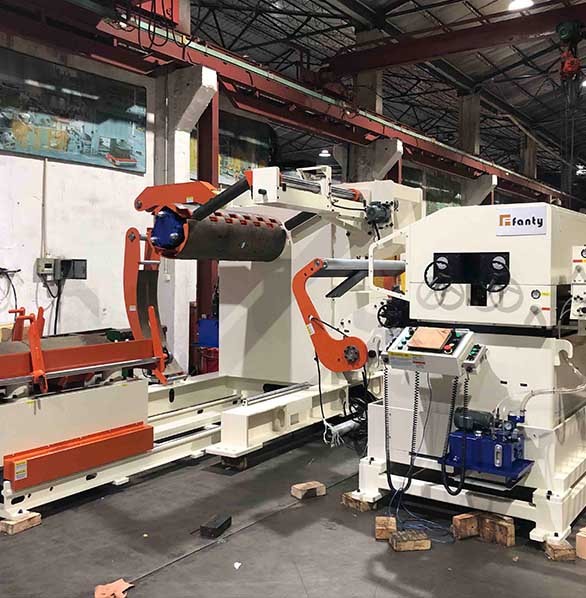
Every NC Straightener Feeder quote arrives with an option list, and the difference between a sensible order and an over-spend is usually decided in the first conversation. Some options protect the two numbers that matter on a press line — feeding accuracy and uptime — while others simply raise the invoice. This guide walks through the NC Straightener Feeder upgrades that earn their cost in a stamping plant, the ones to leave off, and the questions to ask before signing. If you are still comparing machine types, start with the 3-in-1 decoiler straightener feeder lineup on our product index and then read on for the option-level detail.
Put your budget where the accuracy lives
The core job of an NC Straightener Feeder is to place strip inside a die at the same position, every stroke, at speed. Options that strengthen that core job deserve your money first. Start with the encoder and servo package: a higher-resolution encoder on the feed rolls and a servo motor sized with headroom cost a few percent of the machine price, and they are the components that let a line hold ±0.05 mm feeding accuracy at 200 SPM. If a supplier offers a smaller motor to reduce price, ask exactly what feed rate and material thickness the smaller drive is rated for — the answer will tell you how much margin you are giving up.
Roll quality belongs in the same category. Hardened, ground feed rolls with a proven surface finish, plus a straightener entry roll set matched to your strip range, will outperform a cheaper roll package the first time you run high-tensile material. The same logic applies to the lubrication system on the straightener section: an automatic metering option removes the most common cause of roll wear and skipped maintenance, which makes it a payback item, not a luxury.
One question most buyers forget: how is the accuracy figure verified before the machine ships? A supplier who test-runs the NC Straightener Feeder at your feed length and material thickness, then hands over a measured test report instead of a calculated specification, is giving you the strongest guarantee in the industry. That factory test costs nothing as a line item, yet it tells you more about the machine than any glossy option on the list.
Automation and connectivity that pay for themselves
Most plants buy their first NC servo feeder to remove hand feeding, then discover that the real savings sit in the data the feeder can share. A die-protection interface that pauses the line when a feed-length error or misfeed is detected can prevent one die crash and pay for the whole option package. Remote access and PLC communication — Modbus, Profinet, or simple I/O to your press control — let a setup technician or the machine builder diagnose a fault without a site visit, which matters when your stamping line sits in a different shift or a different country.
Ask about feed-count and stroke-count reporting. On a progressive die line, knowing exactly how many parts a tool has produced, and when the NC servo feeder logged its last fault, turns maintenance from guesswork into a schedule. FANTY builds these connectivity options into many of the 200+ coil lines we have installed across 60+ countries, and we routinely see plants justify the upgrade on downtime reduction alone within the first year.
Reading the option list like a buyer
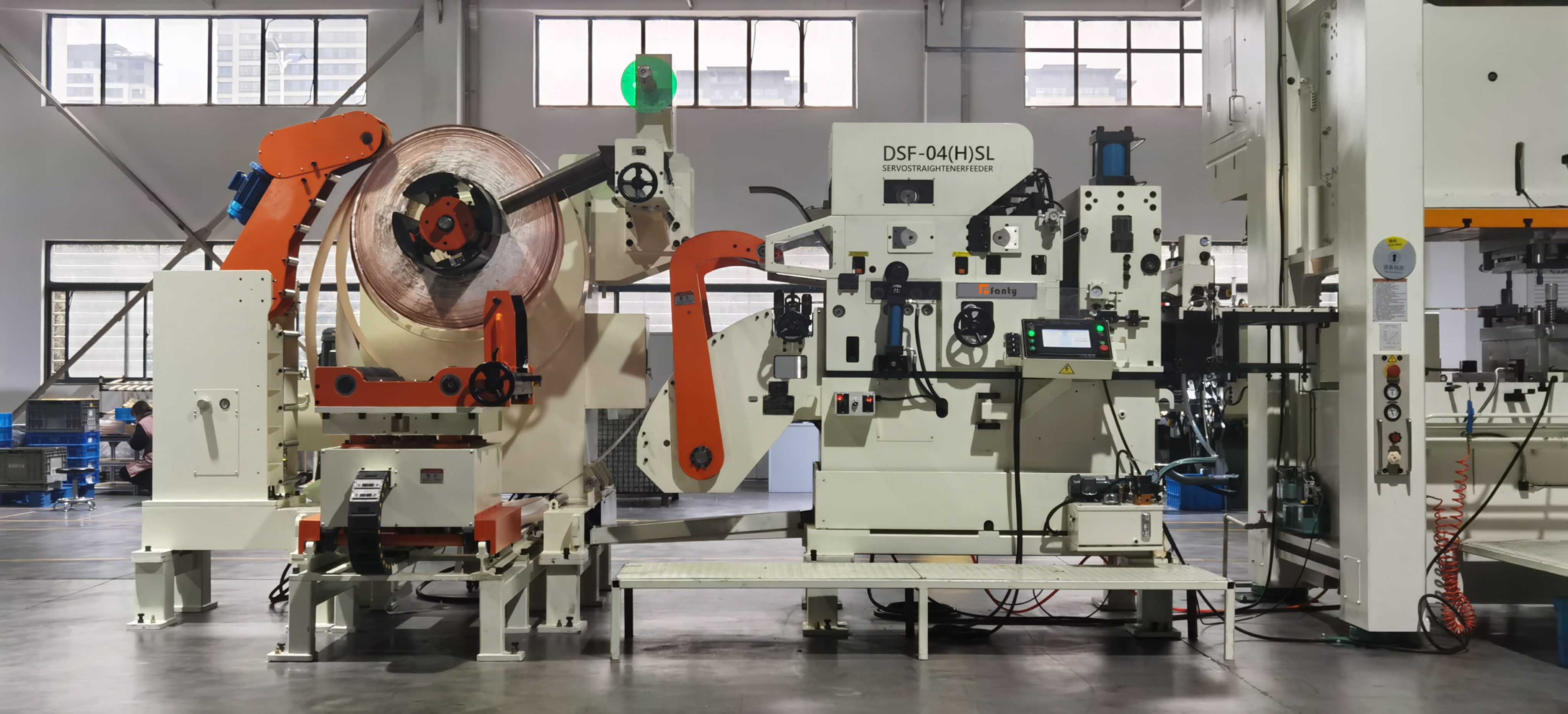
Not every option belongs on every machine. The table below groups the options FANTY quotes most often, what each one actually does on the floor, and the condition under which it earns its keep.
| Upgrade option | What it actually does | Worth it when |
|---|---|---|
| Higher-resolution encoder | Tighter position feedback on feed rolls | Feed lengths under 100 mm at high SPM, thin strip |
| Oversized servo motor | Headroom for accel/decel and heavy strip | Thick or high-tensile strip near the machine limit |
| Die-protection interface | Stops the line on misfeed before the die crashes | Any tool worth more than one night of downtime |
| Remote access / PLC comms | Diagnostics and recipe changes without a visit | Multi-shift plants, multiple lines, remote sites |
| Automatic roll lubrication | Meters lubricant to straightener rolls on a timer | High-speed lines where manual greasing gets skipped |
| Larger HMI with color graphics | Nicer screens, same core control | Rarely — only if operators run many recipes |
Where plants overpay
The upgrades that inflate budgets are usually the ones tied to appearance or to capacity the line will never use. A showroom-grade paint finish, a giant touchscreen, and a control cabinet sized for a machine twice this size all look impressive in the brochure and add nothing to part quality. Before you approve them, ask the supplier to quote the machine two ways: base specification and full specification, with every option priced separately. Transparent line items make it easy to cut what does not matter and keep what does.
Beware of capacity creep, too. If your current jobs top out at 1.6 mm strip and 60 mm feed length, paying for a feeder rated for 4.5 mm strip buys inertia you will carry for the next fifteen years in the form of a bigger motor, a heavier frame, and higher energy use. A 3-in-1 decoiler straightener feeder sized to the top 10% of your real job mix, with a documented path to a larger machine later, is usually the smarter purchase. FANTY's 80+ R&D engineers help buyers map their current and planned strip range before we quote, precisely so you do not pay for unused capability.
Five quick checks before you sign
Run through this list with the supplier while the quote is still open. Each check either confirms the option earns its price or exposes a line item that should come off.
- Is accuracy quoted at your feed length and SPM, not just at the machine maximum? The first is what you will actually run.
- Which options are included in the CE declaration and which are third-party add-ons? Keep the safety chain clean.
- Does the die-protection interface talk to your existing press control, or does it need a gateway you were not quoted?
- What spares does each option add to your shelf? A second encoder and a set of feed roll seals cover most failures.
- Ask for the option list in writing with prices per item, then delete the items that do not change a single part you make.
- Check lead time for each option separately. A six-week delay on a custom paint color is a poor reason to hold up a line that could be running next month.
NC Straightener Feeder upgrade FAQ
Are accuracy-related options always worth the extra cost?
If you run progressive dies that require consistent pitch at high speed, yes — encoder resolution, servo headroom and roll quality protect scrap rates and die life directly. If your jobs are short-run with wide tolerances, a standard package is often enough. Ask the supplier to quote accuracy at your real feed length before deciding.
Can I add connectivity to an NC Straightener Feeder later?
Most modern controls accept a communication module after installation, but retrofitting costs more than ordering it upfront and may require a control software update. If multi-line reporting or remote support is on your roadmap at all, spec the interface at purchase.
Do bigger machines automatically include better options?
No. Frame size and option content are separate decisions. A heavy machine can still ship with a basic control, and a light-duty line can carry full connectivity. Judge the option list on your strip range and tooling, not on the frame rating.
How do I compare upgrade prices between suppliers?
Ask each supplier for a base quote and an itemized option quote. Compare the delta, not the total. A supplier who refuses to break out option prices usually has the least transparent margin.
What is the single upgrade that protects my die investment best?
A die-protection interface that stops the line on misfeed, combined with feed-length monitoring on the NC servo feeder. It converts a rare but expensive crash into a stoppage you can clear in minutes. That is the option FANTY recommends first on every line we commission.
Not sure which options your line really needs?
Send us your strip range, feed lengths, press speed and die types. Our engineers will mark up an option list for an NC Straightener Feeder that earns its keep — and tell you plainly what to leave off.
Request a Specification Review