Which Payment Terms Suit a Straightener Feeder Order?
- Share
- publisher
- David Park - Senior Stamping Engineer, FANTY Machinery
- Issue Time
- Oct 7,2026
Summary
A payment schedule is a risk allocation, not a formality. This guide covers how to tie deposit, pre-shipment, shipment and acceptance milestones on an NC straightener feeder order to events you can actually inspect.
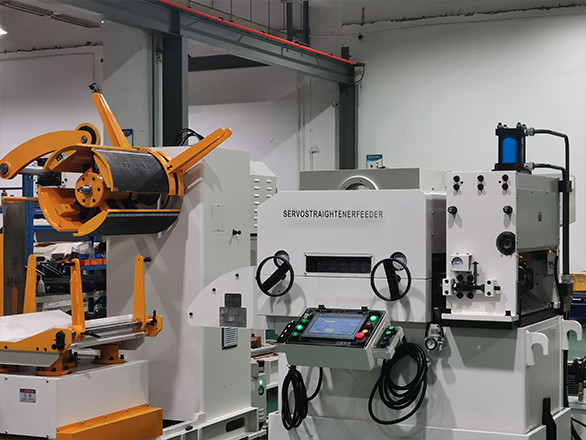
A 30% deposit and 70% before shipment reads like a standard clause. It is really a decision about who carries the risk when the shipment slips.
Most buyers never revisit it. The price dominates the negotiation and the payment schedule sits on page two of the offer.
This guide works through how to tie payment milestones on an NC straightener feeder order to events you can actually inspect.
It covers what each milestone buys, the cost hidden inside a low deposit, and the three situations where retention money stops protecting anybody.
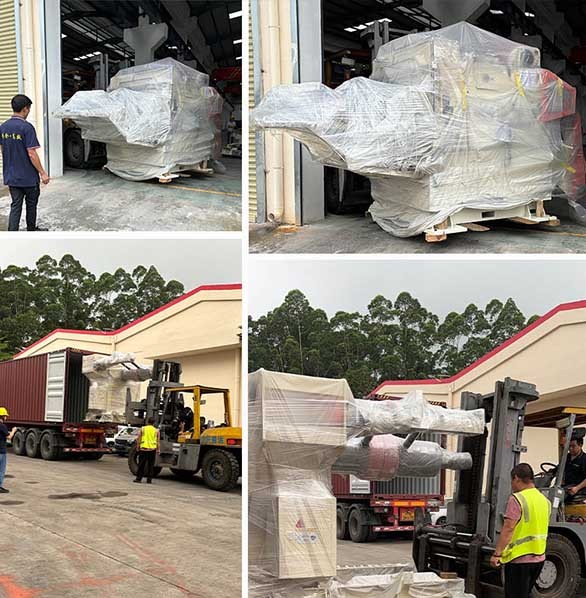
Two buyers can agree the same machine price and end up with completely different exposure, purely because of where the money changes hands.
That is why the schedule deserves the same attention as the specification.
Tie Every Milestone to Something You Can Inspect
A payment schedule is only as strong as the inspection behind it. A milestone you cannot verify is a milestone you have already paid for.
Five events are worth attaching money to on a coil line order.
- Order confirmation. Design freeze, layout drawing issued and signed, main component list locked. Pay 20-30% here and nothing more.
- Pre-shipment run. A witnessed test at the maker's plant, producing parts to your drawing on your material. Pay 40-50%.
- Shipment. A bill of lading issued in your name, not a forwarder's receipt. Pay 15-20%.
- Acceptance on your floor. Performance proved at your line speed, on your strip, with your die mounted.
- Retention release. 5-10% held for 30-90 days of real production, then released.
The order of these events matters more than the percentages. Paying 50% at order confirmation buys you nothing you can check.
Paying the same 50% at a witnessed run buys a machine you have seen work.
What Each Milestone Really Buys You
Every milestone that protects the buyer has a price. The third column below is the one that decides whether the protection is worth taking.
| Milestone | What It Buys | Where It Costs You |
|---|---|---|
| 30% at order confirmation | Design freeze, signed layout drawing, material and long-lead parts ordered | Cash is committed before a single component is machined; cancelling here still forfeits the deposit |
| 40% at pre-shipment run | A witnessed test on your strip, with your die if the maker allows it | Ties up cash weeks before you see the machine, and the maker's own test material can flatter the result |
| 20% against bill of lading | Freight booked, title transferred, cargo insurance live | You are now paying for a machine still on the water, and a port delay becomes your problem rather than the seller's |
| 10% at site acceptance | Performance proved at your speed and your material | By then the maker holds nearly all the money, so a stubborn defect can stall for weeks with little urgency |
| 5-10% retention for 60 days | Leverage on early commissioning failures | Suppliers price the risk in; expect 1-3% higher on the machine price, and a harder warranty conversation |
Read the third column first. It tells you what you are paying for the protection in the second.
On most orders under USD 100,000 the retention line is not worth the price it adds. On a fully automated line it usually is.
The Cost Buried Inside a Low Deposit
A 10% deposit looks like a win at the negotiating table. In practice it moves risk to the supplier, and suppliers price risk back into the quotation.
A machine with a four to six month build has to be funded from somewhere. A low deposit means the maker carries your steel, your drive packages and your machining on its own cash flow.
That shows up in three places: a longer lead time, a lower assembly priority, and a higher unit price.
Expect 2-5% added to the machine price for a deposit below 20%, and a queue position behind buyers who paid 30%.
The exposure runs both ways. A maker with no deposit committed to your order has little cash tied up in it and little reason to protect your slot when a bigger customer calls.
What a low deposit genuinely buys. Flexibility. If your capital plan is not fully approved, a 10-15% deposit keeps the order moving without a large cash call.
That is a real benefit. It is just not free.
Where Retention Money Stops Working
Retention is the most over-rated clause in a coil line contract. It fails in three specific situations, and buyers rarely notice until they need it.
When the defect is a wear item. A feed roll that loses grip after eight months is not covered by a retention released at sixty days. The clause expires long before the failure appears.
When the seller is a trading company. If the seller does not own the factory, retention withholds money from a party that cannot repair the machine or change the process that caused the defect.
When the retained amount is trivial. Five percent of a small order will not change anyone's behaviour, and the paperwork to release it costs more than the leverage it provides.
Retention earns its place when three conditions hold: the machine is complex, the seller is the manufacturer, and the retained sum is large enough to matter.
Outside those conditions, a defined spare parts allowance and a written warranty schedule do more work for less friction.
One limit is worth stating plainly. Retention does not cover lost production. If a line is down for three weeks, the money you hold back will not approach the cost of the idle shift.
Reading a Letter of Credit Without a Finance Department
A letter of credit protects both sides, but only when the documents match the terms character for character. Three mismatches cause most of the delays we see.
The goods description. The credit must describe the goods exactly as the invoice does.
"NC straightener feeder, model DSF3" and "coil processing machine" are not the same string, and a bank will treat them as different shipments.
The inspection certificate. If the credit names a third-party inspector, agree who books the visit and who pays for it before signing. Otherwise the shipment sits at the port waiting for a document nobody ordered.
The latest shipment date. Build schedules move. A shipment date with no tolerance turns a two-week slip into a payment dispute that neither party intended.
For a first order with a new supplier, an LC is worth the bank charge. For a repeat order with a supplier that has shipped twice on time, a 30/70 telegraphic transfer is cheaper and settles faster.
The choice is about transaction history, not about which instrument sounds more professional.
What to Trade and What to Hold at the Table
Not every clause carries the same weight. Spend your negotiating capital where it changes behaviour rather than where it looks strong.
Trade the deposit upward if it buys an earlier build slot or a witnessed pre-shipment run. On most projects that is worth more than the cash-flow cost of the extra 10%.
Hold the acceptance definition. This single clause decides whether a performance argument is settled by data or by opinion, and it is the cheapest thing on the list to get right.
Hold the first-year spare parts list. A named kit with part numbers is worth more than a 2% discount, because it removes the weeks of waiting that follow a wear failure.
Trade the retention period if the supplier will not move on acceptance. Sixty days catches most commissioning defects; longer periods mostly generate paperwork.
FANTY has built coil handling equipment for twelve years and ships to more than 60 countries.
The schedules that produce the fewest disputes are consistently the ones with four inspectable milestones and one written acceptance test.
The coil line guide library maps each specification line to its real landed cost, which is the figure a payment schedule should be built around.
The machines and their documentation are listed on our products index.
How much deposit is normal on a straightener feeder order above USD 80,000?
Twenty to thirty percent is the common range. Below 20% expect a longer lead time or a 2-5% price adjustment; above 40% you are funding the maker's working capital with no extra protection.
Can you hold 10% retention for 12 months on a coil line?
You can ask, but few manufacturers accept it. A 12-month hold usually converts into a 3-6% price increase, which on a USD 150,000 machine costs more than the retention protects.
What should a pre-shipment inspection certificate cover?
Feed length accuracy at two speeds, straightener roll gap and penetration settings, hydraulic pressure at rated load, safety interlock function, and a signed parts list. Anything less is a visual check.
Does a letter of credit cost more than a 30/70 telegraphic transfer on a USD 120,000 order?
Typically yes. Bank charges and document handling add roughly 0.3-0.8% of the value, or USD 360-960, plus the cost of any inspection certificate the credit requires.
How long does a payment dispute delay a coil line installation?
Three to six weeks is typical when documents are the cause, because the goods clear customs but the payment does not. A clear acceptance clause removes most of that delay.
Where to go next
This article sits in the purchasing branch of the coil line guide library, one layer below the specification-cost pillar. It deals with how an order is paid for rather than how the machine is specified.
Read the coil line specification cost guideFanty · NC Straightener Feeder
Coated, High-Strength or Thin Gauge? Each Needs Different Rolls
Roll finish and pressure setting decide whether you mark the surface or hold flatness. Send your material spec and we size the straightener feeder properly the first time.
Get a Free QuoteFANTY Machinery · 13 years on stamping automation · 2,000+ coil lines installed · engineers reply within 24 hours