Why Did a New Decoiler Fail in Its First Month?
- Share
- publisher
- David Park - Senior Stamping Engineer, FANTY Machinery
- Issue Time
- Oct 19,2026
Summary
A new decoiler that fails in its first month is almost never a manufacturing defect. It is a hydraulic supply, an anchor torque or a sensor setting that the commissioning report did not cover.
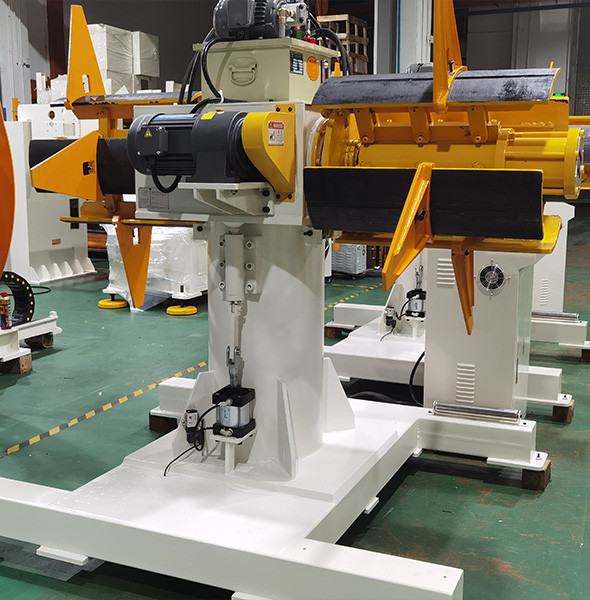
Week three, second shift, the mandrel stopped expanding. The operator cycled the control four times, then called maintenance, then called the supplier.
A new uncoiler that fails inside a month is a warranty conversation, and the first assumption is a bad seal or a bent segment.
It was neither. The machine was built correctly and installed against three assumptions that did not hold in that building.
Week Three: A Mandrel That Would Not Expand
The symptom was specific. The mandrel would expand under no load and stall as soon as a 4-tonne coil was on it.
Hydraulic pressure at the gauge read 5.2 MPa, comfortably above the 4.5 MPa the manual specified. That reading sent everyone looking at the cylinder.
The cylinder was fine. Pressure measured at the gauge is not pressure measured at the actuator, and the difference was the whole story.
Between the gauge and the mandrel sat eleven metres of hose, two elbows and a quick-release coupling that had been added during installation.
Under a 4-tonne load the flow demand rose, the pressure drop across that path rose with it, and the mandrel saw 3.8 MPa when the gauge still read 5.0.
The first fix attempt was a new seal kit, which is what a stalled cylinder usually needs. It took a day and changed nothing.
The second was to raise system pressure, which brought the mandrel back to 4.1 MPa under load and shortened pump life in the process.
Raising system pressure to overcome a restriction is a temporary answer. It masks the cause and puts extra load on a pump that was sized for the original figure.
What the Commissioning Report Did Not Say
The commissioning report recorded gauge pressure, cycle time and a successful test on an empty mandrel. All three were accurate.
It did not record pressure under load, and an empty mandrel needs almost nothing to expand.
The second omission was anchor torque. Four of eight anchors were at 60 percent of specification, which nobody checked because the base looked solid.
The third was the coil present sensor, which had been left at its factory setting and was reading a coil 12 mm smaller than the real diameter.
Three omissions, none of them dramatic, all of them invisible in a report that tested the machine rather than the installation.
Read the commissioning report for what it does not contain. The gaps predict the first month better than the measurements do.
A test on an empty mandrel proves the control logic and nothing about the hydraulic path under load.
The Three Faults That Show Up in Month One
Hydraulic supply is the first. Hose length, elbow count and quick-release fittings all consume pressure that the specification assumed would reach the actuator.
Anchor torque is the second. A decoiler that is 60 percent torqued will run, and will move under the first heavy coil, and will then wear its base pads.
Sensor calibration is the third. Coil present, coil diameter and loop position all have factory defaults that rarely match the installed geometry.
All three are installation issues. All three present as machine faults, and two of them present as intermittent faults, which is worse.
Each of the three has a signature. A stall under load is hydraulic, creep is mechanical, and a false stop is electrical.
Learn the signatures and the diagnosis takes minutes rather than a warranty call and a week of waiting.
Write the signatures on a card and leave it in the panel. The next shift will meet the same three faults on a different machine.
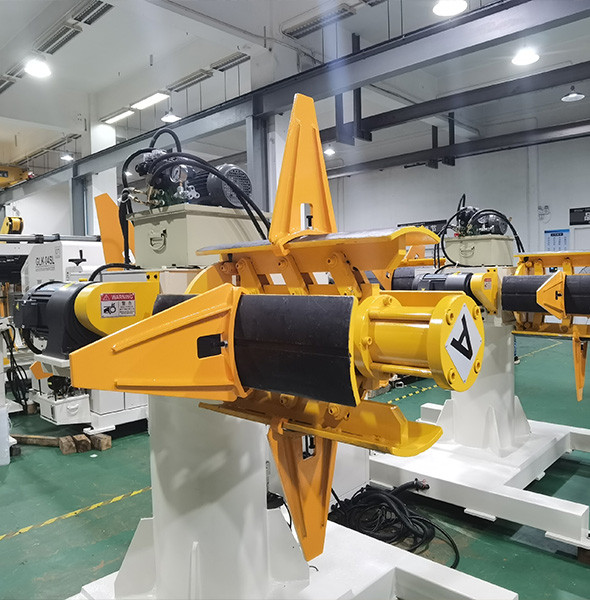
Symptom, Cause, and What It Costs to Fix
| Symptom | Actual cause | Fix | Where It Costs You |
|---|---|---|---|
| Mandrel stalls under load | Pressure drop over 11 m of hose | Shorter run or larger bore | Two days of downtime and new hose |
| Coil creeps on the mandrel | Anchor torque at 60 percent | Re-torque and check shims | Base pad wear if left for months |
| Line stops with coil present | Sensor at factory default | Recalibrate against real geometry | Twenty minutes and a taught procedure |
| Brake releases late | Shared air header below 0.6 MPa | Dedicated supply or larger receiver | Cycle time loss on every coil |
Every row in that table is cheap to fix and expensive to diagnose, which is why they cluster in the first month rather than the first week.
None of the four costs more than a day to fix. All four cost a week to find if the search starts in the wrong place.
Start the search with the hydraulic path, because it explains stall symptoms that look mechanical.
Separate installation faults from sizing faults early, because only one of those categories belongs to the supplier.
What Is Not a Commissioning Fault
A decoiler that cannot hold a coil heavier than its rating is not a commissioning fault. It is a sizing error, and it belongs in the purchase conversation.
Surface marks on the inner wraps are usually the coil, not the mandrel. Fibre cores and rusted steel cores mark strip that a clean mandrel would not.
A decoiler that runs loudly on one particular coil is describing that coil, not a bearing. Swap the coil before opening the machine.
Brake noise on a new machine is often normal bedding-in and disappears within a week of running. Replacing pads at day three wastes a set.
Equally, a line that runs quietly on an empty mandrel and noisily with a coil is describing load, not wear.
And a line that will not hold tension on day one is usually a loop control tuning issue, not a decoiler defect. Tune it before calling warranty.
A First-Month Checklist for Any New Uncoiler
- Measure hydraulic pressure at the actuator, not at the gauge, with a full coil on the mandrel.
- Torque every anchor to specification and record the value, then re-torque after the first week.
- Calibrate coil present and coil diameter sensors against the real installed geometry, not the factory default.
- Confirm the air supply at the machine under simultaneous demand from brake and clamp.
- Check base pad contact with a feeler gauge after the first heavy coil, not after the first month.
- Log the first ten coil loads with weight and cycle time, so an intermittent fault has a baseline to compare against.
Six checks, perhaps three hours in total, and they would have caught all three causes in this case before week three.
Ask the commissioning engineer to sign the pressure reading taken under load, not the reading at the gauge.
The decoiler range lists rated coil weight and mandrel expansion per model, which is the reference for every measurement here.
Six checks and one signature turn a first month of intermittent faults into a normal commissioning.
Run the checks again at the end of month one. A second set of readings turns a snapshot into a trend.
Compare the two sets and anything that moved by more than 10 percent is a maintenance item before it becomes a failure.
Photograph each completed check, with the gauge or torque wrench visible in frame. It takes a minute and settles disputes months later.
Hand the signed list to the plant engineer rather than filing it with the supplier. The person who runs the machine needs it more.
The cheapest warranty claim is the one that never happens because the installation was measured properly.
Where to go next
Installation quality decides more of a decoiler's first year than its specification does.
The decoiler guide covers capacity, mandrel type and control choice, all of which belong in the order rather than the retrofit.
The Coil Line Guide LibraryHow much pressure drop is normal over a 10 metre hose run?
0.3 to 0.6 MPa at working flow. Above 1 MPa, the hose bore is too small or the elbow count is too high.
Should anchor bolts be re-torqued after installation?
Yes, after the first week of production. New grout settles and a decoiler base will lose 20 to 30 percent of its initial torque.
Why does a coil present sensor fail on a new decoiler?
Because the factory default range rarely matches the installed geometry. Calibrate it against a real coil, not against the manual.
Is brake noise in the first week a fault?
Usually not. Pads bed in within 100 to 200 cycles. Replacing them before that wastes a set without fixing anything.
How long should commissioning take on a 5-tonne decoiler?
One to two days including alignment and load testing. A single-day commissioning is usually a machine test rather than an installation test.
What if the decoiler cannot hold its rated coil weight?
That is a sizing problem, not a commissioning one. Check the rating against the coil weight before accepting delivery.