Why Do NC Straightener Feeder Lead Times Vary So Much?
- Share
- publisher
- FANTY
- Issue Time
- Sep 10,2026
Summary
Two suppliers quote the same NC Straightener Feeder six weeks apart. This guide breaks the schedule into its four real blocks - engineering, fabrication, purchased drives, and assembly - and shows which ones a buyer can compress and which ones cannot.
Ask five suppliers for a delivery date on the same NC Straightener Feeder and you can get five different answers — six weeks from one, sixteen from another, for machines with near-identical capacity plates. That gap is not sales padding. It reflects real differences in how the equipment is built, what is held in stock, and which parts of the machine are made to order. Understanding where the weeks come from turns a vague promise into something you can plan a press installation around.
Where the calendar actually goes
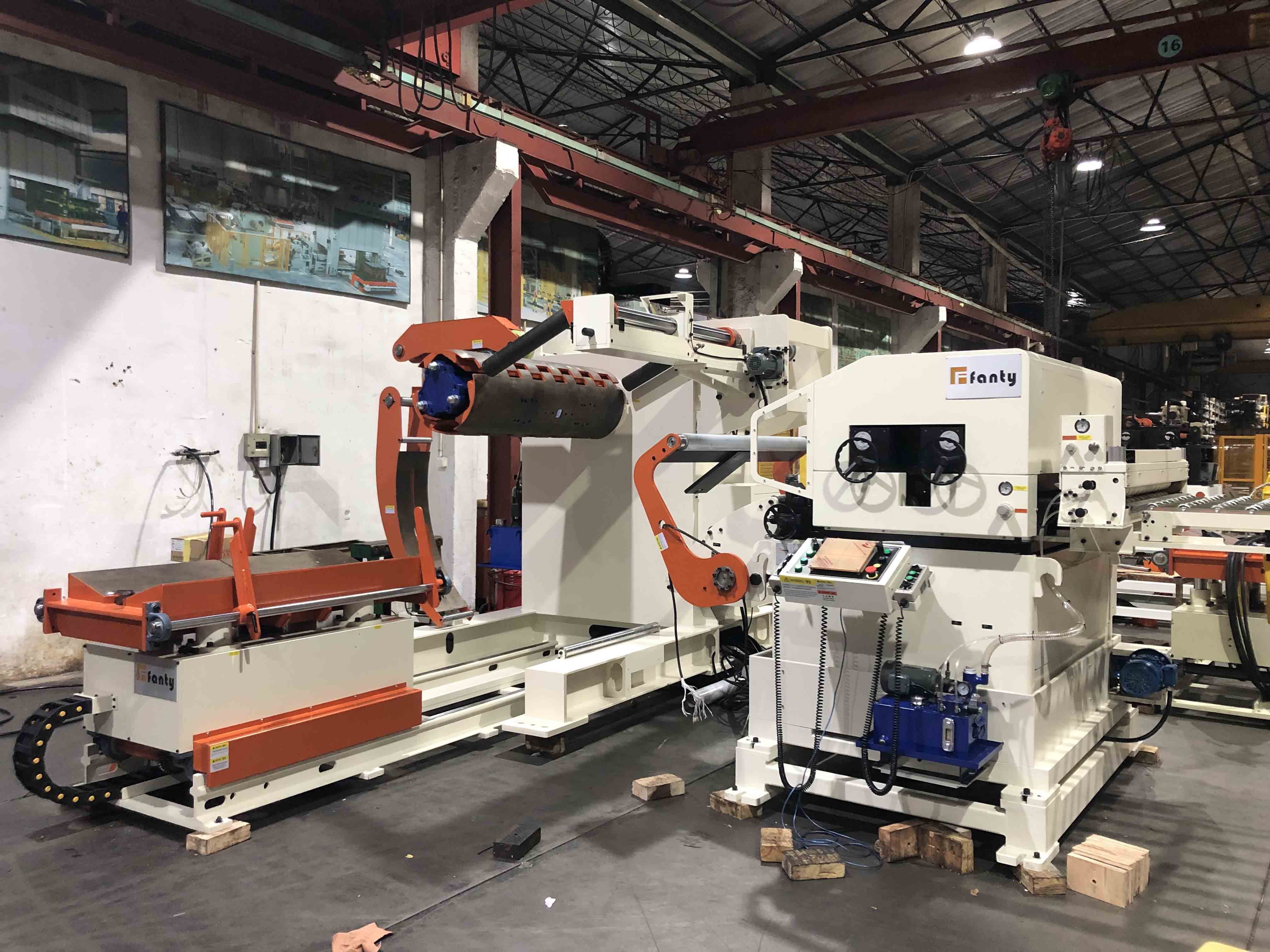
A 3-in-1 decoiler straightener feeder is not a catalogue item. Even a "standard" 800 mm wide unit contains a welded frame, four to nine hardened work rolls, a hydraulic or pneumatic mandrel assembly, a servo drive package, an HMI, and a control cabinet with the press interface wired in. Those items come from different supply chains, and the slowest one sets the delivery date.
Broadly, the elapsed time breaks into four blocks: engineering and drawing approval, fabrication and machining, purchased components, and final assembly with testing. A supplier holding servo drives and controllers in stock can compress block three to a few days. A supplier ordering a specific drive on demand adds the distributor's own lead time on top.
This is why two factories quoting the same machine can be four weeks apart without either one being dishonest. One is quoting from a position of inventory; the other is quoting from a position of order-to-build.
Frame, rolls and machining time
The structural side of a straightener feeder is usually the most predictable part of the schedule. A fabricated steel frame needs cutting, welding, stress relief, and machining of the mounting faces. Stress relief is the step buyers most often overlook: skip it and the frame moves after machining, which wrecks roll parallelism. Done properly, it adds days but protects the tolerance that makes the machine worth buying.
Work rolls are the other schedule-sensitive item. Standard roll diameters in common alloys are often stocked. Larger rolls, special hardness, or a chrome or tungsten-carbide surface treatment move into made-to-order territory. On a heavy-gauge machine running 6 mm strip, roll diameter and hardness are not areas to compromise, so the extra weeks are usually worth accepting.
| Lead time driver | Typical impact | Can it be shortened? |
|---|---|---|
| Frame fabrication and stress relief | 2-3 weeks | Only by ordering against a planned build slot |
| Work roll machining (standard alloy) | 1-2 weeks | Yes, if rolls are held in stock |
| Servo drive and controller package | 1-6 weeks | Yes, by accepting an available drive model |
| Non-standard coil width or strip thickness | 3-5 weeks | Partly — a close standard size often works |
| CE documentation and third-party inspection | 1-2 weeks | Schedule it in parallel, not at the end |
| Customer drawing approval delay | 0-4 weeks | Yes — this one is entirely on the buyer |
Note the last row. In practice, a meaningful share of "supplier delay" is buyer-side silence on drawings. A layout drawing that sits unapproved for three weeks in the customer's engineering department shows up later as a supplier who missed the date. If you want a machine on time, assign one person to own the approval loop.
The drive package is the wild card
Servo drives, motion controllers and industrial PCs are the components most exposed to global supply conditions. A controller family that is in distribution stock ships in days; the same family on allocation can take six weeks or more. This is the single largest source of variability between suppliers quoting similar machines.
There is a practical trade-off here. Insisting on a specific brand of drive that is on allocation will cost you weeks. Accepting an equivalent drive the builder already stocks may cost you nothing in performance — feed accuracy is a function of the mechanical train, encoder resolution and tuning, not the logo on the amplifier. For most stamping operations, ±0.05 mm feed accuracy is achievable with more than one drive platform.
Ask the question directly: which drive is quoted, and is it in stock today? A supplier who can answer that in one sentence is quoting from a real position.
Options that quietly add weeks
Options are where a six-week quote becomes a twelve-week reality. Each of the following is individually reasonable and collectively expensive:
- Non-standard coil inner diameter — the mandrel and expansion segments must be redesigned and remachined.
- Custom paint colour matched to a plant standard — trivial in cost, awkward in scheduling because it forces the frame out of the normal finishing sequence.
- Extended coil car travel or a raised pass line to suit an existing press — real fabrication change, real weeks.
- Integration with an older press controller — the interface work is engineering hours, and it happens late in the build.
- Witnessed acceptance testing with your own material — needs a slot in the test bay and the material shipped in ahead of time.
Compressing the schedule honestly
There are legitimate ways to shorten a delivery. The first is to buy a standard configuration and adapt your process to it rather than the reverse. A machine built from a proven platform with stocked rolls and a stocked drive is inherently faster to deliver than a bespoke one, and in most stamping operations the standard unit performs identically.
The second is to release the order with a complete technical specification on day one — strip material grade, thickness range, coil ID and OD, coil weight, line speed, and the die change pattern. Suppliers lose days, sometimes weeks, waiting for a coil weight that the buyer already knows. Front-loading that information is free and it is the highest-return action available to a purchaser.
The third is to accept staged delivery. A machine can often ship with the mechanical assembly complete and a follow-up visit for final interface commissioning. This gets the equipment into your plant and onto the foundation sooner, which matters if your building works are the real critical path.
FANTY has been building coil line equipment for 12 years and ships to 60+ countries, which means the schedule patterns behind these quotes are familiar rather than theoretical. A supplier with that order history can usually tell you within a day whether your configuration sits on the standard path or the custom one.
How to read a delivery promise
When a quotation states a delivery period, look for the trigger event. "Eight weeks" from what — from order, from drawing approval, from receipt of deposit? The differences are not semantic; they routinely account for three to four weeks of real calendar time.
A quote worth trusting names the milestone, names the drive platform, and states whether rolls are stocked or made to order. A quote that says only "6-8 weeks" is a placeholder, not a plan. Ask for the milestone in writing, then build your installation schedule backwards from it — foundation, services, crane access, and operator training all have their own lead times, and a machine that arrives before the foundation is ready is no faster than one that arrives late.
Is a longer delivery time a sign of better quality?
Not by itself. Long lead times usually indicate a bespoke configuration or a component on allocation. What matters is whether the supplier can explain which part of the schedule is long and why — a vague long date is worse than a specific short one.
Can I hold a build slot before my drawings are final?
Often yes, and it is worth asking. Many builders will reserve capacity against a deposit and a preliminary specification, with the final drawing approval starting the detailed engineering. This is the single most effective way to protect a delivery date.
What if my required coil width is between two standard sizes?
Step up to the larger standard width rather than ordering a custom one. The machine handles narrower strip without modification, and you avoid the 3-5 week custom fabrication cycle. The cost difference is usually smaller than the delay.
Does changing the drive brand after ordering reset the clock?
It can, and usually does. Once the control cabinet layout, wiring schedule and PLC program are built around a specific platform, a late substitution forces rework. Decide the drive platform at the quotation stage, not after the order is placed.
How much notice does a supplier need to ship on time?
Deposit and approved drawings in hand is the honest answer. Suppliers who quote from a planned build slot typically need two to three weeks of notice to secure the slot; after that, your order queues behind whatever was booked first.
Need a realistic delivery date, not a guess?
Send your strip data — material, thickness range, coil weight and line speed. FANTY's engineering team will tell you whether your configuration sits on the standard build path or needs custom work, and what that means for the calendar.
Request a Build Schedule