Why Do Two Coil Line Suppliers Quote Differently?
- Share
- publisher
- David Park - Senior Stamping Engineer, FANTY Machinery
- Issue Time
- Oct 15,2026
Summary
Two quotations for the same coil line can sit 40% apart without either supplier padding the price. This guide takes one 1,300 mm enquiry and separates the scope decisions behind the gap: mandrel type, roll count, control class and the boundary that decides who pays for site work. It lists the five line items buyers compare wrongly, a two-hour method for normalising two quotes, and the four clauses that keep the comparison intact in the purchase order.
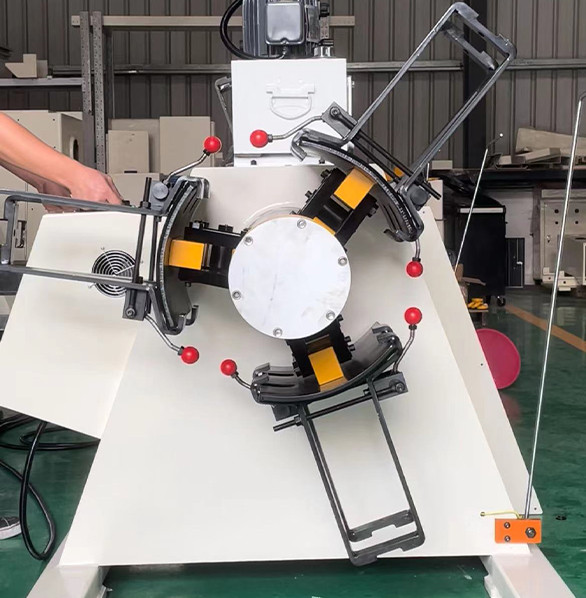
A buyer sent us two quotations for the same NC straightener feeder line. Same coil width, same strip thickness, same 200 SPM press. The totals sat 40% apart.
Neither supplier was padding the number. The two documents described different machines, different scopes and different risk.
Closing that gap is a paperwork exercise, not a negotiation, and it is worth doing before anyone starts arguing about price.
Two Quotes, One Line, a 40% Gap
The enquiry was for a 1,300 mm line feeding a progressive die at 45 strokes per minute, running 1.6 mm SPCC from 6-tonne coils on a 508 mm bore.
Supplier A quoted 148,000 USD delivered, covering the decoiler, the straightener, the feed unit and the control cabinet.
Supplier B quoted 207,000 USD against the same drawing, for what looked on paper like the same three machines.
The difference was not margin. It was eighteen separate scope decisions, and none of them had been written on the enquiry sheet.
A quotation is a scope description, not a price. Two suppliers reading a thin enquiry will describe two different machines and both will be honest about it.

Where the Gap Is Created Before the Machine Is Built
Every line on a quotation answers a question the buyer never asked. Four of them move the number further than the machine itself does.
| Quote Line | What It Gives the Run | Where It Costs You |
|---|---|---|
| Mandrel: manual wedge or hydraulic | Hydraulic cuts a coil change from 12 minutes to under 4 | Roughly 8% on the machine price, plus a hydraulic power unit to maintain |
| Straightener roll count: 5 or 9 | Nine rolls hold flatness across a wider thickness range | More setup skill required and a larger re-grind bill every second year |
| Control class: relay logic or servo drive | A servo drive holds ±0.05 mm feed length at 200 SPM | Servo spares cost more and the panel needs a technician, not an electrician |
| Scope edge: loop pit, guarding, site wiring | Turnkey scope means one contractor and one warranty | The cheapest quote leaves site work to you, and site work is where budgets break |
The fourth row is the one that catches plants out. A quote that stops at the machine terminal box can look 15% cheaper and cost more to commission.
Freight is the third variable nobody normalises. A 1,300 mm line ships as several containers, and FOB, CIF and delivered terms move the total further than most buyers expect.
Ask both suppliers to quote the same Incoterm. Comparing a free-on-board price with a delivered price is not a comparison at all.
Ask for a scope boundary drawing rather than a price list. The drawing shows exactly where each supplier's responsibility stops.
The Five Line Items Buyers Compare Wrong
Strip the marketing out of two quotations and five items are still compared incorrectly, every single time.
- Machine weight, used as a proxy for rigidity, when stiffness depends on where the frame carries the load
- Coil capacity, quoted at the mandrel instead of at the rated coil outside diameter
- Line speed, quoted at the feed unit rather than at the die, where acceleration is spent
- Spare parts package, quoted as a percentage of machine value instead of as an itemised list
- Commissioning days, quoted without stating who supplies the strip and the die for the trial run
Take the second item. A 5-tonne rating on a 508 mm mandrel is not the same claim as 5 tonnes at 1,500 mm outside diameter.
At the larger diameter the coil sits closer to the line's structural limit, and the mandrel load case changes completely.
Line speed carries the same trap. A feed unit rated at 200 SPM cannot deliver 200 strokes per minute if the die needs a 40 mm feed and the acceleration profile was sized for 20 mm.
Spare parts are where the cheapest quote quietly becomes the most expensive. Ask for the list and price it against your own maintenance plan.
On one comparison we ran, the low quote carried no straightener rolls in its spares package. A single roll set later cost 3,400 USD and three weeks of lead time.
How to Normalise Two Quotes in One Afternoon
You do not need a second site visit or a technical consultant to make two quotations comparable. You need one table.
Build a spreadsheet with a row for every subsystem: mandrel, brake or drive, straightener head, feed unit, loop control, die protection interface, guarding, controls, documentation and site work.
Then fill one column per supplier and leave a third column for what your own plant has to add to make each offer complete.
Fill in the gaps before you fill in the price. Most of the 40% gap disappears once every row has an entry from both suppliers.
Where a supplier has written "by others", that is not a gap in the document. It is a cost that has moved to your side of the project.
Add a fourth column for the risk that comes with each choice, not just the money. A manual mandrel saves capital and costs you two operators on every coil change.
Do the exercise with both quotations open, not from memory. Every figure in the table should be traceable to a line on a supplier document.
Ten minutes per row is enough. A line with twelve subsystems is a two-hour exercise, and it is the cheapest two hours in the whole purchase.
What a Quotation Cannot Tell You
A normalised comparison still leaves four questions open, and none of them can be answered from a document.
Whether the machine fits the building. A quote never shows the crane hook height, the door width or the pit depth. Those decide whether a 6-tonne coil can be loaded at all.
Whether the operator can set it. A nine-roll straightener head holds better flatness than a five-roll head and demands a different level of skill on the floor.
Whether the strip you actually buy suits the machine. Quotes are written against a nominal material. Mill-to-mill variation in yield and flatness is not priced anywhere.
Whether the supplier can support the line in year three. Documentation, spares availability and service response are not comparable line items on a quotation.
The specification chain behind all of this, from capacity to control, is set out in our coil line knowledge base.
These are the questions buyers send us after the first round of quotes, usually once the two totals have been put side by side.
How much of a 40% quote gap is usually real?
On the comparisons we have run, roughly 25 to 30 points of it is scope. The remaining 10 to 15 points is machine class, control level and spares.
Should a 1,300 mm line at 45 SPM carry a 9-roll or a 5-roll head?
For 1.6 mm SPCC at 45 SPM, five rolls hold flatness. Move to 0.8 mm at 200 SPM and the same job needs nine rolls.
How much does a hydraulic mandrel add to the price?
Typically 6 to 10% of the machine value, and it saves 8 to 10 minutes on every coil change. At three coils a shift that pays back inside two years.
Is the cheapest quote always the one with less scope?
No. It is the one with scope moved elsewhere. Check the "by others" lines before you assume the low number is incomplete.
How long should a supplier allow for commissioning?
Plan on 5 to 8 working days for a 3-in-1 line, plus 2 days of operator training. Quotes that promise 3 days are usually counting machine time only.
What to Write Into the Purchase Order Instead of a Price
The purchase order is where a normalised comparison either survives or quietly unwinds. Four clauses do most of the work.
Performance, not specification. State feed length accuracy at a named speed and material, for example ±0.05 mm at 200 SPM on 1.2 mm SPCC, rather than a nominal accuracy figure.
Acceptance test conditions. Name the material grade, thickness, coil size, die and the number of strokes the trial will run. Without that, the test is a demonstration.
Scope boundary list. Attach the scope drawing to the order. A drawing that ships with the contract is enforceable in a way a sales email is not.
Spare parts list with prices. Ask for it at order stage, when it is a negotiating item, rather than after the first breakdown.
Payment terms belong in the same document. A 30% deposit with the balance on shipment carries different commercial risk from a letter of credit, and the two are not comparable line items.
With those four in place, the 40% gap between the two quotes stops being a problem and becomes information.
FANTY has built these lines for twelve years, and the enquiries that arrive with a scope drawing attached are the ones that close in one round.

Where to go next
This article sits under the selection and cost cluster, one layer below the specification overview. If you are still deciding which spec lines are worth paying for, start there.
The Coil Line Guide Library