Why Does Coil Line Installation Take Six Weeks?
- Share
- publisher
- David Park - Senior Stamping Engineer, FANTY Machinery
- Issue Time
- Oct 28,2026
Summary
A 400-tonne press bay promised four weeks from delivery to first good part and took seven. The calendar was never one schedule but five overlapping clocks, and only some of them move for money. This breaks the six weeks into concrete, rigging, utilities, commissioning and process tuning, with the week-by-week plan and the five pre-shipment documents that keep the dates honest.
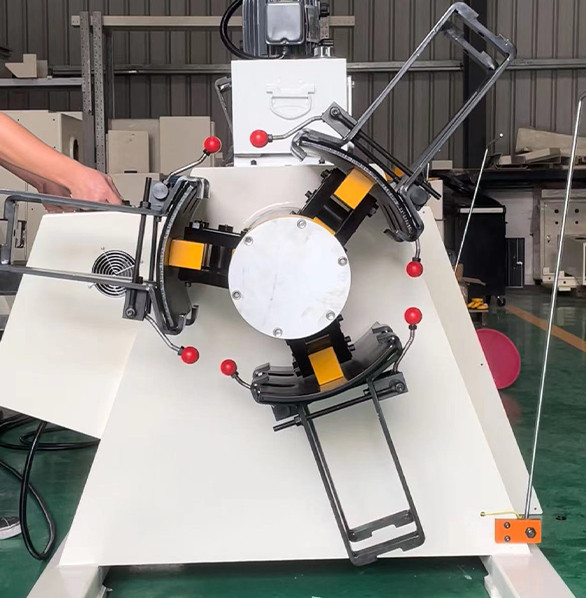
A 400-tonne press bay in Ohio took delivery of a coil line installation package on a Tuesday in March. The purchase order promised four weeks from arrival to first good part.
The first good part came in week seven, and nobody on site was being lazy.
The schedule slipped because it was never one schedule. It was five separate clocks — concrete, rigging, utilities, commissioning and process tuning — drawn as a single bar on a Gantt chart.
Here is where those weeks actually sit, which ones you can buy back, and which ones will not move for any price a buyer is willing to pay.
Count the Weeks From Concrete, Not From Delivery
The clock that decides the handover date starts at the pour, not at the port. A 300 mm reinforced slab carrying a 12-tonne decoiler needs 28 days to reach design strength under ordinary Portland cement.
Accelerated mixes reach roughly 70% of that strength in seven days.
That is enough to set a machine down, but it is not enough to torque anchor bolts to the supplier's figure, and most builders will not sign off on it.
Anchor bolt templates have to be set before the concrete goes in, and they have to be set from a datum that will still exist six weeks later. A paint mark on the floor is not a datum.
If the bolt pattern ends up 5 mm out, you drill. Drilling a cured 300 mm slab under a machine base costs a day and a half, plus an inspection report the customer will want to see.
The item everyone forgets. Site drawings usually show the slab and leave out the cable trench and the pit for the scrap conveyor. Both are poured work, and both need the same cure window as the base.

Where the Rigging Hours Actually Go
Rigging is quoted in hours and lost in metres. Door width, hook height and the crane's turning radius decide whether a machine goes in on the planned day or waits in the yard.
A 1,600 mm decoiler on a 3.5 m base will not pass a 3.2 m door with the mandrel fitted. The mandrel comes off outside, which means an extra lift and a re-alignment afterwards.
Hook height is the second trap. Lifting a 4.1 m tall leveler housing needs a hook that clears 5.0 m once the slings sit at 60 degrees, and plenty of older bays clear only 4.6 m.
Check the lift, not the weight. A 10-tonne machine on a four-point sling can put 14 tonnes through two bridge wheels when the load swings.
Compare that against the crane rating plate, not the machine's shipping weight.
Coil car rails and press pits are usually finished last, so the rigging crew ends up working around wet concrete. Sequence that work ahead of the delivery or accept two idle days.
Power and Air Are Never Ready on the Day You Plan
The electrical contractor is a different company with a different queue.
A new 45 kW service from the utility can take three to six weeks before a meter is fitted, and that clock starts when the application is accepted.
Inside the building, the cable run matters as much as the supply. Forty metres of 70 mm² cable through an existing tray takes two electricians four days, and tray capacity is often the real constraint.
Compressed air is the smaller item that stops commissioning dead. A 0.6 MPa supply at 500 L/min with a dryer and a 5-micron filter is the normal requirement for a line this size.
A shop compressor sized for hand tools will not hold that flow. It will hold pressure at idle and droop the moment a valve opens, which shows up later as an inconsistent response from the line.
Prove it before the machine lands. Run the compressor against a bleed valve at rated flow for ten minutes and watch the header gauge. A 0.1 MPa droop is a repair, not an adjustment.
Commissioning Is Two Weeks Because It Is Two Jobs
Week five is mechanical. Level the base, torque the anchors, check the pass line against the press bed, and run the machine empty for four hours. That work is predictable and it rarely slips.
Week six is process. Thread strip, set the loop, tune the leveler rolls to the incoming material, and run the first die. This is where the surprises live.

The strip that arrives on site is almost never the strip in the sample box. A coil with 3 mm of camber, or a 0.4 mm thickness variation across the width, will consume a full day of roll adjustment nobody budgeted.
First-article approval is a meeting. The customer's quality team has to be present with the drawing revision they will actually accept. A two-day wait for a signature is common and entirely avoidable.
Operator training belongs in this block too. Two operators for four hours on a running line beats eight hours in a classroom, and it has to happen after the process is stable rather than before.
Which Delays You Can Buy Out, and Which You Cannot
Concrete cure cannot be bought out at a sensible price. Utilities can be accelerated with money and paperwork. Shipping can be accelerated with money alone, and only up to the next sailing.
The six-week figure misleads in the other direction as well. A 5-tonne line going into an existing bay with a live 45 kW drop and a clear door is a ten-day job, and quoting six weeks for it wastes the buyer's money.
Where the number really breaks is a second line inside a running plant. Production will not stop for your commissioning window, so every test run has to fit between shifts.
That constraint adds days no supplier programme accounts for, and it is the most common reason a competent installer overruns on an otherwise well-planned job.
Pre-assembly is the honest shortcut. Wiring the control panel and pressure-testing the hydraulics at the factory removes two to three days from the site programme. Ask for it in writing, with a test record attached.
The cost side of each specification line, including what a week of site delay actually does to the invoice, is mapped in the coil line guide library.
A Six-Week Plan With Dates That Hold
The plan below assumes a mid-size line — 10-tonne decoiler, 1,300 mm width, 400-tonne press — going into a prepared bay. Shift the dates to your calendar, keep the sequence.
| Week | What has to be finished | Where a slip costs you |
|---|---|---|
| −4 to −1 | Slab poured, cured, anchor templates verified | A late pour pushes every later week by the same amount |
| 1 | Machine landed, set on base, rough level | Idle crane hire at day rate, plus yard storage |
| 2 | Anchors torqued, pass line checked to press bed | Re-drilling, inspection report, one lost day |
| 3 | Power terminated, air proven at rated flow | Commissioning cannot start; two to five days |
| 4 | Empty run, safety circuit proven, guards fitted | Insurance sign-off withheld |
| 5 | Strip run, loop set, leveler tuned | Scrap coil, plus a second strip order |
| 6 | Die trial, first article approved, operators trained | Production start delayed by the approval queue |
Five items are worth confirming before the container leaves the factory, because each one has a site consequence that cannot be fixed locally:
- Anchor bolt template drawing, dimensioned from the press centreline rather than from the machine base
- Lifting plan with the centre of gravity marked, and the sling angles the supplier actually used in the factory
- Utility schedule stating kW, voltage, phase, air flow and dew point, not just "3-phase"
- Factory test record for the control panel, signed and dated, with the I/O list revision
- A named commissioning engineer with dates, not a department name on the contact sheet
None of that is exotic. All of it is cheaper than a week of idle crane and a customer who has already told their own customers when the line will run.
The questions below come up in the first meeting after a slip, usually from a buyer holding a signed delivery date.
How long does a 12-tonne decoiler foundation need before the machine lands?
Twenty-eight days on ordinary Portland cement at 20 °C, or seven days on an accelerated mix that reaches about 70% strength. Torquing anchors to the supplier's figure on a seven-day slab is where cracks start.
Can a coil line be installed in 10 days?
Yes, if the slab is cured, the 45 kW drop is live, the door clears the widest component, and the crane is rated above the lift. Strip the site-readiness items out and a 5-tonne line is a ten-day job, not six weeks.
What does one week of delay cost on a 400-tonne press line?
Between USD 6,000 and 15,000 in direct cost on a typical job — crane hire, supervision, accommodation and yard storage. The production loss on the customer's side is usually larger and never appears on your invoice.
Does factory pre-assembly really remove 3 days from commissioning?
It removes the panel wiring and hydraulic pressure test, which run two to three days on site. It does not shorten the die trial, because that depends on the strip and the tool, not on the machine.
How much crane capacity does a 10-tonne decoiler need?
Plan for 1.25 times the lift weight, so 12.5 tonnes, and check the rating at the radius you will actually work at. A 15-tonne crane at 8 m radius is often a 9-tonne crane in practice.
Where to go next
This article sits in the buyer-guide cluster, which covers what a coil line costs to buy, ship, install and run.
If you are still deciding which specification lines are worth paying for, start with the cluster pillar.
Read the coil line cost guide