Why Does Feed Roll Pressure Drift on an NC Servo Feeder?
- Share
- publisher
- David Park - Senior Stamping Engineer, FANTY Machinery
- Issue Time
- Oct 14,2026
Summary
Short feeds, roll marks and length drift that appears late in a shift all trace back to the same component. This article separates a pressure fault from a roll surface fault and from a control fault with a ten-minute test, compares the four pressure systems in common use, and lists the four conditions where the pressure gauge reads perfectly and the feeder still slips.
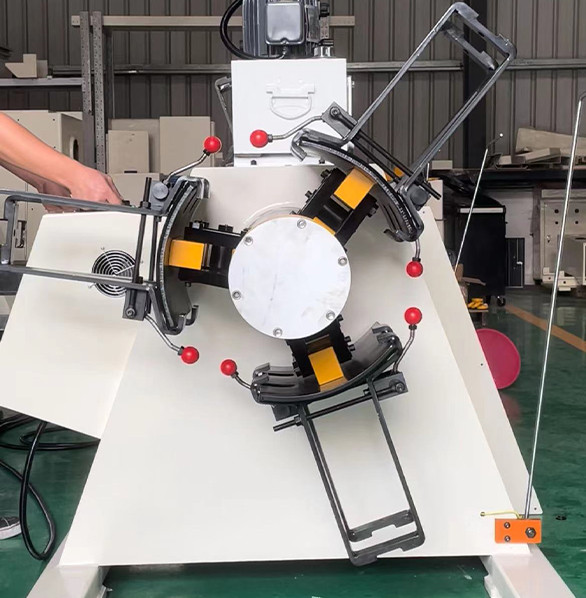
Feed roll pressure is the one setting on an NC servo feeder that nobody records and everybody adjusts. It is also the first suspect when a line that held ±0.05 mm last month starts running 0.1 mm short.
The servo usually gets blamed. The gauge at the cylinder usually explains it.
Three Symptoms That All Come Back to Roll Pressure
Pressure problems do not announce themselves as pressure problems. They arrive as three complaints that sound like three different faults.
Short feed. The strip slips under the roll for part of the stroke and the part moves forward less than commanded. The operator sees a length error and reaches for the servo parameters.
Marks on the top face. Pressure that is too high for the strip leaves a witness mark at every roll contact. On pre-painted or polished material the part is scrapped.
Drift across a shift. The first two hours hold length and the last two do not. Nothing was changed, which is the clue that something physical is moving.
All three live at the same place. The pressure that holds the strip against the feed roll sets the friction available, and friction sets how much of the commanded move reaches the strip.

Know Which Pressure System You Are Setting
Four systems are in common use, and each drifts for a different reason. Confirm which one is on the machine before spending a shift on the wrong theory.
| Pressure Source | What It Gives the Line | Where It Costs You |
|---|---|---|
| Pneumatic cylinder on shop air | Simple, cheap, easy to adjust at the machine | Follows shop air pressure; a busy plant drops it without warning |
| Hydraulic cylinder | Stable pressure regardless of plant air | Oil leaks reach the strip; needs its own power unit and a service schedule |
| Disc spring pack | No supply needed; holds set force for years | Setting it requires dismantling, so nobody checks it |
| Mechanical screw with coil spring | Fully independent of utilities | Spring settles with temperature and time; repeatability is the weakest of the four |
Pneumatic is the most common and the most misdiagnosed, because the pressure gauge on the machine often sits at the filter-regulator rather than at the cylinder.
Those two readings can differ by 0.5 bar on a long run of small-bore hose. If the gauge you are reading is upstream of the restriction, you are not reading roll pressure at all.
Where the Pressure Goes Missing Before It Reaches the Rolls
Pressure loss between the regulator and the cylinder accounts for most of the drift we are asked to look at. Four points are worth checking in order.
The regulator itself. A worn regulator will hold its setting at zero flow and sag once the cylinder cycles. Watch the gauge while the machine runs, not while it is idle.
Line restriction. A 6 mm hose feeding a cylinder that wants 40 litres a minute will not deliver full pressure during the stroke. It will deliver it a second later, which is too late.
Cylinder seal leakage. A slowly failing rod seal loses air past the piston, so the force at the roll falls while the gauge upstream still reads correct.
Moisture. Water in the line freezes the flow at low temperature and blocks the port. On a plant without a dryer this shows up as a winter problem, not a summer one.
Each of the four produces the same symptom. Separating them takes a gauge at the cylinder, which is a ten-minute job and the only measurement that settles the question.
How to Prove Pressure Is the Cause in Ten Minutes
Run this sequence before adjusting anything. It separates a pressure fault from a roll surface fault and from a genuine control fault.
- Fit a gauge at the cylinder port, not at the filter-regulator
- Record the gauge reading at the start and the end of a full shift
- Measure feed length on the first 20 strokes and again after two hours
- Raise the pressure 0.5 bar and repeat the length check
- Inspect the roll face for glazing before accepting any conclusion
If a 0.5 bar increase restores the length, the fault is pressure. If it changes nothing, the roll surface or the drive is the next place to look.
Feed roll pressure is a recurring question on our own service calls, and the same five points come up every time.
What pressure should a feed roll run on 1.2 mm SPCC?
Typically 4 to 5 bar at the cylinder for a 1.2 mm cold-rolled strip. Oily strip needs the upper end; dry, pickled strip runs fine at the lower end.
How much feed length does 0.5 bar of pressure change?
On a 120 mm feed of oily 1.2 mm strip, roughly 0.08 to 0.12 mm. That is two to three times the total error budget on a 200 SPM line.
Can too much roll pressure damage the servo?
Not directly, but it raises the load on the feed roll bearings and the drive. A pressure that marks the strip is already past the point where the servo is working harder than it needs to.
How often should roll pressure be verified?
Monthly for a stable job, and after any change of coil supplier. Pressure that held on one mill's strip can sit 0.3 bar outside the window on another's.
Can a 6 bar supply be too high for thin strip?
Yes. Above about 5 bar on 0.6 mm pre-painted strip the roll face starts to print through. Drop to 3.5 bar and re-check feed length before accepting the marking.
Does a disc spring pack ever need re-setting?
Rarely within 10 years in normal service, which is exactly why it is worth measuring when nothing else explains a drift. It is the one pressure source that fails without a symptom.
What Pressure Drift Does to Feed Length
The link between pressure and length is friction, and friction is not linear. That is why a small pressure loss can look like a large length error.
At 4 bar on oily 1.2 mm strip, the roll is near the top of the friction curve and a 0.2 bar change barely registers. At 3 bar the same 0.2 bar change moves the length by a tenth of a millimetre.
This is the practical reason to run roll pressure in the middle of its range rather than at the minimum that stops slipping. A setting with margin absorbs plant air variation instead of passing it to the part.
The same logic applies across a coil. As the coil empties, back tension rises, and higher back tension demands more grip. A line set at the edge of slip at full coil will slip at the last third.
What a Change of Coil Supplier Does to the Setting
A setting that holds for years can move overnight when the plant switches coil supplier. Nothing on the machine changed, which is why the fault is so often missed.
Three strip properties drive how much grip a given pressure buys. Surface finish is the largest, oil film weight is second, and thickness tolerance is third.
Pickled and oiled strip grips differently from bright cold-rolled strip at the same pressure. A switch from one to the other can move the usable window by half a bar.
Hardness matters on high-strength grades. HSLA 340 at 1.6 mm needs more pressure than SPCC at the same thickness, because it springs back against the roll instead of conforming to it.
The practical response is to re-verify feed length on the first coil from a new supplier, not to adjust pressure on the assumption that the old setting still applies.

When Pressure Is Not the Problem
Pressure is the most common cause of a slipping press feeder and it is not the only one. Four conditions produce identical symptoms with the pressure gauge reading perfectly.
Glazed rolls. A polished, shiny roll face has lost the tooth that grips the strip. Increasing pressure masks it for a week and then stops helping.
Loose encoder coupling. A coupling with backlash reports a position the strip never reached. The error looks like slip and moves with the drive rather than with the material.
Late pilot release. If the pilot pins are still engaged when the feed starts, the strip cannot move and the roll skids on it. The pressure reading is irrelevant.
Variable oil film. Strip from two suppliers can carry different oil weights. Pressure that suits one slips on the other, and the difference only appears when the coil is changed.
When we look at a slipping line, the pressure check comes first because it is fast and cheap, but it is not the only test. Roughly one case in four turns out to sit in this list instead.
Put the Numbers on the Setup Sheet
A pressure setting that is not written down is a setting that will be different next month. Four entries on the job setup sheet remove most of the guesswork.
Record the cylinder pressure at the port, the roll gap, the strip thickness and the oil condition. Those four values reproduce the job; nothing else on the sheet does.
Add the date of the last roll inspection and the feed length measured on the first 20 strokes. When the length moves six months later, the sheet tells you whether anything was changed.
This is the same discipline our service team applies in the field, and it is the reason a line can be handed between shifts without a length argument.
Where to go next
Roll pressure is one term in the feed accuracy budget. The rest of the terms, from decoiler back tension to pilot release timing, are laid out in our coil line knowledge base.
The Coil Line Guide Library