Why Does a Coil Line Spare Part Take 14 Weeks?
- Share
- publisher
- David Park - Senior Stamping Engineer, FANTY Machinery
- Issue Time
- Nov 26,2026
Summary
A 40 USD friction disc stops a line making 11,200 parts an hour, and the replacement is quoted at fourteen weeks. This guide breaks the fourteen weeks into manufacturing stages, prices a stopped line at 20,000 USD a day, and sets the break-even where air freight beats waiting. It also names the six parts worth holding and the four situations where a spares shelf is capital with no return.
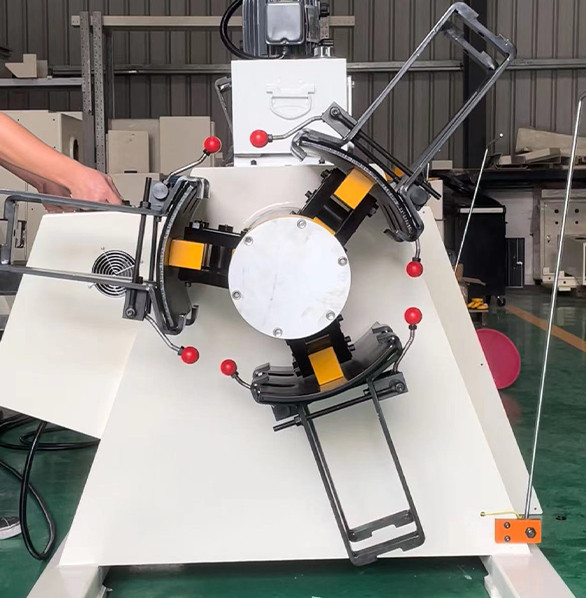
The line stops at 06:40 on a Tuesday because the brake on the uncoiler will not hold tension. The part that failed is a friction disc that costs 40 USD.
The replacement is quoted at fourteen weeks. The press runs 120 strokes a minute, two parts a stroke, and the finished-goods rack holds four days.
That gap is where spare parts planning either exists or does not. It is a purchasing decision made months before the machine ships, not a maintenance decision made on the morning it breaks.
The coil line equipment index lists the assemblies that carry the long lead times, which is the first place to look when you build a coil line spare parts list.
This guide prices the fourteen weeks, works out what each week of waiting costs on a real line, and names the parts where holding stock quietly wastes money.
Which Spares Belong on Your Shelf Before the Machine Lands
The wrong question is what might break. Almost everything breaks eventually, and a shelf stocked against that question turns into a warehouse of parts nobody touches.
The right question has two axes. How long does the line stop if this part fails, and how long does the part take to arrive once you order it?
A bearing that fails stops the line for six hours and is on a shelf in Shenzhen or Rotterdam the same day. A straightener roll that fails stops it for two weeks and needs a grinding shop.
The first part needs a purchase account. The second needs a shelf, and the shelf needs to exist before the machine is commissioned.
The working threshold most plants land on is a lead time longer than three times the finished-goods buffer. Four days of stock means anything over twelve weeks goes on the shelf.
Where the Fourteen Weeks Go
Fourteen weeks is not a shipping delay. It is a manufacturing queue, and it breaks into stages you can audit on a quotation.
| Part class | Typical lead time | What sets the clock | Where the estimate misleads |
|---|---|---|---|
| Cast frame or housing | 10 to 16 weeks | Pattern, pour, stress relief, then machining | Quoted from stock when a sister model shares the casting |
| Straightener roll set | 10 to 13 weeks | Forging, hardening, grind, hard chrome | Excludes re-grinding your own rolls, which takes 3 weeks |
| Servo drive and motor | 8 to 12 weeks | Drive allocation, not manufacture | A "compatible" drive arrives in 2 weeks and needs a parameter set |
| Mandrel assembly | 6 to 9 weeks | Wedge machining, hydraulic assembly, pressure test | Segments alone are faster and often all you need |
| Brake disc and lining | 4 to 6 weeks | Friction material batch | Usually available from a local brake shop in 3 days |
| Seals, bearings, sensors | 1 to 5 days | Catalogue stock | Cheap enough that nobody orders them until they are needed |
Read the second column as a promise and the fourth as the fine print. The gap between them is where a four-week surprise lives.
A cast frame sits in a pattern shop for a week before anyone pours metal. Stress relief adds another week if the foundry does it properly, and skipping it is how a frame moves after machining.
Rolls are the item buyers underestimate. Grinding to a 0.01 mm crown takes a specialist shop, and the chrome plating line is a separate queue with its own schedule.
Servo drives have a lead time that has nothing to do with how hard they are to build. Allocation moves with demand from other industries, and a 12-week quote in January can become 22 weeks in June.
What a Stopped Line Costs per Hour
Downtime cost is arithmetic, not opinion, and every plant should do it once with its own numbers.
Take a line running 120 strokes a minute with two parts a stroke. That is 14,400 parts an hour at full rate, and a realistic average of 78 percent gives 11,200.
Contribution per part on a 1.2 mm bracket is around 0.09 USD. The line therefore carries roughly 1,000 USD an hour of contribution when it runs and nothing when it does not.
| Cost line | Per hour | Per day, 20 productive hours |
|---|---|---|
| Lost contribution at 11,200 parts an hour | 1,000 USD | 20,000 USD |
| Idle labour, four operators plus setter | 95 USD | 1,900 USD |
| Expedited freight for customer orders | varies | 600 to 4,000 USD |
| Restart scrap, first 30 strokes | varies | 150 to 400 USD |
The bottom three lines are small next to the first. That is the point: the argument for holding spares is almost never about the part.
It is about 20,000 USD a day, and about a customer who starts calling other suppliers on day three.
Some of that cost is recoverable. Overtime later in the month buys back part of the volume, and a plant running at 70 percent utilisation loses less than one at 95 percent.
On a line that is already the constraint, none of it is recoverable. Use that distinction before you decide how much shelf to buy.
The Shelf List: Six Parts and Six Traps
- Brake friction disc and lining set. Fails without warning, stops the line immediately, and costs under 200 USD. Hold two sets.
- One spare straightener roll. A marked roll cannot be polished out on the machine, and a re-grind takes three weeks plus re-setting every gap.
- Servo drive with the parameter file. The drive is worthless without the file, and the file is worthless if only the integrator has it.
- Hydraulic seal kit and one accumulator bladder. Seals age on the shelf, so buy a kit every fourth year rather than a lifetime supply.
- Proximity and pressure sensors, one of each. Ten sensors cost less than one hour of downtime and fit in a shoebox.
- Absolute encoder battery. The cheapest item on the list and the one that erases your reference position at 2 a.m.
The traps are less obvious than the list. A spare that does not fit the machine you actually received is a common one, and it happens when the order was placed from a brochure.
Record the serial number on every assembly before you buy against it. Frame revisions move bolt patterns more often than suppliers admit.
Buying the whole assembly when the wear part is available separately doubles the shelf cost for no gain. Ask what the assembly contains before you accept the only part number on the drawing.
The fourth trap is shelf life. Rubber seals harden, hydraulic oil separates, and a battery that sat in a drawer for four years is already half spent.
The fifth is a part that fails only in pairs. Brake discs on a twin-mandrel machine wear together, and one spare disc means a second stop next month.
The sixth is a spare that needs a specialist to fit it. A drive on the shelf without a laptop, the software and a person trained to load parameters is inventory, not insurance.
Expediting: Air Freight Against Downtime
When the part is not on your shelf, the next decision is how fast it arrives. That decision has a clean break-even.
A 60 kg servo drive ships air freight at 6 to 9 USD a kilogram plus handling and customs, so 480 to 760 USD, door to door in five to seven days.
The same crate goes by sea for around 1,200 USD and arrives in thirty to thirty-five days. Sea is more expensive per kilogram of urgency and cheaper per kilogram of metal.
Set the two against downtime. Five days of air freight against three days of stopped line at 20,000 USD a day is not a close call.
The rule that survives contact with a purchasing department: if downtime costs more than 1,500 USD a day, air freight wins on any part under 200 kg.
Above 200 kg the freight curve turns. A cast frame or a roll set moves by sea because air freight on 900 kg costs more than the part, and no expedite saves four weeks of grinding.
Ask for the air freight option in writing at the quotation stage. A supplier who will not quote it before the order is a supplier who will not quote it at 2 a.m.
Where the Long-Lead Argument Breaks Down
Holding spares is not free, and the case for it collapses in four situations that buyers should recognise before they sign.
When the machine is near the end of its life. A 12,000 USD drive held for a line that will be replaced in three years is capital with no return.
When the part is shared with a common platform. If three machines in the plant use the same drive, one spare covers all three and the arithmetic improves by a factor of three.
When the failure mode is not the part. Most brake failures are contamination or a mis-set air gap, and a spare disc does not fix either. Diagnosis first, stock second.
When the stock is a substitute. A locally sourced "equivalent" disc with the wrong friction coefficient holds tension badly at low speed and glazes in a month. Cheap spares generate repeat downtime.
The budget has a scale problem too. Two percent of machine value in spares is sensible for a plant with eight lines and absurd for a plant with one.
On one machine, put the money into a service contract with a four-day parts commitment instead. That buys access to a regional stock you could never justify holding yourself.
And read the availability clause rather than trusting it. Ten years of parts availability means nothing if the part ships from a factory that closed in year four.
Putting Spares in the Purchase Order
The cheapest time to buy a spare is with the machine. It travels in the same container, clears on the same documents, and is priced before the supplier has you on a deadline.
Spare parts ordered later carry their own freight, their own customs entry and their own minimum order. On a 300 kg crate that overhead runs 15 to 25 percent of the part value.
So put the shelf list in the machine order, priced line by line, with delivery in the same shipment. Expect a discount of 5 to 10 percent against the after-sales price list.
Ask for three things alongside it: OEM part numbers on every assembly drawing, a tolerance table for the wear parts, and the parameter file for every drive on a USB stick.
Then write the service commitment into the same document. Response within 24 hours, parts dispatch within 48 hours for catalogue items, and a named engineer for the first year.
That package is what a plant actually buys when it buys spares. The parts are the visible half, and the paperwork is the half that decides how the next breakdown goes.

What the shelf cannot fix is a machine that was specified for a duty it never sees. The specification cost guide prices each line on a quotation against the cost it actually avoids.
Does the 14-week lead time apply to every part on a coil line?
No. Castings, roll sets and servo drives carry it. Seals, sensors and friction discs arrive in days, which is why the shelf list is short.
What does one day of downtime cost at 11,200 parts an hour?
About 20,000 USD in lost contribution at 0.09 USD a part, plus roughly 2,000 USD of idle labour. That is the number a spares budget competes against.
How much does air freight add on a 60 kg servo drive?
480 to 760 USD door to door, against 1,200 USD and 30 days by sea. It is the cheapest insurance on the list when the line is the constraint.
Is 2 percent of machine value the right spares budget?
For a plant with eight lines, yes. For a single machine it is too much; a parts commitment from the supplier buys more cover for less capital.
Where to go next
The shelf protects the machine you bought. Whether that machine was the right one is a separate question, and it is answered line by line on the quotation.
See what each spec line costs