Why Does a Coil Slip on the Mandrel Under Full Tension?
- Share
- publisher
- David Park - Senior Stamping Engineer, FANTY Machinery
- Issue Time
- Nov 23,2026
Summary
Slip on a mandrel is a friction problem before it is a brake problem. This works out the clamping force needed at 12 kN tension, tests four causes cheapest-first, and separates bore, segment and coil faults with four readings that fit inside a normal coil change.
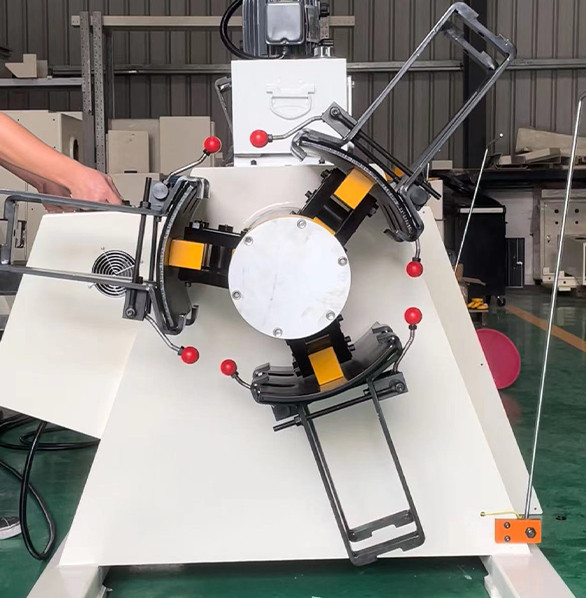
Coil slip on a mandrel rarely announces itself as slip. It shows up first as a length error at the die, then as a bright ring inside the bore, and only later as a coil that turns a few degrees under full tension.
The instinct is to tighten the brake. That is usually the wrong direction, because a brake cannot make a mandrel grip. This is the diagnostic order that finds the real cause in about an hour.
What Slip Looks Like Before It Scrapes the Coil
The first symptom is a feed length that drifts by 0.2 to 0.5 mm for part of a coil and then recovers. The pattern follows the coil, not the shift.
Operators usually describe it as the strip "going soft". What they are seeing is the mandrel turning slightly less than the strip demands, which releases tension and lets the loop grow.
By the time a bright ring appears inside the bore, the slip has been happening for weeks. That ring is the mandrel segment polishing the bore, and it makes the next slip easier.
A chalk line drawn across the mandrel face and the coil edge settles the question in one run. If the two marks separate, the coil moved on the mandrel rather than with it.

The Arithmetic That Decides Whether It Can Grip
Grip is a friction problem, and friction is decided by three numbers: tension, bore radius and the friction coefficient between segment and steel.
Take a 12 kN strip tension on a 1,250 mm coil. The torque at the mandrel is 12 kN times the 0.625 m coil radius, which is 7.5 kNm.
That torque has to be carried at the bore, not at the coil surface. At a 254 mm bore radius, the friction force needed is 7.5 kNm divided by 0.254 m, or about 29.5 kN.
Divide by a dry steel-on-steel friction coefficient of 0.15 and you need roughly 197 kN of total clamping force. Three jaws at 65 kN each give 195 kN.
That margin is thinner than it looks. A polished segment drops friction to 0.12 and the requirement rises past 240 kN. A film of coil oil does the same thing from the other side.
This is why a coil that gripped perfectly in March slips in July. Nothing was rebuilt. The segments were polished by six months of coils, and the margin went negative.
Four Causes, Cheapest Test First
Slip has four common causes, and they are not equally likely. Testing them in cost order avoids a week of strip samples before someone measures the bore.
Cause one, an over-tensioned line. A tension set for 2.0 mm strip on a 0.8 mm run asks the mandrel for torque it never had to carry. Check the tension setpoint before touching a single bolt.
Cause two, an under-expanded mandrel. A 508 mm nominal bore measures 509.2 mm on a coil that sat in a humid yard. The segments bottom out before they touch, and the coil rides on three narrow lines of contact.
Cause three, worn or polished segments. Segment faces that look shiny are burnished, and burnished steel has lower friction than new steel. This is the cause that gets missed because nothing looks broken.
Cause four, a loose-wound coil. If the outer wraps move while the bore stays still, the mandrel is fine and the coil is not. That distinction changes the fix entirely.
| Cause | What the check costs | What it costs to ignore |
|---|---|---|
| Over-tension setpoint | Ten minutes at the HMI | Edge stretch and a coil that will not sit flat |
| Under-expanded mandrel | One caliper reading per coil | Bore scoring that follows the coil to the customer |
| Polished segments | A visual check and a file test | Progressive slip until no tension setting holds |
| Loose-wound coil | One hand push on the outer wrap | A month spent rebuilding a mandrel that was fine |
Measuring Bore, Mandrel and Ovality in Fifteen Minutes
Four readings separate the causes. None of them needs the coil off the mandrel, and all of them fit inside a normal coil change.
- Bore diameter at three clock positions, using an internal caliper. Record the largest, not the average.
- Mandrel diameter fully expanded, measured on each segment face rather than on the body.
- Coil ovality, as the difference between the largest and smallest bore reading on the same coil.
- Expansion pressure at the hydraulic unit, read while the coil is loaded rather than free.
An ovality above 3 mm is enough to explain slip on its own, because only two of the three segments carry load. A bore 1 mm over nominal removes most of the expansion travel before the segments touch.
The Fixes in the Order Worth Trying
Fix in ascending cost. Each step below is cheaper than the one after it, and the first two solve most cases on a mandrel that is otherwise sound.
- Clean the segments with a degreasing solvent, then wipe dry. Oil film is worth about 0.03 of friction.
- Bring expansion pressure up to the upper end of the maker's range, usually 70 to 90 bar.
- Fit a 0.5 mm liner shim on each segment for bores that run oversize by 1 to 2 mm.
- Replace segment faces once they are burnished or scored, and keep the old set as a spare.
A liner shim is a legitimate field fix, not a bodge, provided the bore stays round.
On a 1,250 mm coil with 12 kN tension it recovers roughly 40 kN of clamping margin, which is the difference between marginal and safe.
Reducing tension is the other cheap fix, and it is often correct. If the part needs 12 kN because the loop is short, the loop is the problem, not the mandrel.
When the Brake Is the Problem After All
Slip and brake trouble look alike at the die, and separating them is worth ten minutes because the two fixes sit at opposite ends of the machine.
Slip leaves a mark in the bore. Brake trouble leaves the bore clean and shows on the tension gauge as a wave with a period of exactly one coil revolution.
A worn brake disc on an uncoiler releases unevenly, so tension rises and falls once per turn. The strip then reaches the line in a wave that the loop control spends the rest of the coil chasing.
The test is a coast-down. Run at production tension, stop the drive and watch how quickly the mandrel stops. A healthy brake holds it inside one revolution; a worn one lets it coast for three.

Both faults can exist at once, which is why the order matters. Fix the grip first, then the brake, or the second test will be read against a moving baseline.
Where a Mandrel Cannot Help You
Not every slip is a grip problem, and a stronger mandrel will not fix the ones that are not. Four situations sit outside what any segment design can do.
Thin strip, small bore. A 0.3 mm strip wound on a 406 mm bore crushes at the bore before the segments reach full pressure. The coil deforms, and no amount of clamping restores the round.
Loose-wound coils. When the outer wraps move independently of the bore, the coil is behaving as a spring. A mandrel grips the bore, and the bore is not what is moving.
Damaged bores. A coil dropped on its edge arrives with a flattened bore. Two segments contact, the third floats, and the contact pressure doubles on two narrow strips of steel.
Very wide coils on a narrow mandrel body. At 1,500 mm width the coil can cock on the mandrel under tension, which reads as slip but is really a squareness problem at the coil, not friction at the bore.
In each case the honest answer is a different loading method, a different coil specification, or a coil car that does not drop the coil in the first place.
Keeping It From Coming Back
Once the cause is known, the prevention is a schedule rather than a repair. Three habits keep a mandrel inside its friction margin for years.
Record bore diameter on every incoming coil for one month. The distribution tells you whether your supplier's bore tolerance is the real source, and it costs nothing but a clipboard.
Add segment inspection to the quarterly service. Look for burnishing, measure face flatness, and replace before the shine spreads across the full contact area.
The wider specification questions, including how bore, weight and mandrel type are chosen before a machine is built, are worked through in the coil line knowledge base.
Segment sets, liner shims and mandrel bodies are listed with their bore ranges in the coil handling equipment index, which is the faster check before ordering a spare.
Three questions come back from the floor often enough to answer here.
Is 1.5 mm of bore oversize too much?
Above 1.5 mm over nominal on a 508 mm bore, most three-segment mandrels run out of expansion travel. A liner shim covers 1 to 2 mm; beyond that the segments need replacing.
Can a 12 kN tension be held on a 5-tonne coil?
Yes, if the mandrel delivers about 200 kN of clamping force at 0.15 friction. Below 180 kN the margin disappears as soon as the segments polish.
Does a liner shim damage the bore?
No, provided the shim is softer than the coil steel and the bore is round within 2 mm. Hardened shims on an oval bore will mark the coil.
Where to go next
Slip is one symptom inside a larger decision about capacity, mandrel type and control. That chain, from coil weight through bore size to brake pressure, is mapped in the decoiler specification guide.
It is worth reading before a machine is ordered rather than after a coil has been marked.
Work through the decoiler specification chain