Why Does a Decoiler Brake Overheat on Long Runs?
- Share
- publisher
- David Park - Senior Stamping Engineer, FANTY Machinery
- Issue Time
- Oct 13,2026
Summary
Brake heat is a symptom, and three of the four common causes are settings rather than worn parts. The article separates a tension fault from a brake fault with one test, works the drag torque for a 5-tonne coil down to the core radius, and marks the cases where a hot brake is normal and should be left alone.
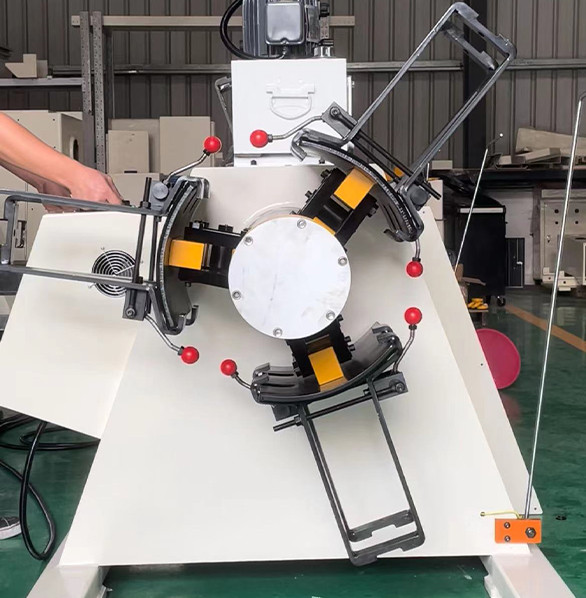
A brake that runs hot on a decoiler is rarely a brake problem. In most cases the pads are doing exactly what the setting asks them to do, and the setting is asking for too much.
Heat is the visible symptom. The cause sits upstream, in how drag tension was chosen and how it behaves as the coil pays out.
This article walks through four causes on a decoiler machine, how to test each one on a loaded coil, and the setting that holds without cooking the pads.

The Brake Is Usually the Messenger
A decoiler brake has one job: hold back the coil so the strip leaves under controlled tension. Every newton-metre of drag becomes heat somewhere.
Normal running temperature for a dry friction brake sits around 60 to 75 °C at the pad surface. Above 90 °C the friction coefficient starts to fall and the pad wears faster.
So the useful question is not whether the brake is hot. It is why the setting demands more drag than the job needs, or why the drag has drifted upward on its own.
What an overheated brake looks like. Tension that increases through the shift, glaze on the pad face, a faint smell near the payoff, and coil wraps that tighten toward the core instead of relaxing.
By the time an operator notices the smell, the pads have usually lost their friction curve and the line is holding tension by luck rather than by setting.
Four Causes Worth Checking in Order
Work from the cheapest check to the most expensive. Three of the four are settings, and only one of them is a worn part.
Drag set for the heaviest coil. Someone sets tension on a full 5-tonne coil and never resets it. As the coil empties, the same brake torque holds a lighter coil with proportionally more force.
Brake applied against a driven payoff. If the payoff motor runs in speed control while the brake drags, the two fight each other. The brake absorbs the difference as heat.
Air pressure above specification. A pneumatic brake delivers torque in proportion to air pressure. A regulator drifting from 0.4 to 0.55 MPa raises drag by roughly 35 percent.
Pads glazed or the disc scored. This one is a genuine wear fault. Glazing drops the friction coefficient, so the operator raises pressure to compensate, which raises temperature further.
| Cause | How It Shows Up | How to Confirm It | Where It Costs You |
|---|---|---|---|
| Drag set for the heaviest coil | Temperature climbs through the coil | Log pad temperature at full and empty coil | Costs nothing to fix, but costs a pad set every few months if ignored |
| Brake fighting a driven payoff | Constant heat at steady speed | Compare payoff motor current with the brake released | Wastes energy continuously and hides a control fault behind a wear problem |
| Air pressure over spec | Heat rises and falls with the shop compressor | Read the regulator gauge over a full shift | Cheap to fix, but the fault is shared with every other air user in the plant |
| Glazed pads or scored disc | Heat plus a flat, spongy tension feel | Inspect the pad face and measure disc thickness | Requires parts and a stop; the only cause here that cannot be tuned away |
Three of the four can be settled with a gauge and a screwdriver. The table is deliberately ordered that way, because replacing pads before checking the setting is the most common wasted spend on a payoff.

Testing Drag on a Loaded Coil
You can settle most of this in forty minutes with the line stopped and one coil on the mandrel. Do it before ordering any parts.
Step one: read the regulator. Note the gauge value, then watch it for ten minutes. A gauge that swings by 0.1 MPa while the compressor cycles tells you the drag is not constant.
Step two: release the brake and jog the payoff. With the brake fully off, the payoff motor should hold the coil without help. If it struggles, the brake was covering a weak drive.
Step three: measure at two coil diameters. Set drag on a full coil, run to half, and measure pad temperature again. A rise of more than 15 °C points to a fixed setting on a changing coil.
Step four: inspect the pad face. Glaze looks like a polished, glassy surface. A scored disc shows as concentric grooves you can catch with a fingernail.
- Record the pad temperature at full coil and at half coil. The difference matters more than either reading alone.
- Check the air regulator while the shop compressor cycles, not during a quiet moment.
- Confirm that the payoff can carry the coil with the brake off. That single test separates a brake fault from a drive fault.
Run the four steps in order and you will normally arrive at one of two answers: the setting is wrong, or the brake is genuinely worn. Both are cheap to resolve once they are separated.
How to Separate a Tension Fault From a Brake Fault
The two produce almost the same symptom and completely different fixes. One test tells them apart.
Brake fault. Temperature rises with time at constant speed and constant coil diameter. The heat accumulates because the brake is generating more torque than the setting implies.
Tension fault. Temperature is fine but the strip arrives at the line loose at the core and tight at the outside wrap. The brake is behaving, but the reference is wrong.
Both at once. Common on lines where nobody owns the payoff. A glazed pad raises pressure, the higher pressure over-tensions the strip, and the loop controller downstream hides it until the parts go out of tolerance.
If the loop looks stable and the brake is still hot, trust the thermometer over the control screen. A closed loop will compensate for a brake fault for a long time before anything visible changes.
Reading a Hot Brake Correctly
Some hot brakes should be left alone, and a plant that chases every temperature reading will spend money it does not need to spend.
Very short coils. A 400 kg coil on a 5-tonne machine runs a high drag relative to its mass. Pad temperature will sit higher than on a heavy coil, and that is normal for the machine size.
High line speed with a light strip. Thin strip at 60 m/min can demand more braking power than thick strip at 20 m/min, because energy dissipation depends on speed. A hot brake here is a duty-cycle fact, not a fault.
A brake doing a drive's job. On an older line with a free-running payoff, the brake is the only tension control there is.
It will run hot by design, and the honest fix is a different payoff rather than a different pad.
Where the data misleads: a single temperature reading means almost nothing without the coil mass, the line speed and the time at speed. Measure all four or none.
Setting the Drag for a 5-Tonne Coil
Take a 5-tonne coil, 508 mm inside diameter, 1,250 mm outside, 300 mm wide, 1.5 mm SPCC, feeding a line at 45 m/min.
Start from strip tension, not from brake torque. A typical target for this material is 3 to 5 percent of yield. For SPCC at roughly 280 MPa, that is 8 to 14 MPa of strip tension.
Convert to a force at the strip. 14 MPa across a 300 mm by 1.5 mm section is about 6.3 kN. Multiply by the coil radius and you have the torque the brake must hold.
At full coil. A 625 mm radius needs roughly 3,940 N·m. At a 350 mm core radius the same tension needs only about 2,200 N·m, which is the whole reason a fixed setting overheats.
What to do about it. Either accept the mid-coil compromise, or use a payoff with closed-loop tension control so the brake torque follows the diameter.
On a 5-tonne coil the diameter ratio is roughly 1.8 to 1. A brake set at the full-coil value is over-braking by about 80 percent by the time the coil reaches the core.
Keeping the Brake Cool Without Losing Tension
Once the cause is known, the fix is usually a setting change plus one hardware decision. The order matters, because hardware should not be bought to solve a setting problem.
Step the drag down with the coil. Two or three positions on the regulator, changed at known coil diameters, costs nothing and removes most of the overshoot.
Set the regulator from the gauge, not from feel. Write the specified pressure on the machine. A brake adjusted by ear drifts with whoever is on shift.
Add a forced-air shroud only if the duty cycle demands it. Cooling treats the symptom. It is legitimate on a high-duty line, and pointless on a line that is simply over-braked.
Move to closed-loop tension when the diameter ratio is large. Above roughly 1.5 to 1, a diameter-following control pays for itself in pad life and strip consistency together.
FANTY has built coil handling equipment for 12 years, with 370 staff across production and service.
On an uncoiler with a driven payoff, the cheapest correct answer is often a control change rather than a bigger brake.
Machine sizes and drive options are listed on the decoiler range page.
How hot is too hot for a decoiler brake, 60 or 90 °C?
Treat 75 °C as normal for a dry friction brake and 90 °C as the point where friction starts to fall. Sustained running above 90 °C shortens pad life sharply.
Should drag tension drop as the coil goes from 5 tonnes to 1?
Yes. At a constant setting the braking force per unit of strip tension rises roughly 80 percent as the coil empties on a 1.8 to 1 diameter ratio.
How many coil changes should a brake pad last, 500 or 5,000?
On a correctly set brake, 3,000 to 5,000 changes is reasonable. A pad failing inside 500 changes almost always points to a setting or a fighting-drive problem.
Can a hot brake be cooled with a fan instead of being fixed?
It can, and on a high-duty line that is a legitimate fix. On a line that is simply over-braked, a fan adds noise and air demand without removing the cause.
At what line speed does the brake start to overheat?
Speed alone does not set it. Energy dissipation rises with speed and with drag torque together, so 60 m/min on thin strip can heat a brake more than 20 m/min on heavy strip.
Is a water-cooled brake worth the plumbing?
Only above a genuinely heavy duty cycle, typically continuous running on coils above 10 tonnes. Below that, a diameter-following tension control solves more for less.
Where to go next
Brake and tension behaviour is one item in the decoiler specification chain. Capacity, machine type and mandrel come before it, and the whole chain is laid out in the same cluster.