Why Does a Spare Parts List Decide Coil Line Uptime?
- Share
- publisher
- David Park - Senior Stamping Engineer, FANTY Machinery
- Issue Time
- Nov 3,2026
Summary
A spare parts list is cheap at the order stage and expensive at two in the morning. This walks the list in the order a buyer can work in: sort by lead time rather than price, decide which consumables to stock for year one, write four clauses that make dispatch windows enforceable, audit the crate during commissioning week, and know where the exercise stops paying back.
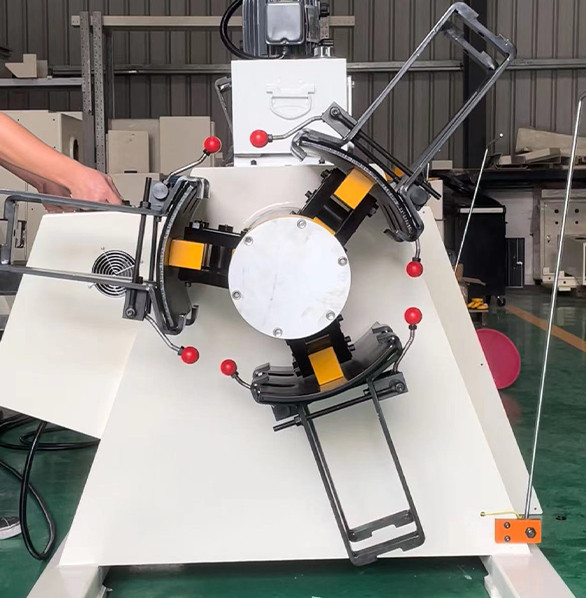
The spare parts list is usually the last page of a coil line quotation, and it is the page that decides how long the line stands still in month seven.
Coil line spare parts cost very little at the order stage and a great deal at two in the morning on a Sunday.
What follows is the order a buyer can actually work in: what belongs in the first crate, what to leave on the shelf at the supplier, what to write into the contract, and where the whole exercise stops paying back.
The wider machine range is listed on our equipment specification pages.
Start With the Parts That Stop the Line in the First Hour
Most year-one stoppages on a coil line are not spectacular. A brake pad glazes, a loop sensor drifts, a seal weeps, and the line runs at half speed until someone finds the fault.
The cost is not the part. It is the hours between the fault appearing and the replacement arriving, and that interval is set entirely by what was in the crate on day one.
Think in hours, not in currency. A wear part that costs 40 dollars and takes nine days to reach a plant in northern Europe is not a 40-dollar risk. It is a nine-day risk with a 40-dollar price tag.
That reframing changes the list. You stop asking which parts are cheap and start asking which parts, if absent, will idle a press crew of six.
Two things follow. First, the list has to be built from the maintenance schedule backwards, not from the bill of materials forwards.
Second, the buyer, not the supplier, has to sign off on it, because only the buyer knows how far the plant sits from a spare.
Sort the List by Lead Time, Not by Unit Price
Split every candidate part into three bands by the time it takes to arrive, not by what it costs. The bands drive the decision, and the price only decides how many you hold.
Parts inside seven days can sit at the supplier. Parts between one and four weeks need a decision at order stage. Parts beyond four weeks have to be in the crate, whatever they cost.
| Wear item | Typical lead time | Stock at commissioning | Where it hurts you |
|---|---|---|---|
| Brake pads or caliper linings | 3 to 10 days | One set | Glazing shows as loop hunting, so crews chase the sensor instead |
| Hydraulic seals and hoses | 1 to 3 weeks | One seal kit | A weeping seal becomes a floor spill and a stopped shift |
| Loop or slack sensor | 2 to 5 weeks | One unit | Lead time usually exceeds the delivery promise on the replacement |
| Encoder and coupling | 3 to 6 weeks | One coupling | Coupling failure looks like a control fault and eats a day of diagnosis |
| Feed roll coating set | 6 to 10 weeks | Not at first, but price it | Marking complaints arrive before the wear limit does |
| Contactor and overload relay | 2 to 8 weeks | One of each rating | Obsolete frame sizes are the classic six-week surprise |

Read the table as a budget, not a shopping list. The middle column is a decision you make once, and the last column is the reason the decision matters.
Note that the feed roll coating sits outside the first order on purpose. It wears slowly, it is priced into the first two years of maintenance, and buying it early ties up money in a part that may be superseded.
The Consumables You Will Reorder Inside Twelve Months
Consumables are the parts that fail on a schedule rather than a surprise. They belong in the maintenance budget, and their consumption rate is a design signal worth watching.
- Brake linings, if the line runs more than two coil changes an hour.
- Hydraulic filter elements, replaced on hours rather than on pressure.
- Feed roll cleaner and dressing compound, if coated strip is in the mix.
- Proximity switches on the loop and the end-of-coil arm, at roughly two a year.
- Air filter bowls and regulator diaphragms on any pneumatically braked unit.
Watch the ratio between consumable spend and scheduled maintenance hours. When linings start arriving quarterly instead of annually, the loop control is probably working the brake harder than it should.
What the Spare Parts Clause Should Say
A parts list without contract wording is a wish. Four clauses convert it into something enforceable, and none of them is unusual in a machinery purchase.
| Clause | What it buys | Where it costs you |
|---|---|---|
| Named list with part numbers | A list you can hand to a local distributor | Suppliers resist publishing numbers; expect a redacted version |
| Guaranteed dispatch window | A clock that starts on the purchase order | Prices rise when the window is short, typically 5 to 12 percent |
| Ten-year availability statement | Protection against a discontinued control card | Rarely given on electronics, so scope it to mechanical parts |
| Interchangeability declaration | Freedom to buy the second set elsewhere | Voids nothing, but the supplier may decline to warranty a third-party fit |

The second clause is the one buyers underuse. A dispatch window measured from the purchase order, not from the acknowledgement, is what turns a nine-day gap into a three-day one.
Write the clause in hours and days, not in words like promptly or as soon as possible. A dispatch window with no unit is not a window.
Name the carrier and the incoterm in the same sentence. A part that leaves the factory in three days and sits in customs for two weeks has not arrived in three days.
Expect pushback on the electronics. A ten-year availability promise on a servo drive is not something any builder can honestly sign, because the drive maker's own lifecycle is shorter than the machine's.
Commissioning Week Is When the List Gets Tested
The crate arrives with the machine, and the first week is the only chance to confirm it against the actual build. Do that check while the supplier's engineer is still on site.
Open every box, match every part number against the list, and fit at least one of each wear item under supervision.
A seal kit that does not match the cylinder is discovered in five minutes here and in five days later.
Photograph the shelf layout before the engineer leaves. Crews reorganise stores within a month, and a parts list that does not match the shelf is a list nobody trusts.
Record the ambient conditions too. A plant at 85 percent humidity will corrode bare mandrel surfaces and stored linings faster than a European buyer expects, and that changes the stocking quantity.
FANTY ships lines into more than 60 countries, and the pattern is consistent: the plants that audit the crate in week one raise fewer urgent parts requests in year one.
Where a Spare Parts List Stops Being Useful
Three situations defeat the list, and pretending otherwise is how buyers end up with a shelf of parts they never fit.
Control obsolescence. When a drive or a motion card is discontinued, no parts list saves you. The only mitigation is a documented migration path, agreed at order, naming the successor hardware.
Damage rather than wear. A dropped coil or a fork-truck strike does not consume a wear part. It bends a frame, and the recovery is a service visit, not a box on a shelf.
Low-utilization lines. Below roughly 800 hours a year, a two-year spares holding is money sitting still. Buy on demand and pay the freight, because the parts will be obsolete before they are needed.
The list also misleads on cost. A buyer who stocks everything spends perhaps 4 percent of the machine price on inventory that turns over once in three years, and that capital has a price the quotation never shows.
How much does one day of downtime cost on a 200 SPM line?
At 200 SPM and 70 percent utilization, a single shift produces roughly 67,000 strokes.
A two-shift day lost on a part worth 300 dollars usually costs between 6,000 and 20,000 dollars in labour and margin, which is why the lead time dominates the price.
Do six wear parts really cover most year-one stoppages?
In our service records on more than 200 installed lines, six categories account for the large majority: brake linings, seals, loop sensors, encoder couplings, contactors and roll coating.
Everything else is either a multi-year item or damage.
What spares budget should a buyer hold at 1 million parts a year?
Plan 2 to 4 percent of the machine price for the first order and 1.5 to 3 percent a year after that. The band moves with coil changes per shift, because every change works the brake and the mandrel.
Which documents should ship inside the spares crate?
Three: a part-number list matching the physical labels, an assembly drawing for each stocked sub-assembly, and a one-page fitment sheet.
Without the drawing, a seal kit becomes a guessing game at the worst possible moment.
Where to go next
This article sits in the procurement cluster, one level below the guide that maps each specification line to what it really costs at the plant.
If the parts list is being negotiated alongside the machine price, read that mapping first.
Open the specification cost guide