Why Does an Uncoiler Chatter at Full Coil Diameter?
- Share
- publisher
- David Park - Senior Stamping Engineer, FANTY Machinery
- Issue Time
- Nov 11,2026
Summary
A knock that appears at full coil and fades as the coil empties carries its own diagnosis in the frequency. Counting beats against mandrel revolutions separates bore clearance from spline wear from structural resonance in ten minutes. The article covers the inertia and payoff geometry behind the symptom, prices each fix in downtime, and names the three cases where the noise is the coil or the floor rather than the machine.
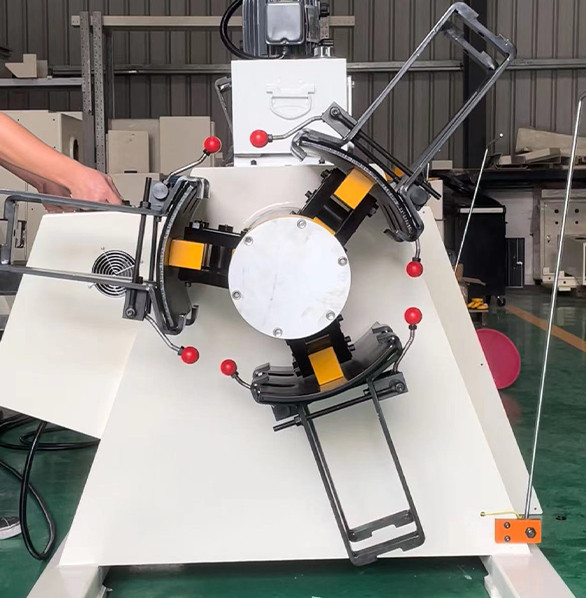
An uncoiler that hammers at full coil diameter and goes quiet as the coil empties is telling you the frequency of the noise, not the loudness. Measure that frequency and half the candidate causes drop out.
You get there before anyone reaches for a spanner.
Coil inertia at 1,500 mm outside diameter is roughly forty times what it is at 600 mm. Anything driven by that inertia changes with coil weight. Anything driven by structure does not.
That single distinction is what makes this fault diagnosable in an afternoon instead of a month.
Why the Noise Fades as the Coil Empties
Three physical quantities fall together as the coil pays off, and each of them feeds a different fault mechanism.
Mass falls. A 1,500 mm coil of 1.2 mm strip at 320 mm bore weighs close to 5 tonnes. At 700 mm it is under 1 tonne. Any fault that needs weight to excite it fades with the coil.
Inertia falls faster than mass. Rotational inertia scales with the square of the radius, so the same coil at 1,500 mm carries about 4.6 times the inertia of the same coil at 700 mm.
Payoff speed rises. At a fixed strip speed of 30 m/min the mandrel turns at 6.4 rpm at full diameter and 13.6 rpm when half empty. The once-per-revolution rate doubles as the coil shrinks.
Those three effects explain why the symptom looks weight-related when it is really inertia-related. They also explain why a bearing that sounds terrible at full coil passes a hand-rotation test on an empty mandrel.
Four Causes You Can Separate in Ten Minutes
Listen with a phone recorder and count the beats against the mandrel revolution. That count splits the causes into two groups immediately.
- One knock per revolution, under 0.5 Hz: the coil bore is loose on the mandrel, or the coil is out of round.
- Four to twelve knocks per revolution: mandrel spline wear, a damaged segment, or a key that has opened up.
- Steady tone between 15 and 60 Hz that does not track revolution count: structural resonance or gear mesh in the drive.
- Random crackle that stops when the strip is slack: strip stick-slip at the payoff point, not the machine at all.
The first two groups are mechanical and get worse with load. The second two are not, and one of them is not even a machine fault.
Bore clearance is the most common. A mandrel expands to nominal bore minus a working clearance. A coil with a bore 6 mm over nominal sits on the segments with a gap that closes and opens once per turn.
Out-of-round coils produce the same signature. A coil that has sat on a saddle for six months takes an oval set. The mandrel cannot round it out, and the strip tension pulses at the payoff point.
The drive reverses under inertia. A brake that holds too hard, or a regenerative drive tuned for a lighter coil, alternates between motoring and holding. Each reversal lands as a knock at the mandrel.
That fault is weight-dependent by definition. Halve the coil and the reversals stop, which is why operators report it as a full-coil problem and mechanics find nothing on an empty machine.
Gear mesh shows up at a different rate. A drive gearbox with 19 teeth produces 19 pulses per mandrel revolution. That is a distinct count from bore clearance and it points straight at the reducer.

What Each Fix Costs in Downtime
Fixes are not interchangeable, and the cheapest one is not always the one that ends the noise. The table prices each route against the time it takes.
| Fix | What it removes | What the downtime costs |
|---|---|---|
| Re-cut the bore liner or fit a sleeve | Clearance knock on one bore size | Two days down; every future bore size needs its own sleeve |
| Replace mandrel segments and keys | Multi-knock from spline wear | Four to six days and a full mandrel strip-down; alignment must be re-checked afterwards |
| Increase snubber roll pressure | Strip lift and payoff pulse at large diameter | Marks on soft or coated strip, and faster roll wear |
| Stiffen the base or add a brace | Structural resonance at 15 to 60 Hz | Foundation work and a week of production; only worth it if the tone survives a load change |
Work down that list in order of cost, not in order of suspicion. The bore check takes twenty minutes and eliminates the most common cause before any downtime is booked.
Snubber pressure is the cheapest experiment and the easiest to overdo. A pinch roll that stops the strip lifting at full diameter will also mark 0.8 mm galvanized at 3 kN.
Measure the strip after the change, not just the noise.
When the Noise Is Not Coming From the Machine
Two conditions produce a convincing decoiler fault with a machine that is entirely sound.
The coil itself. A coil welded at the mill, a coil with a crushed wrap, or one dropped during handling pulses once per revolution no matter which mandrel holds it.
Load a coil from a different heat and the noise usually changes. That single swap is the cheapest test available.
The strip, not the coil. Narrow slit strip at high tension can slip sideways at the payoff point and snap back, which sounds like a knock from the mandrel area. Loosening the drag for one coil settles it in minutes.
A third case is a base that was never grouted. The machine is level and square on the day it is installed, then settles 0.3 mm under repeated coil loads. Chatter starts a season later and the machine gets blamed.
A fourth case is the strip edge itself. Slit burr on one edge catches the guide roll and sends a pulse back through the strip that sounds like a mandrel knock from three metres away.
Where the noise survives a coil change, a tension change and a base check, the mandrel is the right place to look. Before that, it is usually not.

How to Test the Mandrel Without Stripping It
Four checks settle whether the mandrel is worn, and all four can be done with the machine in place and the coil off.
Runout on the expanded mandrel. Mount a dial indicator on the base and sweep the mandrel outside diameter at the nose and at the root. More than 0.05 mm total runout means the segments are not seating evenly.
Expansion travel. Measure the outside diameter collapsed and at rated hydraulic pressure. A mandrel that travels 2 mm where the drawing calls for 5 mm has a seized segment or a tired spring pack.
Segment contact pattern. Mark the mandrel with layout dye, expand it inside a scrap coil bore, and read the contact patches. Three even bands mean the segments carry load.
One bright band means the coil is rocking on a single segment, which is a liner problem rather than a hydraulic one.
Bore measurement on the coil. Take readings at three points around the bore in two planes. A bore that varies by more than 2 mm is oval, and no mandrel expansion will correct it.
Record all four before ordering anything. A mandrel that passes runout and expansion but shows a single contact band needs a liner, not a rebuild, and that difference is a week of downtime.
The Reading to Write Down Before You Touch Anything
Four numbers make the fault repeatable, and without them every conversation about it starts from memory.
Record coil outside diameter, bore, strip width, and the mandrel speed at which the noise begins. Add the noise frequency measured against revolution count.
Those five values separate the four causes in the list above without a single component being removed. They also let a supplier tell you whether the machine is at fault before anyone travels.
Bore and mandrel expansion figures for our builds appear in our decoiler data library, and the coil line guide library sets out the capacity and mandrel logic behind that number.
A decoiler and a plain uncoiler are sized by the same bore arithmetic, so the numbers transfer between machine types without conversion.
Does a 4 mm bore clearance make an uncoiler start to knock?
Beyond 4 mm over nominal the knock becomes audible at full coil weight. At 8 mm it is loud enough to be reported as a mechanical failure, and the mandrel is usually undamaged.
Does a 5-tonne coil make the fault worse than a 2-tonne coil?
It makes an inertia-driven fault worse and a structural one no different. That comparison alone is worth running before any parts are ordered.
Do 4 to 12 knocks per revolution point to spline wear?
Between 4 and 12, matching the number of mandrel segments. A single knock per turn points to bore clearance or an out-of-round coil instead.
Where to go next
Chatter is a symptom that a specification decision either prevented or invited, and bore tolerance is the first place that decision is made.
Our coil line knowledge base works through capacity, machine type, mandrel design and control in the order a buyer has to settle them.