Why Does an Uncoiler Need a Snubber Roll?
- Share
- publisher
- David Park - Senior Stamping Engineer, FANTY Machinery
- Issue Time
- Oct 9,2026
Summary
A snubber roll rides on the coil outside diameter, keeps wraps tight and adds a small, steady back tension. This guide explains the four symptoms of a loose coil, how to tell a snubber problem from a mandrel or brake problem, and how a snubber compares with a hold-down arm and a peeler. It also sets out five cases where a snubber roll will not help.
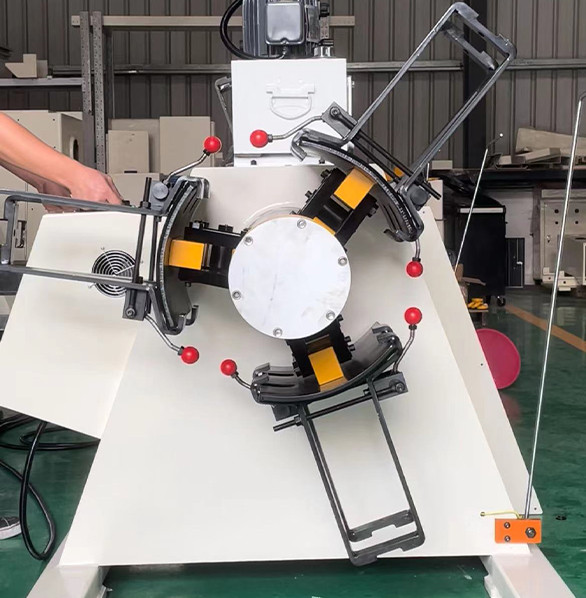
An operator hears it before he sees it: a dull slap once every revolution, then a strip that jumps as the outer wrap comes off the coil.
By the time the wrap has sprung, the coil is loose on the mandrel, the payoff tension is unstable, and somebody downstream is blaming the feed system.
This article explains what a snubber roll does on a decoiler, when the symptom is coming from somewhere else entirely, and where a snubber roll will not help at all.

A coil is only tight because it was wound tight at the mill. Once the outer band is cut and the first wraps are paid out, nothing holds the rest together.
That is the whole reason the accessory exists.
The Symptom: Loose Wraps and a Slapping Strip
A loose coil announces itself in four ways, and they arrive in a predictable order.
- A slap once per revolution. The loose wrap hits the mandrel or the guide as the coil turns.
- Tension spikes at the payoff. The strip goes tight, then slack, in step with the wrap.
- Edge damage on the coil face. Wraps rub against each other when the coil is loose.
- A strip end that flips. On a nearly empty coil the free end can lift and catch the peeler.
The last one is the expensive one. A flipped strip end bends the first metre of material and sometimes the guide.
What a Snubber Roll Actually Does to the Coil
A snubber roll rides on the outside diameter of the coil and presses the wraps together. That is the whole mechanism.
Two useful things follow from it. The wraps stay tight, so the payoff stays stable as the coil empties. And the roll drags against the coil, which produces a small, steady back tension.
On a 1,250 mm coil running 0.8 mm strip at 25 m/min, that drag is often enough to stop the strip ballooning when the line decelerates.
The roll must follow the coil diameter as it shrinks, so it is mounted on a pivoting arm. Gravity, a spring or a pneumatic cylinder provides the force.
Pressure matters more than most people expect. Too light and the wraps still spring; too heavy and the roll marks the coil face and loads the drive.
On a pneumatic arm the pressure should fall as the coil diameter shrinks. A constant setting that suits a full 1,500 mm coil is far too heavy at 700 mm.
Mechanical arms solve this with geometry rather than control. The arm angle changes the effective force, which is why a simple gravity snubber can still work on a steady-speed line.
Roll material follows the strip. Polyurethane for coated and soft material, steel for bare heavy gauge where marking is not a concern.
When the Symptom Comes From Somewhere Else
Loose wraps are a symptom, and a snubber roll only treats one cause. Work through the table before you order hardware.
| What You Observe | Most Likely Cause | Where the Fix Costs You |
|---|---|---|
| Loose wraps on every coil, all suppliers | No hold-down on the uncoiler at all | A retrofit arm costs money and downtime, but it is the cheapest of the four fixes |
| Loose wraps only on some coils | Soft-wound coils from the mill, or coils that were dropped | A snubber masks it; rejecting the coil costs a supplier argument and a delivery delay |
| Wraps tight, but tension still spikes | No brake or back tension control on the mandrel | A snubber is the wrong purchase — you need a tension-controlled drive |
| Coil slips and also loosens | Mandrel not fully expanded, or coil inside diameter outside the expansion range | Correcting it may mean a different mandrel, not an accessory |
| Slap only at the end of the coil | Reduced coil weight, so the same drag now over-brakes the payoff | Needs pressure that reduces with coil diameter, which is a control change |
Rows two and three are where most wrong purchases happen. A snubber roll cannot tighten a coil that was wound loose, and it cannot substitute for tension control.
Check the brake before the accessory. If the mandrel coasts when you release the drive, no arm on the outside diameter will fix the tension.
Then check the mandrel expansion. A coil that moves on the mandrel also loosens, and the loosening is the symptom rather than the fault.
Snubber, Hold-Down Arm or Peeler: Which One You Need
Three accessories sit around the same coil and get confused with each other. They solve different problems.
| Accessory | What It Gives the Run | Where It Costs You |
|---|---|---|
| Snubber roll | Keeps wraps tight and adds light, steady back tension as the coil pays out | Adds drag, so a marginal drive can stall; contact pressure must fall as the coil empties |
| Hold-down arm | Same job with a heavier, controllable force, usually pneumatic | Needs air, a regulator and a pressure schedule; over-pressure marks the coil face |
| Peeler | Lifts and guides the outer wrap so the operator can start the strip without touching the coil | Does not hold wraps tight once the coil is running; it is a threading aid, not a tension device |
If your only problem is starting a new coil, buy a peeler. If wraps loosen during the run, you need a snubber or a hold-down arm.
On coils from 1,200 to 1,500 mm outside diameter and strip from 0.5 to 3 mm, a snubber roll with a pneumatic arm covers most of the range.
Where a Snubber Roll Will Not Save You
It is a cheap accessory with a narrow job, and it fails in five situations worth knowing before you buy.
Heavy gauge. Above roughly 4 mm the strip is stiff enough that the coil holds itself. An arm adds cost and marking for no gain.
Thin, high-speed strip. Below 0.4 mm the tension the arm provides is not enough on its own; you need a controlled mandrel drive.
Soft-wound coils. If the mill wound the coil loosely, no external roll will make the wraps behave. Fix the material, not the machine.
Small mandrels and light coils. On a 1-tonne coil the added drag can be a meaningful share of the drive torque, and the payoff can stall at low speed.
Clean-room or cosmetic strip. Any roll that touches the coil face can leave a mark on polished or pre-coated stock. Contact pressure and roll material have to be chosen for the surface, not just the load.
A snubber roll is a stabiliser. It is not a substitute for a properly sized mandrel, a working brake, or a coil that was wound correctly in the first place.
Order it with the machine if you know the strip is thin, coated or delivered on soft-wound coils. Retrofitting an arm later costs more than specifying it at the start.
If the line already has one and wraps still loosen, measure the arm pressure at a full coil and again at a small one before ordering anything else.
Our engineers have specified coil handling equipment for more than 200 installations across 60 export markets.
The starting point for any of it is the specification chain — capacity, type, mandrel, control — which is set out in the coil line guide library.
If you are still choosing between a powered and a manual machine, the decoiler product range lists the standard capacities and drive options.
Does a snubber roll still work below 600 mm coil diameter?
Below about 600 mm outside diameter the arm has little leverage and the wrap tension is already low. That is the point to switch to a controlled drive instead.
How much back tension does a snubber roll add on a 5-tonne coil?
Typically 2% to 5% of the strip yield strength. On 0.8 mm mild steel that is a light, useful drag; on 3 mm stock it is barely measurable.
Does a hold-down arm mark pre-coated coil faces?
It can. Keep contact pressure under roughly 0.3 bar on pre-coated stock and use a polyurethane roll rather than a steel one.
Can a snubber roll replace a brake on an uncoiler?
No. A brake or a regenerative drive controls tension across the whole coil; a snubber only adds a small passive drag. On a 0.5 mm strip, passive drag alone is not enough.
Does a 508 mm coil bore fit a standard mandrel?
Most machines are built for a 508 mm bore, with 610 mm available as an option. Outside that range the mandrel cannot grip evenly and the coil will also loosen.
How often should a snubber roll be replaced?
Inspect the roll surface every 500 hours and expect a polyurethane roll to last two to four years on a two-shift line. A flat spot on the roll is the usual reason for replacement.
Where to go next
This article sits in the decoiler branch of the coil line guide library, one layer below the specification pillar. It diagnoses one accessory decision rather than specifying a whole machine.
Read the decoiler specification guide