Can a Coil Line Run Prepainted Steel Without Marking It?
- Share
- publisher
- David Park - Senior Stamping Engineer, FANTY Machinery
- Issue Time
- Oct 29,2026
Summary
An appliance plant reworked 3 percent of every shift on 0.5 mm prepainted steel, and both the coating supplier and the die shop were blamed before anyone measured the line. This traces the marks to four contact points, prices the fix at $7,500 against a $9,400 monthly rework bill, and separates the marking defect from a die clearance problem nobody had noticed. It also lists the four runs where coated strip should not be used at all.
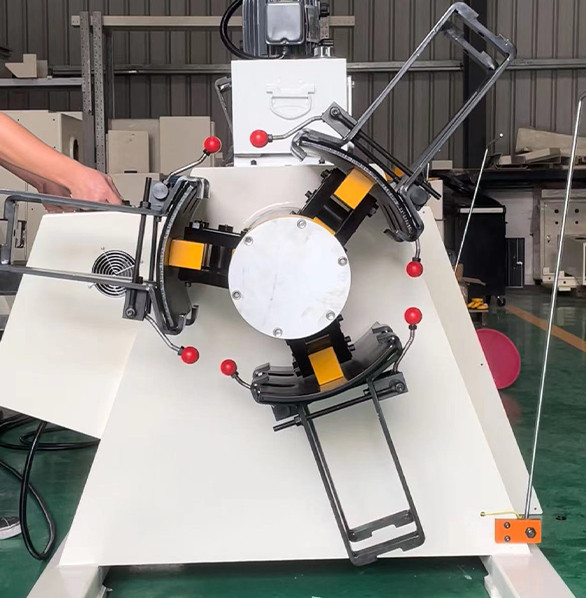
An appliance plant in Nuevo León ran 0.5 mm prepainted steel through a coil line at 60 strokes a minute and reworked 3 percent of every shift.
The marks were on the visible face, they were 2 to 4 mm wide, and they ran parallel to the strip edge.
The paint supplier blamed the coating. The die shop blamed the die. Both were wrong, and the answer sat in four places along 6 metres of line.
Prepainted strip is a different material from bare cold-rolled steel, even when the substrate and the gauge are identical.
The coating is 20 to 25 µm of polyester over a 5 µm primer, and it is softer than the steel underneath.
Any surface that grips the strip hard enough to feed it will also mark it, unless the line is set up for that compromise.
The Panels That Started the Investigation
The part was a side panel for a built-in oven, 0.5 mm substrate, 880 mm wide, 1,240 mm developed length, 60 SPM. The visible face was the top face as it ran through the line.
Rework had been running at 2.5 to 3.5 percent for four months. Each rejected panel cost $4.80 in material and 90 seconds of line time, which came to roughly $9,400 a month.
The plant had already changed the coating supplier once and re-polished the die twice. Neither moved the number, which is the strongest signal that the defect is upstream of the die.
Mark direction is the first diagnostic. Marks that follow the strip length come from a roll that turns against the strip. Marks that run across the strip come from a fixed guide or a die entry.
These ran lengthwise. That narrowed it to four rotating contact points, and eliminated the die entry straight away.
Where the Marks Came From: Four Contact Points
Between the coil and the die, the strip touches the entry pinch rolls, the straightener work rolls, the feed rolls and the edge guides. Each one can mark a coated surface, and each fails differently.
The entry pinch rolls were the worst offender. They were plain steel, 90 mm diameter, loaded at 5 bar to pull a 1.2-tonne coil.
Every stop left a flat spot on the roll, and every flat spot printed itself on the strip.
The straightener work rolls were clean but over-penetrated. Nine rolls at 0.35 mm of penetration on a 0.5 mm strip produced enough pressure to press mill scale and dirt into the coating.
The feed rolls had been knurled by a previous owner to stop slip on oily bare steel. On coated strip, knurling is a stamping tool, not a grip.
The edge guides were fixed nylon blocks with 0.4 mm of clearance. At 60 SPM the strip walked 0.2 mm, touched the blocks, and picked up a smear 40 mm from the edge.
What Coating Hardness Does to Roll Pressure
A polyester coating on an appliance panel measures around 2H on the pencil scale. Bare cold-rolled steel is roughly 4H, and the difference decides how much pressure the line can apply.
The old setting was 5 bar on the feed rolls, chosen years earlier for bare steel at 180 SPM. At 60 SPM the same strip needs about 40 percent less force to move, so the pressure was pure surplus.
Dropping to 3.2 bar removed the feed roll marks and did not introduce slip, because slip depends on acceleration and the line was running slowly.
Roll hardness matters as much as pressure. A 70 Shore A polyurethane roll conforms to the strip and spreads the load over a wider contact patch. A steel roll concentrates it on a line 0.2 mm wide.
The plant changed the entry pinch rolls to 75 Shore A polyurethane and kept the feed rolls steel, which was the cheaper half of the fix.

Four Contact Points and What Each One Costs
| Contact point | Damage mode | Setting that fixes it | Where it costs you |
|---|---|---|---|
| Entry pinch rolls | Flat-spot printing, 3 to 5 mm bands | Polyurethane cover, 4 bar | $1,800 per roll pair, 3-week lead time |
| Straightener rolls | Dirt pressed into coating | Penetration 0.25 mm, felt wipers | Less flatness correction on thick strip |
| Feed rolls | Knurl imprint, 0.05 mm deep | Smooth rolls, 3.2 bar | Slip risk above 120 SPM |
| Edge guides | Smear along one edge | Roller guides, 0.15 mm clearance | $900 and a wider footprint |
Only the first and third items were visible on the panel. The straightener rolls contributed a dull haze that passed inspection but failed a gloss meter at the customer's plant.
That is the part of coated-strip work that catches plants out: two of the four defects are not visible under shop lighting, and both show up in a gloss or adhesion test three weeks later.
What the Die Was Doing All Along
The die was innocent on the marks but guilty on a second defect nobody had separated from the first. Coated strip sheared with a different edge than bare steel, and the clearance had been set for bare.
At 8 percent clearance per side, the coating sheared ahead of the substrate and left a 0.1 mm lip that flaked during the bend.
The flakes appeared as pinholes after painting, which sent the plant back to the paint supplier.
Reducing clearance to 5 percent per side and adding a 0.5 mm entry radius removed the flaking. It also raised punch load by about 6 percent, which the press absorbed without complaint.
Coating thickness changes the shear. A 25 µm coating on a 0.5 mm substrate is 5 percent of the section, and at the cut edge it behaves like a brittle layer with no ductility.
Where the panel is bent after blanking, that edge is the first place a crack starts, and it will be blamed on the coating batch.

Runs Where Prepainted Strip Should Not Go
Coated strip is not a universal substitute for bare steel followed by a paint line. Four conditions push it out of its range.
Two-sided visibility. If both faces are cosmetic, every contact point must be non-marking, which usually means a film-covered run and a slower line. The economics rarely survive.
Speed above 150 SPM. Slip control needs pressure, and pressure marks coating. Above 150 SPM on a short feed, the two requirements cannot both be met with steel rolls.
Severe forming. Draws deeper than 60 mm stretch the coating past its elongation and craze it at the radius. Prepainted stock suits bending and shallow drawing, not deep shells.
Protective film left on. Film protects the surface and destroys feed accuracy, because it creeps under the rolls. Plants that run film usually accept 0.1 mm of feed error and a slower line.
What the Change Cost and What It Bought
The plant spent $6,400 on two polyurethane pinch rolls, four roller guides and felt wipers, plus $1,100 on die work. Total $7,500 against a $9,400 monthly rework bill.
Rework fell to 0.6 percent in the first month and 0.4 percent by the third, once the operators stopped adjusting pressure upward when a coil slipped.
Line speed stayed at 60 SPM. The plant had expected to lose 10 SPM and did not, because the marks were never a speed problem.
- Mark direction first. Lengthwise means a rotating roll; crosswise means a fixed guide or the die. It takes ten minutes and halves the search.
- Pressure is a setting, not a spec. The correct value depends on speed, strip mass and acceleration, and it drifts upward every time a coil slips.
- Check gloss, not just the eye. A 60-degree gloss meter at the press exit catches the haze that shop lighting hides.
Surface contact along the whole line — roll count, roll condition and penetration — is covered in the coil line guide library, which is where the straightener settings in this case came from.
The rolls and guides themselves are listed in the coil line equipment range, including the polyurethane covers used here.
How much roll pressure does 0.5 mm prepainted strip need at 60 SPM?
About 3.2 bar on smooth steel feed rolls, against 5 bar for the same strip in bare steel at 180 SPM. Above 4 bar the polyester starts to take a permanent imprint.
What die clearance suits a 25 µm coating on 0.5 mm steel?
5 percent per side instead of 8 percent, with a 0.5 mm entry radius. Punch load rises about 6 percent and edge flaking stops.
At what line speed does coated strip stop being practical?
Around 150 SPM on a short feed. Above that, slip control needs pressure the coating cannot take, and the marks return within a shift.
Does protective film protect the surface during feeding?
It protects the face and costs accuracy. Film creeps under the rolls and typically adds 0.05 to 0.1 mm of feed error, which is the whole budget on a ±0.05 mm part.
How much does a set of polyurethane pinch rolls cost?
$1,600 to $2,000 per pair on a 900 mm line, with a two to three week lead time. They last 18 to 24 months on coated strip at 60 SPM.
Where to go next
This case belongs to the surface and flatness cluster, where roll contact, penetration and strip condition are treated as one system.
If your marks are lengthwise and your penetration is above 0.3 mm, start with the roll geometry before you change any roll.
Read the roll geometry and penetration guide