Can a Standard Mandrel Hold Narrow Slit Coils?
- Share
- publisher
- David Park - Senior Stamping Engineer, FANTY Machinery
- Issue Time
- Oct 24,2026
Summary
A decoiler sized on coil weight can still drop a narrow slit coil, because width rather than tonnage sets the contact stress. This article compares segment, bladder and plain drum mandrel designs, explains how camber-free narrow coils telescope without spacer support, and gives the load per millimetre figures that decide the case. It also states what an expanding mandrel cannot fix, from oversize bores to payoff speeds above 35 m/min.
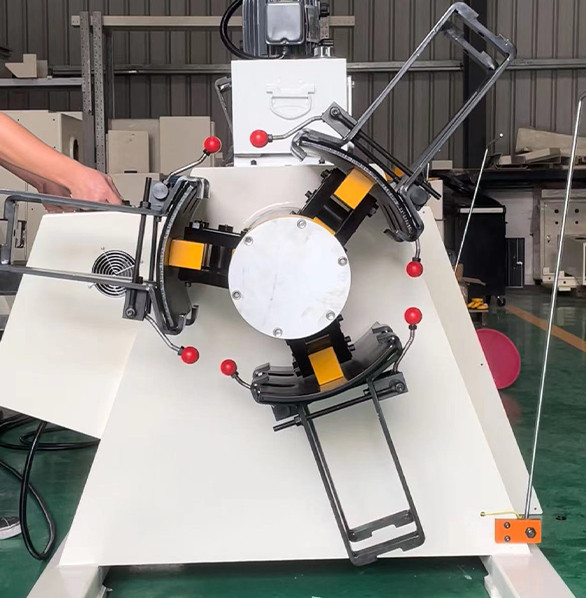
A decoiler mandrel sized for a 1,250 mm master coil does not automatically hold six 40 mm slit coils cut from it. Width, not weight, is what breaks the grip.
I have seen a 15-tonne uncoiler drop a 3-tonne narrow coil because nobody checked the contact area under it.
The Coil Width You Forgot to Specify
Most uncoiler enquiries arrive with three numbers: coil weight, inner diameter and outer diameter. The fourth number, coil width, usually arrives after the purchase order.
That order of events is backwards. A coil 1,250 mm wide sits on the full length of the mandrel body and spreads its load across every segment.
A 40 mm slit coil sits on 40 mm of that same mandrel. The load per millimetre of mandrel goes up by a factor of 30, and the friction that stops the coil turning on the mandrel falls with it.
None of this appears in a weight-based sizing calculation. A 5-tonne mandrel rating assumes a normal coil build, not a narrow strip of steel balanced on one segment.
Ask for the segment contact width as well as the mandrel diameter. A 1,500 mm body with three 400 mm segments is a different machine from one with six 240 mm segments.
Segment count matters more than tonnage once coils drop below 100 mm wide. Three segments leave two gaps exactly where a narrow coil needs support.
Three Mandrel Designs and What Each One Grips
Segment mandrels, bladder mandrels and plain drums with spacers solve different parts of the problem. Choosing between them is a question of coil width and how often the width changes.
| Mandrel design | What it holds well | Where it costs you |
|---|---|---|
| Three-segment wedge | Master coils from 300 to 1,500 mm wide, high torque | Roughly 60% circumferential contact; narrow coils load one segment |
| Bladder / inflatable | Thin gauge, soft or slightly oval coils | Lower torque capacity, bladder is a wear part |
| Plain drum plus spacers | Fixed-width slit stacks run for months | Changeover takes 20-40 minutes per width set |
A segment mandrel is the default for a mixed workload. It expands 40 to 50 mm, which covers 480 to 530 mm inner diameters without shims.
A bladder mandrel wins on thin gauge because it conforms to an oval coil. It loses on torque, and the bladder itself becomes a scheduled replacement item.
A plain drum with spacer plates is the cheapest way to run one slit width forever. It is the most expensive way to run four widths a week.
Manual expansion is fine on a 3-tonne coil and hopeless on a 10-tonne one.
The torque needed to seat the segments by hand grows with the load.
Hydraulic expansion adds cost and a power pack, and it is the only sensible choice when one operator has to change coils alone.
Contact Area Decides Whether the Coil Telescopes
A coil telescopes when the wraps slide sideways instead of staying stacked. Narrow coils have very little to resist that slide, so the mandrel has to supply it.
The mechanism is friction. A 5-tonne coil on a 40 mm wide contact band carries 125 kg per millimetre of width, and the friction coefficient between steel and a dry mandrel segment is not generous.
Once the coil starts to walk, the mandrel is no longer holding a cylinder. It is holding a cone, and the payoff tension changes with every revolution.
A cone shows up immediately at the line.
Strip tension rises and falls once per revolution, and the finished part carries a repeating thickness pattern.
Catch it before the coil leans far enough to touch the frame. At that point the strip edge is damaged and the coil is scrap.

| Narrow coil load case | What the mandrel actually sees | Where it misleads |
|---|---|---|
| 40 mm coil, 3 t | 75 kg/mm across one segment | Weight rating passes; contact stress is the limit |
| 80 mm coil, 5 t | 62 kg/mm, two segments partly engaged | Looks safer than the 40 mm case by weight alone |
| Six coils, 18 t total | Full mandrel length engaged, no spacers | Total weight passes; coils interleave during payoff |
Spacers Do More Work Than the Mandrel
A set of separator plates between narrow coils does three jobs at once, and each one is worth more than the plate costs.
- They keep the coils upright. Each plate carries the coil edge, so a 40 mm coil cannot lean into its neighbour during payoff.
- They stop interleaving. Two coils touching edge to edge will cross wraps at 25 m/min, and separating them costs a shift.
- They let you run one coil at a time. With plates in place you can pay off a single strip without disturbing the stack.
Plate diameter should sit 20 to 30 mm under the smallest coil outer diameter in the set. Bigger plates interfere with the payoff; smaller plates stop carrying the edge.
Weigh the plates.
Six 12 mm plates on a 1,500 mm diameter add roughly 90 kg to the mandrel load, and that weight sits at the outer edge where it does the most harm.
Plate thickness of 10 to 12 mm is normal for coils above 2 tonnes. Thin plates deflect under the weight and stop doing the job they were bought for.
Number the plates to the coil positions.
A set that goes back in the wrong order puts the heaviest coil on the thinnest plate, and the stack leans within a week.

Buyers ask the same six questions about narrow coils. The answers assume a segment mandrel and a 508 mm bore.
Can a 5-tonne uncoiler hold six 3-tonne slit coils?
No. The stack weighs 18 tonnes, so the machine is overloaded three times over before contact area is even considered.
How wide does a coil have to be before a standard mandrel grips it?
Above roughly 150 mm on a segment mandrel the load spreads across two segments and the grip is reliable. Below 80 mm, plan on spacer plates.
What expansion stroke covers a 508 mm coil bore?
A 40 to 50 mm stroke covers 480 to 530 mm inner diameters. Beyond that range the segments bottom out or grip on the coil edge.
Do I need a coil car for a narrow coil stack?
Yes if any coil exceeds 1.5 tonnes. A 3-tonne narrow coil cannot be handled safely by two people and a pry bar, and the mandrel will not survive the attempt.
At what payoff speed does a narrow coil start to lean?
Around 35 m/min without spacer support. With 10 mm plates carrying the coil edges, the same coil runs at 60 m/min without movement.
Is a bladder mandrel better for thin slit coil?
It conforms to oval bores, which helps on 0.5 mm material. It carries less torque, so check the payoff demand before choosing it over a segment design.
The Coil Conditions a Mandrel Cannot Rescue
An expanding mandrel solves a range of inner diameters, not a range of coil quality. Buyers regularly expect more from it than the mechanism can deliver.
If the coil inner diameter runs 20 mm over nominal, the segments reach the end of their stroke and grip on the coil edge rather than the bore. That marks the strip and holds nothing.
Soft or damaged coil cores cannot be saved by more expansion pressure. The bore deforms, the coil drops, and the mandrel takes the blame for a coil that arrived damaged.
High payoff speed exposes the same limit. Above roughly 35 m/min a 40 mm coil with no spacer support will start to lean regardless of how well the mandrel grips.
And no mandrel turns a slit coil stack into a slitting line. If the widths must change every week, the answer is a different process, not a bigger uncoiler.
Sizing the Uncoiler for a Slit Coil Stack
Size the machine on the full stack, then check each individual coil against the contact limit. Both numbers have to pass before the order goes out.
A 15-tonne uncoiler carrying six 3-tonne coils is loaded to 18 tonnes, which is already outside its rating. The same machine carrying one 3-tonne coil is inside its rating and outside its contact limit.
Ask for the load chart, not the tonnage figure on the brochure. The chart shows how capacity falls as the coil outer diameter grows and the mandrel cantilever increases.
Add side guides and a pusher plate for narrow work. Guides keep the stack centred, and the pusher keeps the last coil against the plates as the stack shortens.
Ask for the mandrel body diameter and the segment contact width in the quotation. Those two numbers, not the tonnage, tell you whether narrow coils will be held or dropped.
The full specification chain, from capacity through mandrel type to control, is set out in the coil line guide library.
For the wear side of the same component, measuring mandrel wear before it slips covers the checks that catch a losing grip early.
The standard uncoiler range lists mandrel bodies and expansion strokes for each model.
Where to go next
Narrow coils are one case inside the wider capacity-type-mandrel-control decision. The specification chain that starts with coil weight and ends with the expansion stroke is in our coil line knowledge base.
The Coil Line Guide Library