How Does Stainless Steel Change Coil Feeding?
- Share
- publisher
- David Park - Senior Stamping Engineer, FANTY Machinery
- Issue Time
- Oct 16,2026
Summary
Stainless strip arrives on the same coil as mild steel and behaves nothing like it. This article sets out the five settings that have to move together when the material changes, compares SUS304, SUS430 and SUS316L on what each demands from the line, and gives a changeover sequence that can be run in one shift. It also covers the four jobs a coil line should not be asked to do in stainless.
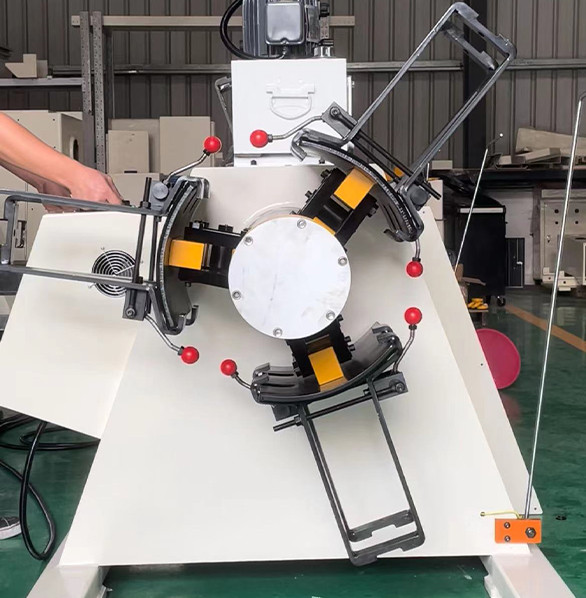
Stainless strip arrives on the same coil as mild steel and behaves nothing like it. A line that was set up for SPCC will run SUS304 on the first shift and mark, bow and scrap it by the second.
Nothing about the NC straightener feeder changes. Five settings inside it do, and they move in the same direction on almost every grade.
This is the changeover sequence we walk through with plants moving from carbon steel to stainless, the settings that have to move, and the cases where the machine is the wrong one for the job.
Five Settings That Move When the Strip Turns to Stainless
Stainless is not harder to feed because it is strong. It is harder to feed because it springs back further and picks up on the rolls while it does it.
Straightener penetration. Austenitic grades need more penetration to reach the same flatness, because their elastic recovery is roughly double that of low-carbon steel.
Roll pressure. Higher yield strength needs more grip, but every extra increment of pressure is another chance of a roll mark on a visible surface.
Roll gap. Set from the measured thickness, not the nominal. Stainless is often supplied at the top of the tolerance band and a 0.05 mm error is visible on a brushed finish.
Line speed. Slow it down. Contact heat and pick-up both rise with speed, and stainless has lower thermal conductivity than carbon steel.
Lubrication. Move to a lubricant rated for stainless. Some chlorinated extreme-pressure additives leave stains that only appear after the part is cleaned.
Move all five together. Adjusting penetration alone, with pressure and speed left where carbon steel needed them, is the most common way a first stainless run ends in a rejected batch.

Grade Choice Sets How Far the Settings Move
Stainless is a family, not a material. The austenitic grades most plants start with are also the ones that punish a carbon-steel setup hardest.
| Grade | What It Demands From the Line | Where It Costs You |
|---|---|---|
| SUS304, 0.8 to 1.5 mm | More penetration and more roll grip than SPCC at the same thickness | Pick-up on the rolls appears within a shift if the surface is not protected |
| SUS430, 0.5 to 1.0 mm | Ferritic, lower work-hardening, closer to carbon steel behaviour | Magnetic and slightly more brittle at the shear, so edge quality needs watching |
| SUS316L, 0.8 to 2.0 mm | Higher alloy content, heavy work-hardening, tight flatness calls | Roll pressure that suits 304 will mark 316L, and re-grinding the rolls costs more |
| Brushed or mirror finish | Protective film can stay on through the line | The film is a consumable, and any roll contact that touches bare strip is a visible defect |
The fourth row changes the whole approach. On a visible finish the objective stops being "feed it accurately" and becomes "feed it accurately without ever touching it with a marking surface".
That is why plants running visible stainless often specify polyurethane or chrome-plated rolls, and why they accept a lower line speed to get them.
Running the Changeover as a Sequence
Run the switch as a sequence rather than a set of independent adjustments. Each step below assumes the one before it is finished.
- Confirm the grade and the measured thickness at three points across the coil, then write the actual number on the setup sheet
- Clean the rolls and the strip path. Carbon steel dust left on a stainless run becomes rust spots after the parts are washed
- Set roll gap from the measured thickness and check both edges, because stainless camber reads differently at the two sides
- Increase penetration in small steps and check flatness on the strip, not on the finished part, until the bow is inside the call
- Bring roll pressure up only until the feed length holds, then stop. Every further increment buys marking risk and nothing else
- Drop line speed by 15 to 25% against the carbon steel figure and confirm the feed still holds at the die
- Run twenty parts and inspect them for surface, not only for dimension, before releasing the line to production
The order matters. Setting pressure before penetration, or speed before either, means repeating the whole sequence when the strip starts to mark.
Two operators should run this together on the first changeover, so the sequence survives the first shift where the person who wrote it is not on site.
Jobs Stainless Will Not Tolerate on a Coil Line
There are jobs a coil line simply should not be asked to do in stainless, and saying so early saves a rejected batch.
A mirror finish through a standard roll set. If the customer specifies a mirror surface and the line carries plain steel rolls, the parts will show contact marks. Polish after forming, or specify protected rolls.
Heavy work-hardening grades at high speed. SUS316L at 200 SPM on a thin section is not a setup problem, it is a machine choice. The line may need more roll support than the frame provides.
Mixed carbon and stainless on one line without cleaning. A single carbon steel run leaves enough free iron to start corrosion on the next stainless batch.
Nominal thickness data. Stainless is commonly supplied at the top of the tolerance band. A setup sheet written on nominal values will be wrong on the first coil and stay wrong.
None of these are reasons to avoid stainless. They are reasons to decide before the coil is on the mandrel rather than after the first inspection report.
One more boundary is worth stating. A line set up for carbon steel will run stainless, but not at the same output. Expect a lower practical stroke rate on the same machine.
Plants moving from carbon steel to stainless tend to ask the same four things first.
How much more penetration does SUS304 need than SPCC at 1.0 mm?
Expect roughly 20 to 40% more, depending on roll count and roll diameter. Start at the low end and increase in small steps until the bow is inside the flatness call.
Should line speed drop by 10% or 25% for stainless?
Start at 20% below the carbon steel figure for 0.8 to 1.5 mm SUS304. Visible finishes usually need the higher end of that range to keep pick-up under control.
Can one line run carbon steel and stainless in the same week?
Yes, with a cleaning step between them. Budget 30 to 45 minutes to clear carbon dust from the rolls and strip path before the stainless run starts.
What roll surface suits a brushed stainless finish?
Chrome-plated or polyurethane-covered rolls are the usual choice. Plain hardened steel rolls are workable for non-visible parts at reduced pressure.
Tracing Stainless Scrap to One of Three Sources
Stainless scrap is expensive, so it pays to know which of the three usual sources is doing the damage on your line.
Flatness scrap. Caused by too little penetration, and it shows up as bow or twist after the part leaves the die rather than before.
Surface scrap. Caused by roll contact, and it shows up as a repeating mark at the roll pitch. Change the pitch and the mark moves with it, which confirms the cause.
Length scrap. Caused by slip under insufficient roll grip, and it shows up as a short or long feed on the same stations.
The repeating-mark test is the quickest diagnosis on the floor. If the defect pitch matches the straightener roll pitch, the problem is in the head, not in the die.
Roll wear is the slow version of the same problem.
FANTY's R&D team, working out of a 45,000 m² plant, measures roll runout during service visits because a worn roll set fails the flatness call long before it fails visibly.
Two Numbers to Watch in the First Week
A new stainless run tells you whether the setup is right through two numbers, and both are cheap to collect.
Feed length deviation per shift. Log the first part and the last part of every shift. A drift of more than 0.05 mm across a shift points at roll grip or thermal growth, not at the servo.
Rejected parts per coil. Count them by cause for the first week. Flatness, surface and length separate cleanly once you record them separately.
Once those two numbers are stable across three consecutive coils, the setup is genuinely settled and can be written down as the standard.
Write it down before the crew that found it moves to another shift. The settings that hold on stainless are worth more than the settings that produced one good batch.
Compare the second week against the first. If the deviation is still moving, the setup is not settled, and the standard should not be written yet.

Where to go next
This sits in the flatness and roll geometry cluster, one layer below the specification overview. If the bow or the roll marks are still moving after the changeover, start with the roll-count and penetration guide.
The Coil Line Guide Library