How Does a Decoiler Machine Work in a Roll Forming Line and Why Is It So Important?
- Share
- Issue Time
- May 15,2026
Summary
Learn how a decoiler machine works in a roll forming line, its key functions, advantages, maintenance tips, and how FANTY automatic decoiler systems improve roll forming efficiency and automation.
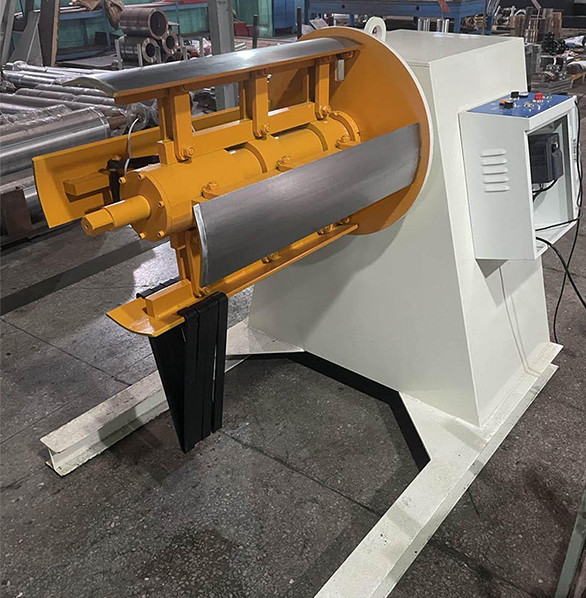
In today’s modern metal processing industry, roll forming production lines are widely used for manufacturing roofing sheets, steel profiles, solar mounting structures, wall panels, C channels, and many other metal products. One of the most important pieces of equipment in these automated production systems is the decoiler machine.
Without a stable decoiler system, even the most advanced roll forming machine may suffer from feeding instability, material deformation, production interruptions, and inconsistent product quality.
As factories continue moving toward automation and high-speed manufacturing, more buyers and production managers are asking:
The answer directly impacts:
- * Production efficiency
- * Feeding precision
- * Material utilization
- * Product consistency
- * Equipment lifespan
- * Factory automation capability
In this complete guide, we will explain:
- * What a decoiler machine is
- * How decoilers work in roll forming systems
- * Main components of roll forming decoilers
- * Types of decoiler machines
- * Advantages of automatic decoilers
- * Common applications in roll forming industries
- * Maintenance and safety considerations
- * Why manufacturers worldwide choose FANTY
What Is a Decoiler Machine?
A decoiler machine, also called an uncoiler, is industrial equipment designed to hold, unwind, and feed metal coils into downstream manufacturing equipment.
In a roll forming line, the decoiler serves as the starting point of the entire production system.
The machine continuously releases coiled metal material at a controlled speed while maintaining proper feeding tension and synchronization with the roll forming machine.
Decoiler machines commonly process:
- * Galvanized steel coils
- * Stainless steel coils
- * Aluminum coils
- * Pre-painted steel coils
- * Carbon steel coils
Modern automatic decoilers are widely used because they significantly improve production stability and automation efficiency.
How Does a Decoiler Machine Work in a Roll Forming Line?
The working process of a decoiler machine is relatively straightforward, but precision and synchronization are extremely important.
The decoiler works together with the roll forming machine to ensure continuous material feeding.
Step 1: Loading the Steel Coil
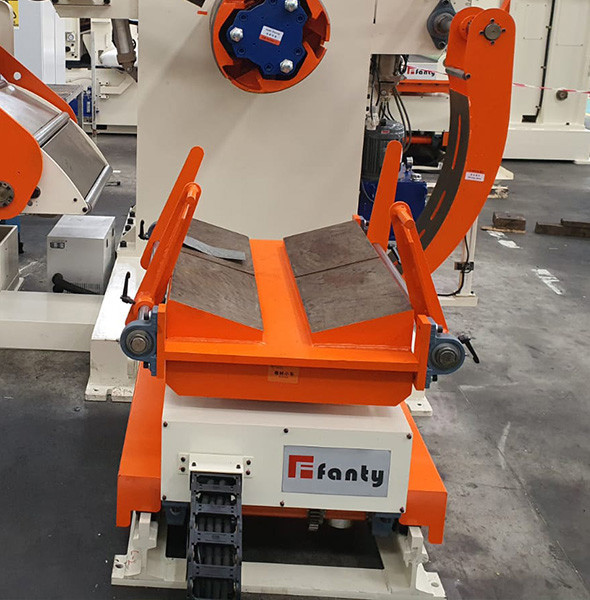
The steel coil is first loaded onto the decoiler mandrel using:
- * Forklifts
- * Crane systems
- * Hydraulic loading cars
Hydraulic decoilers are especially useful for handling large and heavy coils safely.
Once positioned, the mandrel expands mechanically or hydraulically to secure the coil firmly.
Step 2: Coil Unwinding
As the roll forming machine begins operating, the decoiler rotates gradually to unwind the metal coil.
The decoiler must maintain:
- * Stable rotational speed
- * Proper feeding tension
- * Smooth material release
Incorrect tension may lead to:
- * Material deformation
- * Feeding instability
- * Product defects
- * Production interruptions
Step 3: Feeding into the Roll Forming Machine
The decoiler feeds the metal strip directly into the roll forming machine, where rollers gradually shape the material into the final profile.
The entire process requires precise synchronization between:
- * Decoiler rotation speed
- * Feeding speed
- * Roll forming speed
Automatic servo-controlled decoiler systems greatly improve synchronization accuracy.
Main Components of a Decoiler Machine
A modern decoiler machine includes several critical components.
| Component | Function | Importance |
|---|---|---|
| Mandrel | Holds and expands inside the coil | Ensures stable coil positioning |
| Hydraulic System | Controls expansion and loading functions | Improves automation and safety |
| Brake System | Controls coil tension | Prevents feeding instability |
| Motor Drive | Rotates the decoiler | Maintains feeding speed |
| Control System | Coordinates automation functions | Improves operational efficiency |
Types of Decoiler Machines Used in Roll Forming Lines
Different production lines require different types of decoilers.
1. Manual Decoiler
*Manual decoilers are low-cost systems suitable for light-duty production.
However, they require more operator involvement and offer lower automation capability.
2. Motorized Decoiler
Motorized decoilers use electric motors for coil rotation and provide more stable feeding performance.
These systems are commonly used in medium-speed roll forming lines.
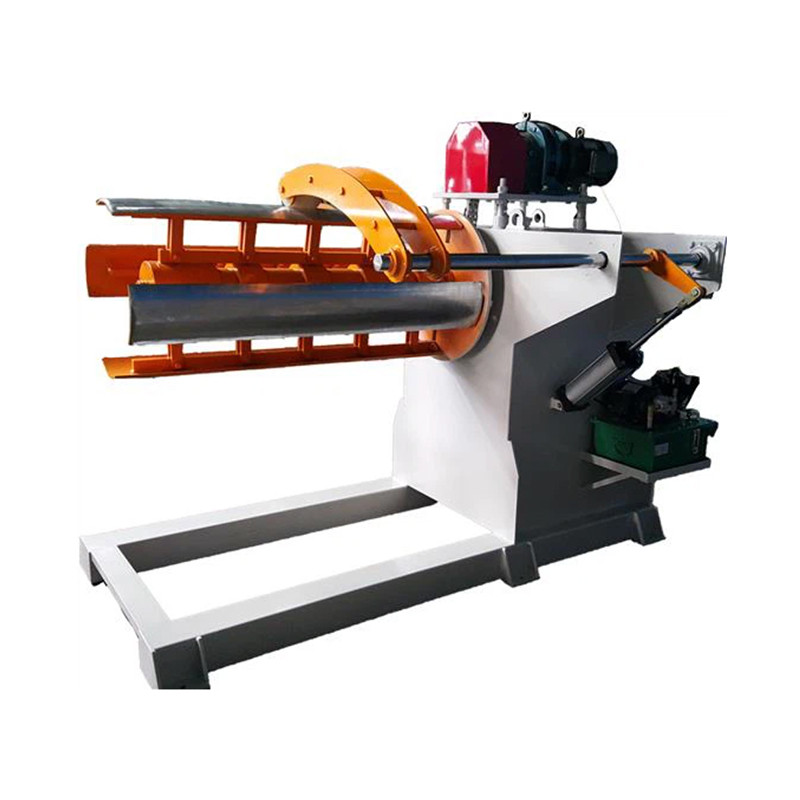
3. Hydraulic Decoiler
Hydraulic decoilers are widely used in heavy-duty industrial production.
Advantages include:
- * Automatic coil expansion
- * Heavy coil handling capability
- * Improved operator safety
- * Higher automation level
FANTY specializes in advanced hydraulic decoiler systems for industrial roll forming applications.
Why Are Automatic Decoiler Machines Important for Roll Forming Lines?
Modern roll forming factories increasingly choose automatic decoiler systems because automation improves overall production performance.
| Benefit | Impact on Production |
|---|---|
| Stable Feeding | Improves profile consistency |
| Higher Automation | Reduces labor requirements |
| Improved Safety | Reduces manual coil handling risks |
| Reduced Downtime | Improves production efficiency |
| Better Material Utilization | Reduces waste and deformation |
As labor costs continue increasing worldwide, automatic coil handling systems are becoming essential for competitive manufacturing.
Industries That Use Roll Forming Decoiler Systems
Roll forming decoiler machines are widely used across multiple industries.
- * Construction materials
- * Roofing sheet manufacturing
- * Solar mounting systems
- * Automotive profiles
- * HVAC duct production
- * Warehouse shelving systems
- * Steel framing production
- * Electrical cabinet manufacturing
These industries require continuous, stable, and high-speed material feeding for efficient production.
Common Problems in Roll Forming Decoiler Systems
Even advanced decoiler systems may experience operational problems if maintenance is neglected.
| Problem | Possible Cause | Recommended Solution |
|---|---|---|
| Material Deformation | Improper tension control | Adjust brake and feeding system |
| Coil Slippage | Weak mandrel expansion | Inspect hydraulic pressure system |
| Feeding Instability | Servo synchronization issue | Inspect control system |
| Hydraulic Leakage | Damaged seals or hoses | Replace hydraulic components |
How to Maintain a Roll Forming Decoiler Machine
Regular maintenance is essential for stable long-term operation.
Key maintenance procedures include:
- * Lubricating rotating components
- * Checking hydraulic oil levels
- * Inspecting brake systems
- * Cleaning electrical cabinets
- * Monitoring servo synchronization
- * Inspecting safety devices
Preventive maintenance helps manufacturers reduce downtime and extend machine lifespan.
Why Manufacturers Worldwide Choose FANTY
FANTY is a professional manufacturer specializing in:
- * Automatic decoiler machines
- * Hydraulic decoilers
- * Servo feeder systems
- * Coil straightening machines
- * Roll forming automation solutions
- * Customized coil handling systems
Unlike suppliers focused only on pricing, FANTY emphasizes:
- * Long-term machine reliability
- * Stable feeding performance
- * Industrial automation engineering
- * Heavy-duty structural durability
- * Global technical support
Our engineering team helps customers optimize:
- * Production efficiency
- * Roll forming stability
- * Material feeding precision
- * Automation integration
- * Long-term operational ROI
This engineering-first approach helps manufacturers improve both production efficiency and long-term profitability.
Learn more about FANTY here:
About FANTY – Professional Decoiler Machine Manufacturer
Frequently Asked Questions (FAQ)
What is the purpose of a decoiler machine in a roll forming line?
* The decoiler machine holds, unwinds, and feeds metal coils continuously into the roll forming machine.
Why is feeding stability important in roll forming?
* Stable feeding helps maintain profile accuracy, prevent material deformation, and improve production consistency.
What type of decoiler is best for heavy steel coils?
* Hydraulic decoilers are ideal for heavy-duty industrial applications because they offer stronger expansion force and better automation.
Can automatic decoilers improve production efficiency?
* Yes. Automatic systems improve synchronization, reduce downtime, lower labor requirements, and enhance production stability.
Does FANTY provide customized roll forming decoiler systems?
Yes. FANTY provides customized decoiler and coil handling automation solutions tailored to different roll forming production requirements.
Final Thoughts
The decoiler machine is one of the most important components in a roll forming production line because it directly affects feeding stability, automation efficiency, and product quality.
As modern manufacturing continues evolving toward intelligent automation, advanced automatic decoiler systems are becoming essential equipment for competitive roll forming factories.
By investing in reliable hydraulic decoiler systems, manufacturers can improve production efficiency, reduce downtime, enhance workplace safety, and achieve more stable long-term operational performance.
FANTY provides professional automatic decoiler solutions designed specifically for modern roll forming automation and industrial manufacturing environments.
Need help choosing the right decoiler machine for your roll forming production line?
Contact FANTY here today for professional consultation and customized coil handling automation solutions tailored to your manufacturing requirements.
Fanty · Coil Handling Equipment
Let an Engineer Size Your Decoiler in 24 Hours
Tell us what your press consumes per shift and we work backwards to the decoiler capacity, coil car and control mode your line really needs. If a smaller model does the job, we say so.
Get a Free QuoteFANTY Machinery · 13 years on stamping automation · 2,000+ coil lines installed · engineers reply within 24 hours