How Much Does a 3-in-1 Decoiler Straightener Feeder Cost in 2026?
- Share
- publisher
- David Park - Senior Stamping Engineer, FANTY Machinery
- Issue Time
- Jul 17,2026
Summary
Two machines that both read 1,300 mm by 6 mm can differ by more than thirty percent once roll count, coil weight and control platform are fixed. Which specification lines move the price, what the line behind the machine adds, and where a cheap quote is actually cheap.
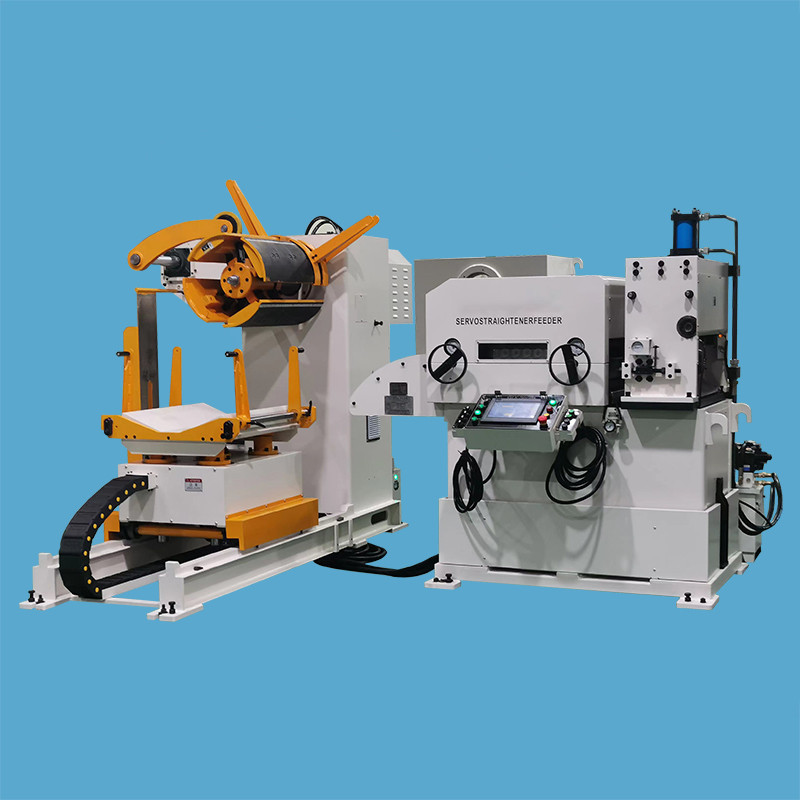
Ask what a 3-in-1 decoiler straightener feeder costs and the honest answer is a question back: at what width, at what thickness, at how many rolls, and on which control platform.
Two machines that both read 1,300 mm by 6 mm can differ by more than thirty percent once those four are fixed.
This page works in shares and steps rather than a single figure, because a number quoted for a machine that does not exist yet is the most expensive kind of reassurance.
It sets out which lines move the price, what the equipment behind the machine adds, and where a low quote is low.

Four Inputs Decide the Price Before Any Supplier Sees Your Enquiry
Price differences between competing offers for the same nominal specification are usually not margin. They are a difference in one or more of four inputs, and all four are decided by your own production profile.
Strip width sets the frame. Width determines roll length, mandrel length and the stiffness the base has to provide. It is the largest single step in the price, and it moves in classes rather than in a straight line.
Thickness sets the torque. Corrective force rises with thickness and yield strength, so roll diameter, bearing size, gearbox and motor all scale with it.
Thickness capability is the most expensive line on the list per millimetre gained.
Roll count sets the length. A stack with more rolls removes more coil set and crossbow, and it also lengthens the machine, adds rolls and stiffens the frame further.
Control platform sets the rest. A basic NC positioning system and a servo platform with recipe storage, diagnostics and a network interface are not the same purchase, even when the mechanical machine is identical.
What Each Spec Line Adds, and Which Ones You Rarely Need
The table below is written as a share of machine cost rather than as currency, because the shares hold across markets while the currency does not.
| Spec line | What it adds to machine cost | Where it costs you |
|---|---|---|
| Width capacity | The largest single step. Moving up a width class changes the frame, rolls, mandrel and base together | You pay for the widest strip you will ever run, on every part of every other job |
| Thickness capacity | Torque-driven, so it scales faster than thickness itself. Roll diameter, bearings, gearbox and motor all move | Buying the next class up for a job you run twice a year |
| Roll count | A meaningful step per added roll pair, plus machine length and a longer frame | Extra rolls show up in the price immediately and in setup time on every changeover |
| Coil weight and mandrel | Mandrel size, base structure, and often a coil car rather than manual loading | A heavier coil is cheaper per tonne of material and slower to change over |
| Decoiler drive type | A hydraulic decoiler adds a power pack and controls over a motorised one | Hydraulic gives tension control that light strip sometimes needs, and adds a fluid system to maintain |
| Control platform | Modest against the mechanical machine, large against nothing. Diagnostics and recipe storage sit here | The cheapest control platform is the one your operators cannot diagnose at two in the morning |
| Regional electrical build | A real step, not a line item you can negotiate away: control voltage, listed components, documentation language | Skipping it means reworking the cabinet at destination, at your cost and on your schedule |
The Line Behind the Machine Costs Money Too
The machine is one purchase order inside a bigger one, and the bigger one is routinely underestimated.
Foundation and floor. A loaded coil line is not a point load. A slab or pit detail is usually provided by the builder, but the civil work is yours, and it is scheduled work rather than an afterthought.
Power supply. Installed capacity and connection point are fixed before the machine arrives, and a transformer upgrade is a lead-time item in its own right.
Coil handling into the mandrel. Coil car, hydraulic loading or a crane. This choice affects both the price of the machine and how many people are needed per coil change.
Guarding, extraction and lighting. Often not in the machine quotation, almost always required on site.
Installation, commissioning and training. Days of engineer time, travel and accommodation, and the production time you lose while the line is proved out.
Added together, these commonly land between ten and twenty-five percent of the machine price when foundation work and power upgrades are included.
A buyer comparing two machine prices and no installation scopes is comparing the smaller half of the purchase.
Where a Cheap Quote Is Actually Cheap
A lower price is not automatically a worse machine, and a higher price is not automatically a better one. What a low quote usually means is that something on this list is outside it.
Frame stiffness. Less steel and fewer stiffening members are invisible on a specification sheet and audible in the workshop once the line runs at speed. Tolerance drift under load is the symptom.
Roll quality. Roll material, hardness depth and grinding quality decide how long flatness holds between regrinds. This is one of the few cost lines where paying more is measurably cheaper over five years.
Scope left out. Foundation drawings, commissioning, training, a spare roll set, tooling, and the mounting of guards are the usual omissions.
Electrical build for your market. A machine built to another market's control voltage and component listing is cheaper to build and more expensive to install.
Documentation and testing. A shortened test regime is cheap to sell and expensive to discover, because the discovery happens on your floor with your material.
One more case worth naming. A quote can be genuinely low because the supplier has a different cost base.
That is a legitimate reason, and it is distinguishable from the others by asking what changes if you move one spec line up a class. A supplier with real costs answers that question in numbers.
A supplier padding a thin machine changes the subject.
Five-Year Cost of Ownership on One Page
| Cost element | How it behaves over five years | Where it misleads |
|---|---|---|
| Machine and installation | Paid once, at the start | It is the only number most buyers actually compare, and it is less than half the total |
| Power and compressed air | Continuous, proportional to running hours | Quoted as connected load, paid as duty cycle. The two differ substantially on a line that runs intermittently |
| Rolls and spares | Regrinding or replacement on a cycle set by material and tonnage | Cheap rolls are cheap once and then expensive every year after |
| Setup and changeover | Recurs per changeover, and hides in labour rather than in a purchase order | A high-changeover operation where the extra rolls slow setup every shift |
| Scrap and rework | Proportional to flatness and feed accuracy loss | Never visible in a machine quote and often the largest single line on this list |
| Downtime | Rare, then concentrated | Spares availability decided at purchase shows up years later |
The comparison only becomes real once the last three lines are given a value. That method, and the payback test that follows from it, is set out in the guide to what each specification line really costs.
How to Put Three Quotes on the Same Basis
Three quotes for the same nominal machine are almost never comparable as received. Normalise them before you compare a single figure.
- The same basis of sale. Ex-works, FOB and delivered prices are three different numbers for one machine, and freight is the usual place the difference hides.
- The same scope list. Write out foundation drawings, commissioning days, training, spare rolls and guarding, then mark each quote against it.
- The same electrical build. Control voltage, component listing and documentation language, stated rather than assumed.
- The same acceptance test. Which material, which flatness criterion, which feed accuracy, and how many days.
- The same commercial terms. Warranty length, spares commitment, payment schedule and price validity window.
Only then does the comparison mean anything, and the line-by-line method is worth following deliberately rather than approximately.
A working version of it is described in how to compare NC straightener feeder supplier quotes.
What Changes Between Two Suppliers for the Same Specification
When two suppliers quote the same specification at different prices, the difference sits in one of six places.
Steel mass and frame design. An identical footprint can carry very different quantities of steel. This is the single least visible difference between offers.
Roll material and finishing. Hardened alloy rolls with a defined hardness depth cost more to make and hold flatness longer.
Drives and control components. Component brand and country of origin affect both price and, later, spares lead time.
How much is machined in-house. A supplier with its own machining capacity controls quality and price differently from one buying finished sub-assemblies.
Test regime. Running a machine on the customer's material for a day costs the builder real money. Suppliers who do it price it in.
Warranty exposure. A longer warranty is a cost carried in the price. It is worth knowing which you are buying.
What to Have Ready Before You Ask for a Firm Price
Suppliers give their tightest numbers to buyers who arrive prepared. These are the inputs that change a range into a price, and each one belongs to you rather than to them.
- Strip width, thickness and yield range for every part you intend to run, not just the part in front of you today.
- Coil data. Inside diameter, outside diameter, weight and material grade, because these drive the mandrel and often the coil car.
- Feed length and target rate, with the accuracy you actually need rather than the tightest figure you can write down.
- The flatness criterion in terms the machine can be tested against, agreed before the order rather than argued about afterwards.
- Site constraints. Available power, floor space, pit depth, crane access and the distance from coil store to press.
- Press and die details. Shut height, pilot release timing and die protection signal, because the feeder has to talk to the press.
- Destination market and compliance requirements, including the electrical build and any documentation the destination requires.
One decision runs across all of this and is worth settling early.
Whether a compact machine or a split line suits you better changes what the rest of the specification should say, and the trade-offs are set out in 3-in-1 decoiler straightener feeder vs separate units.
If the answer is a separate decoiler upstream, the sizing logic starts in how to specify a decoiler for a coil line.
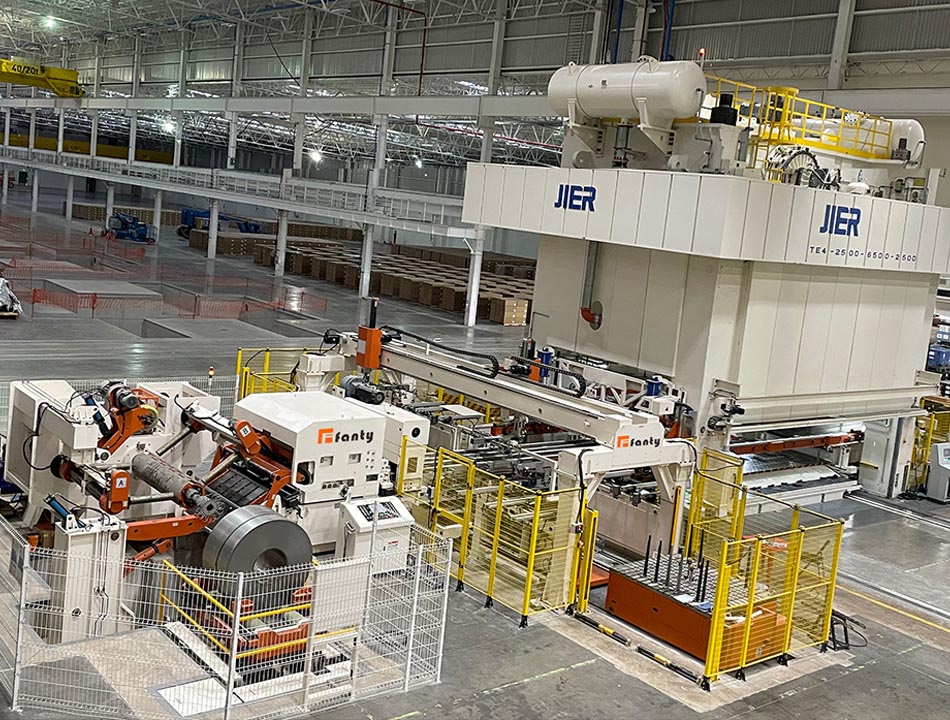

Why will nobody give me a single price for a 3-in-1 machine?
Because four inputs interact and none of them is fixed until you fix them.
Two machines that both read 1,300 mm by 6 mm can differ by more than thirty percent once roll count, coil weight, decoiler drive type and control platform are agreed.
A price given before those are settled is a placeholder.
Which specification line moves the price the most?
Thickness capability, because corrective force and therefore torque scale faster than thickness.
The quick way to test a supplier's pricing honestly is to ask for the same machine one thickness class up and compare the step. A large step with no explanation is worth questioning.
How much does the equipment behind the machine add?
Commonly ten to twenty-five percent of the machine price once foundations, power connection, compressed air, guarding, installation, commissioning and training are counted.
It is the part of the purchase most often missing from a comparison.
Is a 3-in-1 cheaper than three separate machines?
For a compact line, usually yes, because one frame, one control system and no transfer between machines removes cost and floor space.
Above roughly six millimetres thickness or at very long feed lengths, the compact format runs into limits and separate units become the more practical purchase.
Does a wider machine always cost proportionally more?
No. Width moves in classes, not in a straight line. The step from one width class to the next changes the frame, rolls, mandrel and base together, so the price jumps and then stays flat until the next class boundary.
What should the acceptance test cover, and what does it add?
Flatness against the agreed criterion, feed accuracy at your target rate, and a sustained run at production speed. Plan for one to three days plus travel.
It normally costs schedule rather than money when it is agreed before the order, and it is the only place where promises become measurements.
Where to go next
A price is the last thing to settle and the first thing buyers ask about. The cluster overview collects the specification guides that answer the questions which actually determine the number.
Open the coil line guide libraryFanty · 3-in-1 Compact Line
Cut Line Length, Not Line Capability
Tell us the footprint you have and the material you run. We show you which 3-in-1 frame fits and exactly how much line length you get back.
Get a Free QuoteFANTY Machinery · 13 years on stamping automation · 2,000+ coil lines installed · engineers reply within 24 hours