How to Integrate a Decoiler with a Feeder for Maximum Production Efficiency?
- Share
- Issue Time
- May 18,2026
Summary
Learn how to integrate a decoiler with a feeder for smoother coil handling, higher feeding accuracy, and improved automation. Discover setup tips, common problems, and advanced solutions from FANTY.
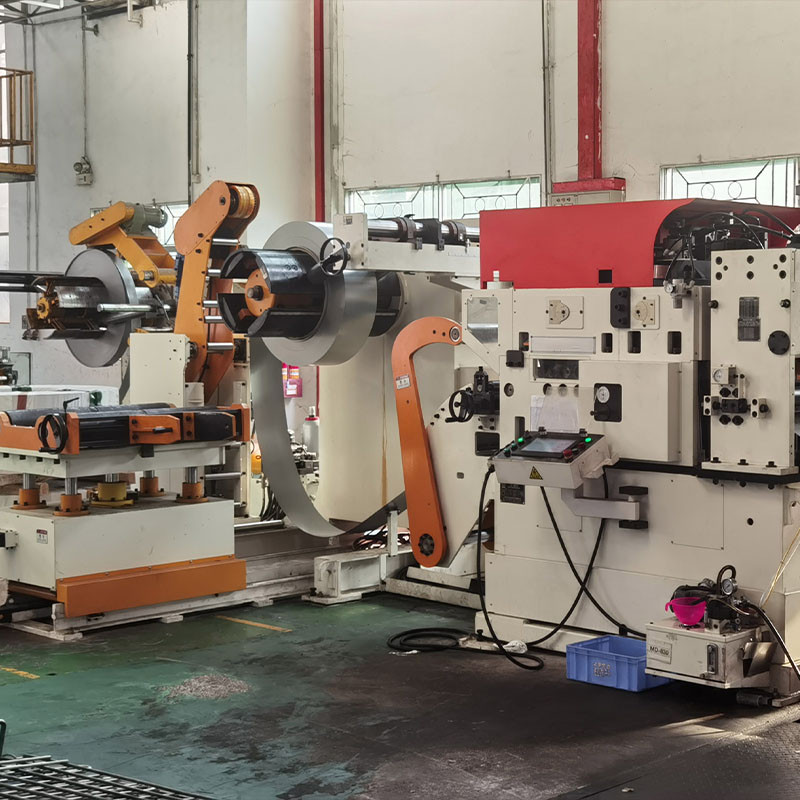
In modern metal processing industries, automated coil handling systems have become essential for improving productivity, feeding precision, and manufacturing stability. Among the most important components in a coil-fed production line are the decoiler machine and the feeder system.
While each machine can function independently, integrating a decoiler with a feeder creates a highly efficient automated production solution capable of supporting high-speed stamping, roll forming, laser cutting, and metal fabrication applications.
As manufacturing moves toward Industry 4.0 automation, many factory owners and engineers are asking:
“How can a decoiler be integrated with a feeder correctly?”
The answer directly affects:
- * Production efficiency
- * Material feeding accuracy
- * Machine synchronization
- * Product quality consistency
- * Automation performance
- * Long-term operating costs
In this comprehensive guide, we will explain:
- * What a decoiler feeder system is
- * How decoilers and feeders work together
- * Key integration methods
- * Important setup considerations
- * Common integration problems and solutions
- * Benefits of automatic servo feeding systems
- * How FANTY provides customized automation solutions

What Is a Decoiler Feeder System?
A decoiler feeder system is an automated coil handling solution that combines:
- * A decoiler machine
- * A feeder machine
- * Optional straightening equipment
The decoiler holds and unwinds the steel coil, while the feeder accurately delivers the material into downstream equipment such as:
- * Punch presses
- * Roll forming machines
- * Laser cutting systems
- * Stamping lines
- * Robotic production systems
When properly integrated, the system ensures continuous, stable, and synchronized material feeding.
Why Is Decoiler and Feeder Integration Important?
In high-speed manufacturing environments, unstable feeding can lead to:
- * Material deformation
- * Feeding inaccuracies
- * Production downtime
- * Tooling damage
- * Inconsistent product quality
Integrating the decoiler and feeder correctly helps manufacturers achieve:
| Benefit | Production Impact |
|---|---|
| Stable Feeding | Improves product consistency |
| Automation Synchronization | Reduces operator intervention |
| Reduced Material Waste | Improves material utilization |
| Higher Production Speed | Increases manufacturing output |
| Improved Safety | Reduces manual coil handling risks |
How Does a Decoiler Work Together with a Feeder?
The integration process depends on smooth coordination between the two machines.
Step 1: Coil Loading
The steel coil is loaded onto the decoiler mandrel using a forklift, crane, or hydraulic loading car.
Hydraulic decoilers are especially useful for heavy coils because they improve safety and automation.
Step 2: Coil Unwinding
The decoiler gradually rotates and unwinds the coil material while maintaining proper tension.
Brake systems help prevent excessive material slack or overfeeding.
Step 3: Material Loop Formation
A material loop is typically formed between the decoiler and feeder.
This loop helps buffer speed differences between:
- * Decoiler rotation speed
- * Feeder pulling speed
- * Production line speed
Loop control systems help maintain stable material flow.
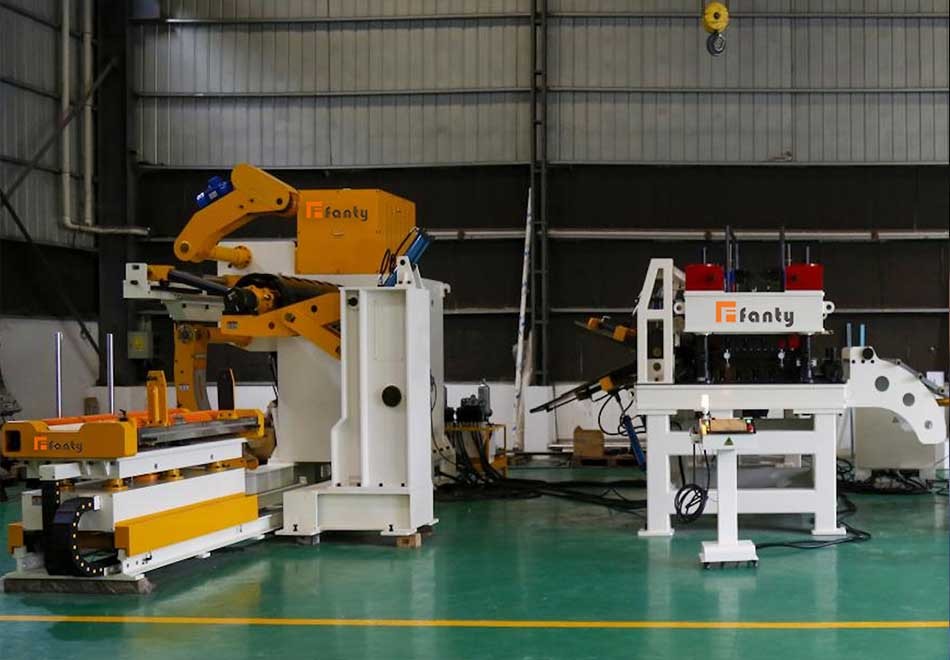
Step 4: Precision Feeding
The feeder pulls the material from the loop and delivers it accurately into the downstream machine.
Servo feeders are commonly used because they provide:
- * High feeding accuracy
- * Programmable feeding lengths
- * High-speed synchronization
- * Stable automation performance
Types of Feeders Commonly Integrated with Decoilers
Different production lines require different feeder systems.
| Feeder Type | Application | Advantages |
|---|---|---|
| Servo Feeder | High-speed stamping | Excellent accuracy and automation |
| NC Feeder | Precision feeding lines | Programmable feeding control |
| Air Feeder | Light-duty applications | Simple and low-cost |
| Roll Feeder | Mechanical stamping lines | Stable feeding performance |
Key Factors When Integrating a Decoiler with a Feeder
1. Coil Specifications
The system must match:
- * Coil width
- * Coil thickness
- * Coil weight
- * Inner coil diameter
Incorrect sizing may reduce feeding stability and machine lifespan.
2. Feeding Speed Synchronization
Synchronization between the decoiler and feeder is critical.
Modern PLC and servo systems help maintain accurate speed coordination.
3. Loop Control Design
Proper loop pit or loop sensor design helps stabilize material flow between machines.
This is especially important in high-speed stamping applications.
4. Automation Integration
Modern production lines increasingly require:
- * PLC communication
- * Servo synchronization
- * Safety interlocks
- * Remote monitoring systems
FANTY provides customized automation integration solutions for modern smart factories.
Common Problems in Decoiler Feeder Integration
| Problem | Possible Cause | Solution |
|---|---|---|
| Material Slack | Poor loop control | Adjust tension and sensors |
| Feeding Inaccuracy | Servo synchronization problem | Inspect feeder control system |
| Coil Slippage | Weak mandrel expansion | Check hydraulic pressure |
| Material Scratches | Damaged rollers or improper alignment | Inspect feeding rollers |
Benefits of Automatic Decoiler Feeder Systems
Modern automatic systems provide major advantages over manual operations.
- * Higher production efficiency
- * Improved feeding precision
- * Reduced labor costs
- * Lower material waste
- * Better workplace safety
- * Enhanced automation capability
As labor costs continue rising globally, automatic coil feeding systems are becoming essential for competitive manufacturing.
Why Manufacturers Worldwide Choose FANTY
FANTY is a professional manufacturer specializing in:
- * Automatic decoiler machines
- * Servo feeder systems
- * Hydraulic decoilers
- * Coil straightening machines
- * Stamping automation systems
- * Customized coil handling solutions
Unlike suppliers focused only on pricing, FANTY emphasizes:
- * Long-term machine reliability
- * Stable feeding performance
- * Industrial automation engineering
- * Heavy-duty structural durability
- * Global technical support
Our engineering team helps customers optimize:
- * Production speed
- * Feeding precision
- * Automation integration
- * Machine safety
- * Long-term operational ROI
Learn more about FANTY here:
About FANTY – Professional Decoiler and Feeder Manufacturer
Frequently Asked Questions (FAQ)
Why integrate a decoiler with a feeder?
Integration improves automation, feeding accuracy, production efficiency, and material handling stability.
What feeder works best with a decoiler?
Servo feeders are widely considered the best option for high-speed precision feeding applications.
What is a material loop in a decoiler feeder system?
The loop acts as a buffer between the decoiler and feeder to stabilize material flow and speed synchronization.
Can automatic systems reduce labor costs?
Yes. Automated coil handling systems significantly reduce manual operation requirements and improve efficiency.
Does FANTY provide customized integration solutions?
Yes. FANTY provides customized decoiler feeder automation systems designed for different industrial production requirements.
Final Thoughts
Integrating a decoiler with a feeder is essential for achieving stable, efficient, and automated coil-fed production.
Modern automatic decoiler feeder systems help manufacturers improve feeding precision, reduce downtime, increase productivity, and support Industry 4.0 manufacturing goals.
By choosing the correct system design, synchronization technology, and automation solution, factories can significantly improve long-term production performance and operational efficiency.
FANTY provides professional decoiler feeder systems designed for modern industrial automation, high-speed production, and long-term manufacturing reliability.
Need help selecting the right decoiler feeder integration solution for your production line?
Contact FANTY here today for professional consultation and customized coil handling automation systems tailored to your manufacturing requirements.