How to Run High-Mix Stamping on One Coil Line?
- Share
- publisher
- David Park - Senior Stamping Engineer, FANTY Machinery
- Issue Time
- Nov 12,2026
Summary
Forty die changes a week at 45 minutes each costs a plant 30 hours of press time; at 12 minutes it costs eight. This is the seven-step sequence that closes that gap: collapsing coil widths, standardising shut heights, storing feed recipes, quick-release roll sets, clamping instead of bolting, a first-piece gate, and a scrap allowance per change. It prices the package against the recovered hours and names the lot sizes below which no coil line makes sense.
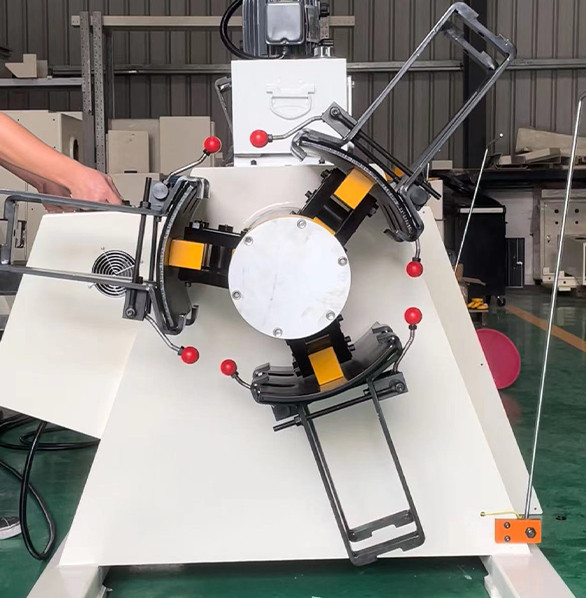
Forty die changes a week on one coil line is not a scheduling problem, it is a changeover-time problem. At 45 minutes a change, that plant loses 30 hours of press time every week.
At 12 minutes it loses 8. The difference is 22 hours, which on a 200 SPM press is roughly 264,000 strokes a week that never happened.
High-mix stamping fails on coil lines for a reason nobody puts in the quotation: the line was specified for one part family and is being asked to run six.
These are the seven decisions that separate a line that copes from a line that fights the schedule every shift.
Where a High-Mix Line Loses Its Hours
Before changing anything, measure where the 45 minutes goes. On the lines we are called in to fix, it splits into four blocks that are almost identical across plants.
Coil change and threading. Twelve to eighteen minutes, mostly spent walking, fetching and re-threading by hand.
Roll and gauge adjustment. Ten to fifteen minutes of trial strip, measure, adjust, measure again.
Die change at the press. Eight to twelve minutes if the die cart and clamping are organised, forty if they are not.
First-piece approval. Five minutes of inspection that turns into twenty when the first three parts are out of tolerance.
Only the die change is usually visible to management, because it happens at the press. The three coil-side blocks are the ones that quietly eat the shift.
Run this measurement for one week with a stopwatch and a clipboard, not with the line's own counter. The counter records when the line is stopped, not why.
Steps 1 to 3: Standardise What Repeats
Standardisation is unglamorous and it removes more minutes than any hardware upgrade. It costs planning time rather than capital.
Step 1: collapse the coil widths. Six widths in a week means six mandrel setups and six guide settings. Cutting to four, with a 40 mm trim allowance on the narrow jobs, removes two setups without touching the line.
Step 2: fix die heights with a standard bolster set. Every die that arrives at the press with a different shut height adds a ram adjustment and a pass-line check.
A 50 mm bolster pack for the short dies puts them all on one height.
Step 3: store feed recipes by part number. Feed length, acceleration, pilot release angle and roll pressure belong in the controller as a named recipe, not in an operator's notebook. Recall replaces adjustment.
The recipe step is the one plants resist, because somebody has to type in forty part numbers. It pays back at the first changeover where nobody has to remember anything.
Steps 4 and 5: Make the Changeover Mechanical
Once the paperwork is standard, the remaining minutes are physical. Two changes remove most of them.
Step 4: quick-release roll sets. A feed or leveler roll changed with four bolts and a spacer stack takes twenty minutes. The same roll on a keyed shaft with a press fit takes an hour and a puller.
Step 5: clamping instead of bolting. Hydraulic or mechanical clamps on the die and on the guide rails replace spanners.
On a 300-part lot, the difference between eight minutes of bolting and ninety seconds of clamping is the difference between the lot being viable and not.
Neither change is expensive relative to a new machine. Both are frequently skipped because they are bought at the wrong moment, after the line has already been signed off.
Roll-set and clamp options for our builds sit on the machine specification pages in our stamping line equipment index, which is the sheet to check before a changeover package is quoted.
- Ask for the roll-change time in writing, measured from stop to first good part, not from stop to roll seated.
- Count the tools a changeover needs. Above six hand tools, the changeover is designed to be slow.
- Check whether the guide rails move on a lead screw or on shims. Shims mean every width change is a setup.
Steps 6 and 7: Hold the First Part Accountable
The last two steps decide whether the saved minutes survive contact with quality. A fast changeover that produces scrap for twenty minutes is not a fast changeover.
Step 6: a first-piece gate that cannot be bypassed. Three parts measured for feed length, burr height and hole position, signed off before the counter starts. No sign-off, no production.
Step 7: a scrap allowance per changeover. Budget 1.5 m of strip for setup on a 300-part lot. Anything beyond that is a fault, not a cost of doing business, and it should trigger a look at the recipe.
| Changeover task | Minutes it frees | Where it charges you back |
|---|---|---|
| Feed recipe recall | 8 to 12 | Recipes go stale when a die is reworked; somebody must own the revision |
| Quick-release roll set | 15 to 25 | Extra roll sets cost $2,000 to $4,000 each and need racking space |
| Bolster height pack | 6 to 10 | Adds 50 mm to the shut height, which limits the tallest die that still fits |
| Hydraulic die clamping | 5 to 8 | Adds a hydraulic circuit and a maintenance point at the press |
| First-piece gate | -3 | Costs three minutes every change and saves the twenty-minute scrap run |
Note the negative row. The gate costs time and still belongs in the list, because the alternative is discovering the problem at part 200.
What the Changeover Clock Is Worth
Put a number on the minutes before asking for money. The arithmetic is simple enough to do on a whiteboard.
Forty changes a week, 33 minutes saved each, is 22 hours of recovered press time. At a burdened rate of $85 an hour that is $1,870 a week, or about $86,000 across 46 working weeks.
Against that, a quick-release roll set for three widths and a clamping package lands near $28,000. Payback sits inside five months, which is why this argument usually wins without a business case document.
| Changeovers per week | Hours recovered | Where the case stops paying |
|---|---|---|
| 10 | 5.5 | Payback runs past three years; buy the clamping only |
| 25 | 13.7 | Payback near eight months; roll sets pay first |
| 40 | 22 | Payback under five months; all five changes pay |
| 60 | 33 | Payback under four months, but the press becomes the constraint |
Below ten changes a week the case weakens quickly. The recovered hours are real, but they only matter if the press was short of capacity in the first place.

Where a High-Mix Line Stops Making Sense
There is a lot size below which no coil line works, and pretending otherwise sells machines that sit idle.
Lots under 150 parts. Threading the strip costs more than the run. At that size a blank-fed press or a laser blank is the honest answer.
Six gauges in one week, all different materials. Each material change brings its own roll pressure, its own flatness behaviour and its own scrap.
Two or three per week is workable; six turns the line into a test rig.
Wide coil on a narrow-part schedule. Trimming 1,200 mm down to 180 mm wastes 85 percent of the strip and fills the scrap bin faster than it fills the press.
No dedicated setup technician. Quick changeover is a skill. If the changeover is done by whoever is free, the times above will not hold, and the line will be blamed for a training gap.
None of these means high-mix is a bad strategy. It means the machine has to be chosen for the schedule, and a line specified for one family rarely grows into six without the changes above.
The Count That Decides the Investment
Two numbers settle the question of how far to go: changes per week and parts per lot.
Changes per week decides whether quick-change hardware pays. Parts per lot decides whether the coil line itself is the right feeding method.
Multiply the two and compare against the cost of the upgrade. A plant at 40 changes and 900 parts a lot is the ideal customer for every item on this list.
A plant at 8 changes and 4,000 parts a lot should buy the clamping and stop there.
Feed-length accuracy and the rest of the line's error budget are set out separately, because a fast changeover that lands 0.2 mm off is not a saving.
The coil line guide library breaks that budget down from the decoiler to the die.
Does quick-change hardware pay back at 20 changes a week?
Above roughly 20 changes a week on a 200 SPM press. At 25 changes the package returns its cost in about eight months; at 10 it takes over three years.
Is a 150-part lot viable on a coil line?
About 150. Below that, threading and first-piece inspection cost more than the run, and a blank-fed operation is cheaper per part.
How much strip should a 300-part changeover scrap?
Budget 1.5 m per changeover on a 300-part lot. Anything over 4 m points at a stale recipe or a guide that was not reset.
Does a bolster pack limit the tallest die the press accepts?
Yes. A 50 mm pack removes 50 mm of shut height from the largest die that will still close, so check the tallest die in the schedule before standardising.
Can one coil line hold ±0.05 mm across six part numbers?
Yes, if each part carries its own stored recipe and the roll pressure is re-checked at every material change. The tolerance survives; the setup discipline is what has to be built.
Where to go next
A high-mix schedule tests the whole line, not just the changeover, and the place it usually fails first is strip position through the leveler.
Flatness is a roll geometry question before it is a setup question, and our coil line knowledge base covers roll count, pitch, gap and penetration for strip that has to stay flat across material changes.