Is Your Servo Feeder Actually Hitting Rated Speed?
- Share
- publisher
- David Park - Senior Stamping Engineer, FANTY Machinery
- Issue Time
- Oct 19,2026
Summary
Rated speed is a cycle time, not a number on a plate. Most feeders that appear slow are being asked to complete their feed inside a window the press has already shortened. This breaks the audit into three causes, each measurable in under an hour, and gives the numbers that separate a feeder limit from a press limit.
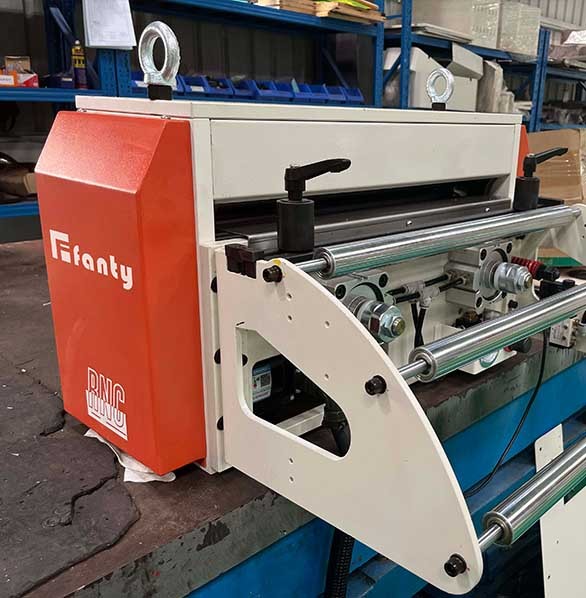
A plant buys a feeder rated at 300 strokes a minute. Two years later the line runs at 240, and the feeder is the obvious suspect because it is the part that moves.
Almost always the feeder is capable and the cycle is not. The servo feeder has a fixed window between pilot release and pilot engagement, and that window is set by the die and the press, not by the drive.
Measuring the window takes ten minutes and settles the question before anyone orders a larger motor.
Rated Speed Is a Cycle Time, Not a Number on a Plate
At 300 SPM the full press cycle is 200 milliseconds. The feed has to happen inside part of that, and the rest belongs to the press doing work.
Pilot release and pilot engagement bound the window. If the die requires 90 degrees of crank rotation for the feed, that is 50 milliseconds of a 200-millisecond cycle.
A feeder that needs 70 milliseconds to complete a 350 mm feed physically cannot run in a 50-millisecond window, whatever the plate says.
So the first question is not how fast the feeder is. It is how much of the cycle the die actually leaves available.
Measure the Feed Window Before Blaming the Feeder
Two measurements do most of the work: the crank angle at which the feed starts and the crank angle at which it must be complete.
A proximity switch on the crank plus a marker on the strip gives both without instrumenting the drive.
Convert degrees to milliseconds using the actual running speed, not the rated speed, because the window shrinks as speed rises.
Then compare that window against the feeder's acceleration profile at the feed length in use. The difference is the real answer.
Most plants find the window is 20 to 35 percent smaller than they assumed, and that the feeder is being asked to do in 50 milliseconds what it was designed to do in 70.
A speed complaint usually arrives without data, so the first job is to create some. Crank angle and feed completion time are enough.
Two hours of logging beats two weeks of opinion, and it usually shows the feeder doing exactly what it was told.
Cause One: The Press Interlock Steals the Window
A die protection interlock that holds the feed until a sensor confirms strip presence consumes part of the window before the feed even starts.
That confirmation can take 15 to 25 milliseconds if the sensor is slow or the input filter is set conservatively.
It is the most common hidden cost in a line that never reaches its rated speed, and it is invisible in a feeder fault log.
Check the input filter setting on the die protection module. Many are shipped at 20 milliseconds and never revisited.
Die protection modules vary in input filter from 1 to 30 milliseconds, and the difference is invisible until the line nears rated speed.
Ask the controls engineer what the filter is set to, then ask why. Most have never changed it from the shipped value.
Cause Two: Acceleration Limits Set by Roll Grip
A servo feeder can only accelerate strip as fast as the rolls can grip it. Beyond that limit the strip slips and the feed goes short rather than fast.
Roll grip depends on pressure, roll surface condition and the coefficient of friction of the strip, which changes with lubricant.
A line that runs fine at 240 SPM and shows short feeds at 280 is usually at the grip limit rather than the torque limit.
Increasing motor size will not fix it. Increasing roll pressure slightly, cleaning the rolls and reviewing lubricant application will.
Measure the limit rather than guessing. Run the line at increasing speed and log at what speed the first short feed appears.
Roll surface condition matters more than operators believe. A polished roll grips less than a freshly ground one at identical pressure.
Lubricant film thickness changes with temperature, so a line reaching 280 SPM in winter may only reach 260 in summer.
Cause Three: The Drive Is Running in a Derated Mode
Servo drives derate for temperature, for input voltage sag and for a mismatched motor parameter set. All three reduce available acceleration.
Voltage sag on press start is the most common. A 10 percent dip during the stroke reduces the drive's available torque by roughly the same proportion.
| Symptom | Likely limit | How to confirm | What It Costs You |
|---|---|---|---|
| Short feeds above 260 SPM | Roll grip | Pressure and surface check | A pressure setting, not a new motor |
| Fault on press start | Voltage sag | Log voltage during the stroke | Separate supply or a line reactor |
| Torque limit warning | Derated drive | Read drive parameters under load | Reparameterisation, one afternoon |
| Feed late but accurate | Interlock timing | Crank angle at feed start | An input filter setting |
All four rows look like the same complaint from the press floor. None of them has the same fix.
Read drive torque utilisation during a stroke. Sustained above 90 percent, derating is happening and the cause sits upstream of the drive.
A line reactor is often the cheapest answer to voltage sag, at a fraction of the cost of a larger motor.
Log voltage and current together for one full shift. The correlation between the two during a stroke tells you which limit you are against.
Where Rated Speed Was Never Available
A feeder rated at 300 SPM at a 100 mm feed length will not deliver 300 SPM at 600 mm. The rating is a feed-length-dependent figure.
Rated speed also assumes a die that leaves a normal window. A die with tight pilots and a long release angle can halve the available window at any speed.
And it assumes a strip the rolls can accelerate. Wide heavy strip changes the acceleration profile more than most specifications admit.
Read the rated speed as a maximum under favourable conditions, and measure your own line's ceiling before treating the difference as a fault.
Some dies cannot support rated speed at all. A long pilot engagement angle shrinks the window regardless of what is behind the machine.
Measure the die before buying a faster feeder. The die sets the ceiling and the feeder only reaches it.
A die with 30 degrees of pilot engagement is not a candidate for 300 SPM, whatever the machine behind it can do.
Ask the tool room for the pilot engagement angle before the speed target is agreed. It is a number that already exists in the die drawing.
A Four-Step Speed Audit
- Log the crank angle at feed start and feed complete, then convert to milliseconds at the running speed.
- Measure the die protection input filter and subtract it from the window before blaming the feeder.
- Find the speed at which the first short feed appears, then check roll pressure and surface before touching the drive.
- Compare commanded feed time against actual feed time at that speed. The gap is the control lag, and it should be under 5 milliseconds.
Four steps, one afternoon, and the answer is usually a setting rather than a capital request.
The press feeder range publishes rated speed against feed length, which is the honest way to compare two models.
That table settles most speed arguments before a machine is ordered, and it belongs with any quotation.
Where to go next
Speed is one of several limits on a coil line, and rarely the binding one. The error budget guide shows how accuracy and speed interact, which is where a persistent short feed usually gets explained.
The Coil Line Guide LibraryWhy does my 300 SPM feeder only reach 240 SPM?
Usually the feed window, not the feeder. A die protection input filter and a tight pilot release angle can remove 30 milliseconds from a 200-millisecond cycle.
Does a bigger motor increase maximum feed speed?
Only if torque is the limit. If roll grip is the limit, a bigger motor changes nothing and a pressure adjustment changes everything.
Is 5 milliseconds of control lag acceptable on a servo feed?
Under 5 milliseconds between commanded and actual feed completion. Above 10 milliseconds the drive tuning needs attention.
Can voltage sag on press start reduce feed speed?
Yes. A 10 percent dip reduces available torque proportionally and shows up as a fault or a late feed on the first stroke.
Is rated speed quoted at a specific feed length?
It should be. A feeder rated at 300 SPM at 100 mm will not hold that at 600 mm, and the datasheet usually says so in a footnote.
How do I find the grip limit?
Run at increasing speed in 20 SPM steps and log the speed at which the first short feed appears. That is the grip limit, not the torque limit.