Is a Cassette Roll Head Worth It on a Straightener Feeder?
- Share
- publisher
- David Park - Senior Stamping Engineer, FANTY Machinery
- Issue Time
- Oct 27,2026
Summary
A cassette roll head turns a two-hour gauge change into a twenty-minute one, and puts a locating joint in the middle of the most highly loaded part of the machine. This article compares the two heads on the five decisions that change a production week, names the four cases where a cassette is the wrong purchase, and works the payback from one changeover a week to eight. It also covers what a 6 mm job does to the joint and how to test one before ordering.
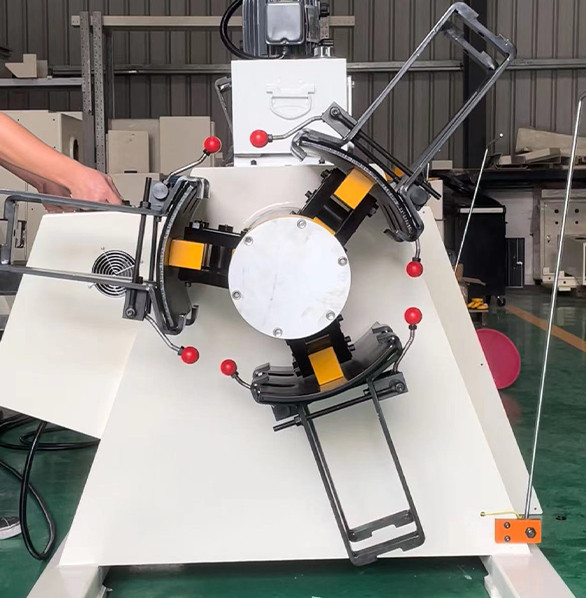
A cassette roll head turns a two-hour gauge change into a twenty-minute one. It also puts a locating joint in the middle of the most highly loaded part of the machine.
Whether that trade is worth it depends on how often you change gauge, and almost nothing else. This is a decision about straightener feeder configuration, so it is worth getting right before the order.
Two Ways to Change Rolls, Two Different Machines
A fixed head carries its rolls in the frame. To change from 0.8 mm to 2.5 mm you release the gap, pull the old rolls, fit a different set and re-set penetration pair by pair.
A cassette head carries the rolls in a cartridge that comes out as one unit. The new cartridge is pre-set for the next gauge, so the change is a swap and a gap trim.
Both machines straighten strip. They differ in what happens on the day the schedule changes, which on a job shop is most days.
The fixed head is more rigid because the load path runs through one casting. The cassette head breaks that path at a joint, and the joint has to be made well or the whole advantage disappears.
The fixed head is more rigid because the load path runs through one casting. The cassette head breaks that path at a joint, and the joint has to be made well or the whole advantage disappears.
Both heads can be ordered on the same frame and the same drive. That makes the choice reversible at the order stage and expensive afterwards, which is why it deserves an hour of thought.
Where the Cassette Wins: Changeover in 20 Minutes
On a 7-roll head, a fixed-set change from 0.8 mm to 3.0 mm takes 75 to 120 minutes with two people. Most of that is not the roll swap; it is re-setting penetration on six gaps and proving flatness afterwards.
A cassette swap on the same size head takes 15 to 25 minutes, because the penetration settings travel with the cartridge.
That difference is the entire economic case. Everything else about the two heads is close enough that a buyer would not notice.
On a line that changes gauge four times a week, the saving is around four hours a week, or 200 hours a year. At a line rate of 60 EUR an hour that is 12,000 EUR a year.
On a line that changes gauge once a month, the same calculation produces 2,400 EUR a year and the cassette never pays for itself.
On a line that changes gauge once a month, the same calculation produces 2,400 EUR a year and the cassette never pays for itself.
The saving is not only the changeover itself. A faster change means the planner schedules more small lots, and more small lots is usually what the customer wants.

The Rigidity the Joint Costs You
The joint between cartridge and frame is a locating face with dowels and clamps. Under straightening load that joint sees the full bending moment of the top roll bank.
On a well-made head the repeatability at the joint is 0.01 mm, which is inside the flatness tolerance you are trying to hold. On a cheap one it is 0.05 mm, and you will chase flatness for a year.
Ask for the joint repeatability figure in writing. It is the single number that separates a cassette head worth buying from one that is not.
Rigidity also falls with the size of the cartridge. A head sized for 6 mm strip carries a cartridge that weighs 600 to 900 kg, and moving it needs a crane or a dedicated trolley.
That handling requirement is a floor-space question as much as an engineering one. Two spare cartridges need a rack, a trolley and a clear aisle.
That handling requirement is a floor-space question as much as an engineering one. Two spare cartridges need a rack, a trolley and a clear aisle.
Weight also decides who can change it. A 700 kg cartridge needs a crane or a hoist on a rail, and a shop without overhead coverage is looking at a trolley and a clear run to the head.
Five Decisions That Separate the Two
Compare the two heads on the five things that actually change a production week, not on a feature list.
| Decision | Fixed head | Cassette head | Where the cassette costs you |
|---|---|---|---|
| Gauge change time | 75 to 120 minutes | 15 to 25 minutes | A second cartridge per gauge, 8,000 to 15,000 EUR each |
| Flatness repeatability | Set once, holds | Holds only if the joint repeats to 0.01 mm | Any joint wear shows up as flatness drift, not as a fault code |
| Heavy gauge capability | Full rating to 6 mm | Rating often reduced at the top of the range | The 6 mm job may need the fixed head anyway |
| Roll access for cleaning | Full access, slow | Swap out and clean on the bench | Cleaning happens off-line, so it happens less often than it should |
| Spare parts | Rolls only | Rolls plus locating dowels and clamps | Dowels are consumables nobody stocks until they wear |
Read the fourth row twice. Cassette heads make cleaning easy, and easy cleaning is usually skipped cleaning.
Cases That Should Buy the Fixed Head Instead
A single-material plant should not buy one. If the line runs 1.2 mm CR4 for eleven months of the year, the cassette is a joint you paid for and never use.
Heavy gauge at the top of the rating is the second case. Cartridge mass and joint stiffness both work against you above about 4 mm, and a fixed head holds flatness with less effort.
Shops without crane coverage are the third. A 700 kg cartridge is not a two-person lift, and a trolley that cannot reach the head is worse than no trolley.
Very tight flatness specs are the fourth. Under 0.3 mm over a metre on thin high-strength strip, the fixed head's continuous load path is simply easier to hold.
And any line where the changeover is already fast because the gauges are similar does not need the feature. Going from 1.0 mm to 1.2 mm is a gap trim on either head.
And any line where the changeover is already fast because the gauges are similar does not need the feature. Going from 1.0 mm to 1.2 mm is a gap trim on either head.
A plant that runs one material but several widths gains nothing either. Width changes are a guide adjustment, not a roll change, on both heads.
What a 6 mm Job Does to the Cassette
A 6 mm coil at 1,000 mm width is a different load case from anything a 1 mm job produces. The bending moment scales with thickness cubed, so the joint sees roughly 200 times the load.
That is why most suppliers derate a cassette head at the top of its range, or quote a heavier frame to compensate. Ask which applies.
On a mixed schedule that runs 6 mm twice a month and thin gauge daily, the answer is usually a fixed head with quick-release roll chocks, not a cassette.
On a schedule that runs 6 mm all week and 0.8 mm all week, a cassette set per gauge is the better compromise, provided the joint figure is documented.
How to Test One Before You Buy
A trial at the supplier's works settles more than a specification sheet. Bring the two gauges you actually run and time the change.
- Time a real change. Both directions, both gauges, with the supplier's own people working, not yours.
- Measure flatness before and after. Swap cartridges three times and check the same strip each time.
- Ask for the joint repeatability figure. In writing, with the measuring method named.
- Run the heaviest gauge at full speed. Watch for chatter at the joint, which appears as a repeating mark at roll frequency.
- Weigh a cartridge and check your crane. Then check the aisle you would store it in.
The Payback Question in Numbers
Payback depends on changeovers per week and on the hourly rate of a stopped line. Nothing else moves the answer much.
| Changeovers per week | Hours saved per year | Payback on a 12,000 EUR cartridge |
|---|---|---|
| 1 | 50 | Over 4 years, before the second cartridge |
| 2 | 100 | About 2 years |
| 4 | 200 | Under 12 months |
| 8 | 400 | Under 6 months |
The table assumes 60 EUR an hour of line time and a 75-minute saving per change. If your line rate is 150 EUR an hour, halve the payback column.
If the line rate is 20 EUR an hour, the cassette is a convenience, not an investment, and the fixed head is the rational buy.

Any NC straightener feeder can be ordered with either head, and the rest of the machine does not change. That is why the decision belongs in the specification, not in a retrofit.
Roll geometry, pitch and penetration are what ultimately decide flatness on either head, and they are worked through in the 3-in-1 decoiler straightener feeder guide.
Is a cassette head worth it at 2 gauge changes a week?
Marginally. It pays back in about two years on a 12,000 EUR cartridge, which is inside a typical machine life but not a compelling case.
What joint repeatability should a cassette head hold?
0.01 mm at the locating face. Above 0.03 mm you will see it as flatness drift after a swap, and no amount of penetration tuning will remove it.
Can a 6 mm cassette head hold the same flatness as a fixed head?
Usually not at the top of the range. Ask for a flatness guarantee on 6 mm strip at full width, in writing, before ordering.
How much floor space do spare cartridges need?
Roughly 1.2 m by 1.5 m of rack per cartridge, plus a 1.5 m aisle for the trolley. Three cartridges is a 5 m² commitment.
Where to go next
The roll head is one decision inside a straightener specification that starts with roll count and ends with penetration. The full chain is set out in our coil line knowledge base.
The Coil Line Guide Library