Is a Coil Line Worth Automating Below 200,000 Parts?
- Share
- publisher
- David Park - Senior Stamping Engineer, FANTY Machinery
- Issue Time
- Nov 17,2026
Summary
Three numbers decide whether a coil line pays back: blank price, what the line removes, and fixed running cost. This article works a 0.68 kg bracket through a per-part saving of USD 0.30 against purchased blanks and USD 0.41 against an in-house blanking press, then converts both into a break-even volume of 157,000 and 115,000 parts a year. It adds a four-row sensitivity table, the die conversion cost most payback sheets omit, and the four checks to run before committing.
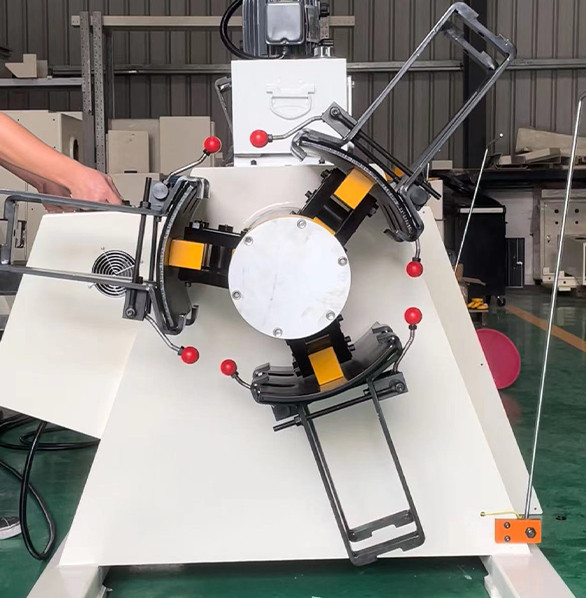
The break-even for coil-line automation on a 0.68 kg bracket sits near 157,000 parts a year, and that number moves by 40 percent depending on what you are replacing.
Buyers usually ask the question the other way round: is 200,000 parts enough? The volume is rarely the deciding variable on its own.
This is the arithmetic we run with purchasers, using a part and a die that most stamping plants will recognise.
The Three Numbers That Decide It
Three figures set the answer, and only one of them is annual volume.
The first is the price you pay for a blank today, delivered and cut. The second is what the coil line removes from your process, which may be a blanking press, a shear, or two handling steps.
The third is the fixed cost the line adds: maintenance, power, floor space and the capital charge on the machine itself.
Volume only multiplies the first two. It never touches the third, which is why small volumes fail the test so consistently.
Work the example as a 320 by 180 mm bracket in 1.5 mm CR, single-out in a 45 SPM press, running two shifts.
Two shifts matters more than it sounds. A single-shift plant at the same annual volume needs a higher rate or a longer year, and the fixed cost is charged against fewer hours.
Labour is the figure most payback sheets overstate. A coil line still needs one operator, so the saving is one person rather than two.
What a Coil Line Saves Per Part
Split the part cost into the lines that actually change, and leave the ones that do not alone.
| Cost line | Purchased blanks | In-house blanking | Where the change costs you |
|---|---|---|---|
| Material, per part | USD 0.78 at 1.15/kg delivered | USD 0.60 including 8% blanking scrap | Coil ties up cash in 5 to 8 tonnes of inventory |
| Cutting or blanking labour | Inside the blank price | USD 0.05, two operators | One operator still needed to load coils |
| Scrap and rework | USD 0.04, mostly handling damage | USD 0.07 from blank handling | Coil line scrap is cheaper but harder to sell back |
| Work in progress | USD 0.02, four weeks of blanks | USD 0.04, two weeks of blanks | You trade blank stock for coil stock, not for zero |
| Floor space | Racked blanks, 40 m² | Press plus racks, 110 m² | The line needs 6 to 9 m of length it did not use before |

Against purchased blanks the saving lands near USD 0.30 per part. Against an in-house blanking press it lands near USD 0.41, because you also remove a machine and its operator.
That 0.11 gap is the whole argument. It is worth USD 16,500 a year at 150,000 parts, and it decides most of the cases we see.
The material line is where the difference is real, and it comes from two places: the cutting charge you stop paying, and the 6 percent of blank you stop losing at the shear.
Everything else in that table is small enough for a supplier to argue either way, which is why the material line should carry the case.
Working the Break-Even at 150,000 Parts
Take a USD 110,000 line, fixed running cost of USD 10,400 a year, and a three-year payback target.
The target needs USD 36,700 a year of capital recovery plus 10,400 of running cost, so USD 47,100 a year of saving.
At USD 0.30 per part that is 157,000 parts. At USD 0.41 it is 115,000 parts.
So 150,000 parts is a yes if you are closing a blanking operation, and a marginal no if you are buying blanks at a good delivered price.
The same job at 250,000 parts clears a three-year payback on either basis, and at 400,000 it clears twelve months.
Note what the calculation leaves out: coil inventory. Eight tonnes of CR at USD 720 a tonne is USD 5,760 tied up, turning over every three to four weeks.
That is working capital rather than cost, but finance will raise it in the same meeting.
The questions that come up once the arithmetic is on the table.
At what volume does a coil line beat purchased blanks?
About 157,000 parts a year on the bracket above, at a USD 0.30 saving and a three-year payback. At 110,000 parts the payback stretches past five years.
Does a 150,000-part job pay back in 3 years?
Only if it removes a blanking press. On purchased blanks the same job pays back in 4.4 years, which many finance teams will still accept for a 12-year asset.
How far can blank price fall before a 200,000-part job loses its case?
Below USD 0.95/kg delivered the saving drops under USD 0.20 per part, and the payback on a USD 110,000 line passes six years. Blank price is the variable to negotiate first.
What is 1 percent of material yield worth on a 0.68 kg part?
About USD 0.006 per part, or USD 1,200 a year at 200,000 parts. Yield matters less than blank price at this size, which is not true for larger panels.
Can a 60 SPM press justify a coil line at 80,000 parts?
Rarely. At 80,000 parts the saving is USD 24,000 and the running cost alone is USD 10,400. The line sits idle enough that maintenance per part doubles.
How Fast the Answer Moves With Volume
The table below holds everything constant except annual volume, on the purchased-blank case at USD 0.30 per part.
| Parts per year | Annual saving | Cash after running cost | Payback | What the number hides |
|---|---|---|---|---|
| 80,000 | USD 24,000 | USD 13,600 | 8.1 years | Maintenance per part is double the 250,000 case |
| 150,000 | USD 45,000 | USD 34,600 | 3.2 years | Assumes two shifts, not one |
| 250,000 | USD 75,000 | USD 64,600 | 1.7 years | Needs 5 to 8 tonnes of coil on hand |
| 400,000 | USD 120,000 | USD 109,600 | 1.0 year | Changeover frequency becomes the constraint |
The move from 150,000 to 250,000 parts is worth more than the move from 250,000 to 400,000, because the first step carries the fixed cost and the second only widens the margin.
That is the shape of every case we run. The interesting question is never "how many parts", it is "how close to the fixed cost am I running".
Change one assumption and the table moves. A blank price 10 percent lower cuts the saving by USD 0.04 a part, which pushes the 150,000 row past four years.
That is the most sensitive input in the model, and buyers usually treat it as fixed because it comes from an existing contract.
Where the Arithmetic Stops Being Useful
It assumes one part per run. A plant making 40 changes a week on 150,000 parts total does not get the labour saving, because the setup time eats it.
At that mix the line still works, but the case has to be built on scrap and material yield alone, which is a thinner argument.
It assumes the die already suits coil feed. A die built for hand-loaded blanks may need a stock guide, a stripper change and pilot revisions before it will run at 45 SPM without a miss-feed.
That work is real money, typically USD 6,000 to 18,000, and it is missing from most payback sheets.
Our coil line knowledge base sets out what a die needs before it will accept coil feed at rate without a miss-feed.
It treats the machine as a constant. A 12-year life is a reasonable assumption for the frame, less so for the drives and the control hardware.
And it ignores what the blank supplier does next. Once you stop buying 150,000 blanks a year, the price you were quoted stops being available if you ever need to go back.
None of these invalidate the calculation. They change which side of 157,000 you should treat as safe.
One omission deserves its own line: floor space. A coil line needs 6 to 9 m of length plus a coil storage area, and in a rented building that is a monthly cost.
Plants that measure payback on machine price alone are surprised in year two, when handling space and extra inventory both reach the accounts.
What to Test Before You Commit
Four checks separate a case that survives commissioning from one that quietly becomes a cost centre.
- Run the actual die on coil for 200 strokes at the target rate, and count the miss-feeds.
- Price the die conversion in writing, including stock guide, stripper and pilot work.
- Measure changeover on a real 40-part lot, not on the demonstration die.
- Confirm the coil width and weight your supplier can actually deliver every month.
Two of those four have killed cases that looked fine on paper, and both were visible before the order.
The 200-stroke test is the one that matters. A die that miss-feeds once in 200 strokes will miss-feed about 50 times in a 10,000-part run.
Run it at the target rate, not a comfortable one. A slow demonstration hides exactly the failure the line was bought to remove.
The coil handling product index sets out line lengths and coil capacities by model, which is where the floor-space line in the table above comes from.
Where to go next
Volume decides whether the line runs enough hours to earn its fixed cost. What happens inside those hours is a separate question, and it starts with how the coil is held and fed.
Open the coil line guide library