Is a Second Straightening Pass Cheaper Than a New Head?
- Share
- publisher
- David Park - Senior Stamping Engineer, FANTY Machinery
- Issue Time
- Oct 31,2026
Summary
A plant running 1,800 tonnes of 1.5 mm pickled coil ran a second straightening pass instead of buying a heavier machine, and the numbers held for two years. This costs the second pass per tonne across labour, edge damage, rewind capital and floor space, then sets the result against a $96,000 machine premium. It shows why rewinding on a 508 mm core plastically re-curls 1.5 mm strip, where the break-even sits at 1,100 tonnes, and which defects neither route touches.
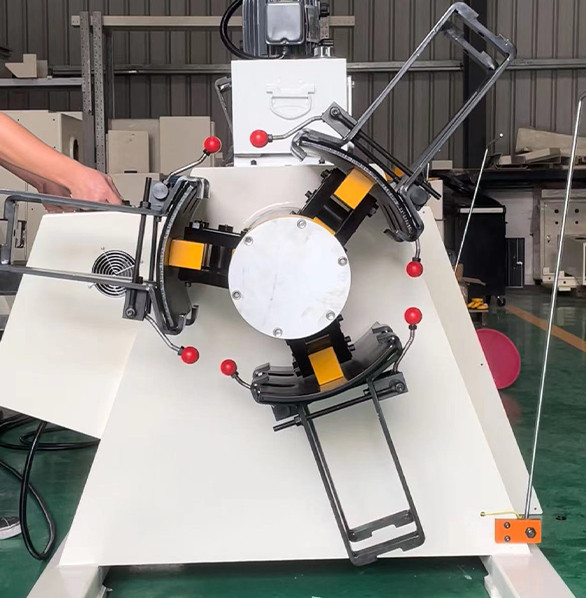
A plant running 1,800 tonnes a year of 1.5 mm pickled coil was quoted a heavier straightener and asked for a second opinion on the arithmetic.
It ran a second pass through the existing machine instead, and for two years the numbers held: no capital, flat blanks, happy customer.
In the third year the second pass appeared in the scrap report as 0.8 percent of material, and the payback calculation changed shape.
Both routes work. The question is which one is cheaper at your tonnage, and the answer turns on four numbers rather than on machine preference.
Why One Pass Stops Working at 1.5 mm
A five-roll set with 42 mm rolls and a 55 mm pitch straightens 0.8 to 1.2 mm stock comfortably. At 1.5 mm it runs out of bending cycles.
Each roll pair applies one reverse bend. Five rolls give two working bends, which is enough to break the coil's memory on thin strip and not enough on heavier gauge.
The symptom is specific and easy to misread: the strip measures flat on the line and bows after blanking.
That happens because straightening redistributes residual stress rather than removing it. Cutting a blank releases the stress, and the blank curls.
A second pass adds two more bending cycles and shifts the stress pattern again. On many jobs that is enough to hold a blank flat to 0.4 mm over 300 mm.
What a second pass cannot do is change the geometry. Roll diameter still limits how much bending moment the machine can apply to 1.5 mm strip.
The rule of thumb on the floor: roll diameter should be at least 25 times strip thickness for a stable bend. On 1.5 mm that is 38 mm, which is why a 42 mm roll works and a 36 mm roll does not.
An NC straightener feeder built around 42 mm rolls can therefore take 1.5 mm, but only just. That margin is the reason the second pass helps at all.

What a Second Pass Costs Per Tonne
Cost it as a production step, not as a machine setting, and the numbers become comparable with a capital purchase.
The cycle: pull the coil off the line, load a rewind, thread, run at 40 m per minute, strap, and return it to the line. That is 14 minutes on a 5-tonne coil with two people.
Labour at $38 an hour for two people is $17.70 a coil, or $3.54 a tonne at 5 tonnes.
Edge damage is the second line. Handling a coil twice adds about 0.8 percent of material loss on 1.5 mm pickled stock, which at $780 a tonne is $6.24 a tonne.
Rewind capital, energy and the floor space it occupies add roughly $6.40 a tonne on a 1,800-tonne year.
Time the step with a stopwatch rather than estimating it. Most plants guess 6 to 8 minutes and measure 13 to 16, because threading and strapping are what actually consume the shift.
| Cost line | Per tonne | Per year at 1,800 t | Where it bites |
|---|---|---|---|
| Extra labour, 14 min per coil | $3.54 | $6,370 | Grows with every coil, not with tonnage alone |
| Edge damage from double handling | $6.24 | $11,230 | Shows as trim scrap, not as a visible reject |
| Rewind depreciation and power | $4.40 | $7,920 | Fixed, so it hurts most at low tonnage |
| Floor space and handling | $1.10 | $1,980 | Permanent, and hard to reclaim later |
| Total second pass | $15.28 | $27,500 | Before any line time is lost |
The heavier machine quoted at $96,000 more than the existing unit. Against $27,500 a year that is a 3.5-year payback, which is why the plant chose the second pass in year one.
Change the tonnage and the answer flips. At 3,000 tonnes the second pass costs $45,800 a year and the payback drops below 2.1 years.
The Rewind Defect Nobody Prices In
Rewinding is not a neutral step. It bends the strip again, in one direction, over the recoiler core.
The bending strain is the strip thickness divided by twice the core radius. On 1.5 mm strip over a 508 mm core, that is 0.295 percent.
Mild steel yields at roughly 0.12 percent strain. So a 508 mm core plastically bends 1.5 mm strip on every wrap, and the straightening you just paid for is partly undone.
The fix is a larger recoiler, 900 to 1,000 mm, which drops the strain to 0.08 percent and stays elastic. That recoiler is the cost line most second-pass plans leave out.
- Core diameter. Below 800 mm on 1.5 mm stock, expect the rewind to add curl rather than remove it.
- Winding tension. High tension tightens the outer wraps and stores energy that releases as crossbow when the coil is opened again.
- Coil set after rewind. Measure crossbow at the coil end, not at mid-coil, because the last wraps carry the rewind curvature.
Where the Machine Wins and Where It Does Not
The break-even sits near 1,100 tonnes a year on this job, with a 3-year horizon and 14 minutes of extra handling per coil.
Below 700 tonnes the second pass wins on cash, because the rewind is often already on the floor and the labour is absorbed by operators who are there anyway.
Above 1,500 tonnes the machine wins on cash and on capacity. The second pass consumes line time, and a line at 85 percent utilisation has no spare hours to give.
The capacity term is the one teams forget. On a two-shift plant, 360 coils a year at 14 minutes is 84 hours, or two working weeks of line time.
If those two weeks would otherwise produce sellable parts, the second pass costs far more than $27,500.
A third route exists and is often overlooked: a cassette roll head on the existing machine. It changes the roll set without changing the frame, and it costs 30 to 40 percent of a new machine.
It also solves the changeover problem, because the cassette for 1.5 mm sits on a cart next to the one for 0.8 mm.
A 3-in-1 decoiler straightener feeder with a seven or nine-roll head changes the geometry rather than the schedule, which is the structural difference between the two routes.
Defects Neither Route Touches
Both routes address bending cycles. Neither one touches the defects that come from the mill or from the die.
Thickness crown. A strip that is 0.03 mm thicker in the centre will bow after cutting whatever you do to it, because the centre elongates differently.
Slitter burr. A raised edge on one side survives straightening and shows as a camber after blanking.
Mill crossbow. Rolls move that stress around. They cannot remove the pattern the coiler laid in at 600 m per minute.
Die springback. A blank that sits dead flat under a straight edge can still form a part that is not, because the die's own radii decide the rest.
One more limit worth stating plainly: a second pass does not double the flatness quality. It buys roughly 30 to 50 percent improvement on 1.5 mm stock, and the second pass on already-flat strip buys nothing at all.
Any NC straightener feeder sold as a flatness cure has to be checked against the incoming coil first.
If the crossbow is above 3 mm per metre at the mill, no roll set will bring it to a blank that sits within 0.3 mm.
The coil line equipment we build is specified from the incoming coil data for this reason, and the roll count follows from that rather than from the budget.
The Decision in Four Numbers
Four figures decide this, and every one of them is measurable in a week.
- Annual tonnes through the gauge. Not total plant tonnage, only the stock above 1.4 mm that needs the extra pass.
- Minutes per coil, measured. Time one changeover with a stopwatch, then multiply by coils, not by tonnes.
- Scrap delta. Run 20 coils each way and compare trim scrap, not total scrap, so the number belongs to the route.
- Spare line hours. If utilisation is above 80 percent, price the lost production into the second-pass case before comparing.
A 45,000 m² plant building straightening lines teaches one thing: the calls that go wrong are rarely about roll count. They are about a second pass that was costed as labour only.
The blank flatness test is the last check, and it belongs in the comparison: 20 blanks, a granite bench, and a 0.05 mm feeler under each corner.
At what tonnage does a nine-roll machine beat a second pass?
Around 1,100 tonnes a year on 1.5 mm stock with 14 minutes of extra handling, and closer to 800 tonnes if the line already runs above 85 percent utilisation.
How many minutes does a second pass add to a 5-tonne coil?
About 14 with two operators, including de-coiling, threading, running at 40 m per minute, strapping and returning the coil to the line.
Does rewinding on a 508 mm core re-curl 1.5 mm strip?
Yes. The strain is 0.295 percent against a yield strain near 0.12 percent, so the wrap is plastic. Use a 900 mm core or larger to stay elastic.
How much flatness does one extra pass actually buy?
Roughly 30 to 50 percent improvement on 1.5 mm stock, measured as bow over 300 mm. On strip that is already flat it buys nothing measurable.
Where to go next
The straightening cluster takes this further: roll geometry first, capital budget second.
If the decision is still open, the guide library sets out roll count, pitch, gap and penetration as one geometry rather than four settings.
Read the flatness specification guide