What Changes When a Press Moves to 780 MPa Steel?
- Share
- publisher
- David Park - Senior Stamping Engineer, FANTY Machinery
- Issue Time
- Oct 21,2026
Summary
A Tier-2 bracket supplier ran HSLA 340 for three years, then quoted the same line on 2.0 mm DP780. The machine did not change; the elongation budget did. This is the field record of the first two weeks: the symptoms, the retuning order that worked, the tonnage table, and where the line's assumptions break.
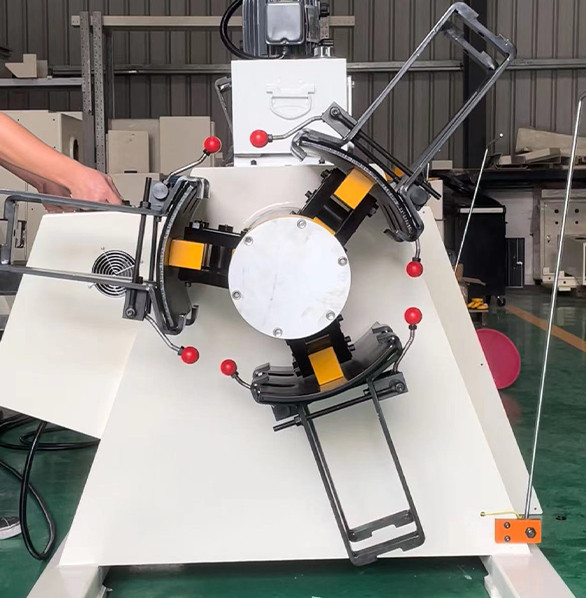
The quote said the same line would run both materials. The first coil of DP780 proved otherwise: 40 strokes, a feed slip, then a bent pilot pin.
What changed was not the machine. It was the elongation budget, and everything downstream of it moved with it.
The record below comes from a Tier-2 bracket supplier running a NC straightener feeder line on 2.0 mm DP780 after three years on HSLA 340.
The First Sign Is Not in the Straightener
Day one looked fine at 40 SPM. The strip ran straight, the rolls were quiet, and the first 200 parts measured inside tolerance.

Forty strokes a minute is a setting check, not a production test. Nothing about 780 MPa shows up below 100 SPM except the springback.
The problem appeared at 120 SPM as a 0.4 mm short feed every 60 to 80 strokes, always in the 3 m after a coil splice.
A splice is where one coil's thickness tolerance meets the next one's. At 780 MPa the line will not average the step the way it does on mild steel.
DP780 at 2.0 mm carries roughly half the elongation of HSLA 340. The strip cannot absorb a feed correction the way mild steel does.
Springback is the second symptom. A 90-degree bend came back at 92.5 degrees, and flange height drifted 0.3 mm across the coil width.
Neither fault points at the machine. Both point at the material, and the line has to be retuned around it.
What it points at is the assumption that a line rated for 340 will hold its settings at 780. It holds them; they are the wrong settings.
What the Material Data Sheet Does Not Tell the Line
Yield and tensile numbers are the easy part. What the line needs is how the coil was rolled and how it was levelled before shipping.
Coil set and cross-bow arrive larger on 780 MPa than on 340, because the mill works harder to hit the mechanicals and locks more stress into the wrap.
The mill's temper pass matters as much as the grade. A skin-passed coil runs flatter through the first stand than one that was not.
A data sheet will not tell you the residual stress pattern. Two coils of the same grade from different mills can behave like different materials.
What replaces it is a trial: two coils, one setting, and a record of what moved. That takes half a day and saves a week of guessing.
Ask for the flatness class and the last processing line before the coil ships. It shortens the trial from days to hours, and it is free.
Two coils from the same mill and the same grade can still differ by a full flatness class. Read the class on the delivery note, not on the quotation.
Retuning in the Order That Works
Change one thing at a time, and change them in this order. Retuning penetration before roll pressure costs a shift and teaches nothing.
Keep a written record of each step. A 780 MPa trial generates four settings worth keeping, and memory loses them by the second shift.
- Roll pressure first. 780 MPa needs 15-25% more grip than 340 at the same width; start high and back off until slip stops.
- Then penetration. Add 0.1 mm at a time on the entry rolls until coil set reads flat under a 1 m straightedge.
- Then the exit gap. Set it 0.05 mm under strip thickness, not at thickness; the last stand has to work the surface.
- Then pilot release. Higher yield means the strip springs back into the pilot before the pins are fully seated.
- Then feed acceleration. Drop the ramp 20% and give the time back to the dwell, not to the cycle.
- Then die protection. Re-check the tonnage window; 780 MPa raises the peak 28-35% on the same part.
- ('p', 'Two of those six steps interact: pressure and penetration. Raise pressure without re-checking penetration and the coil set comes straight back.')
Where the Tonnage Goes
Same part, same die, two materials. The press does not care about the grade, only about the force it has to deliver.
Before the trial, put the die in the press and measure actual tonnage on 340. The nameplate margin and the measured margin are rarely the same.
| Parameter | HSLA 340, 2.0 mm | DP780, 2.0 mm | Where it costs you |
|---|---|---|---|
| Yield strength | 340-420 MPa | 450-550 MPa | Higher stripping force, faster die wear |
| Blanking force | 100% | 128-135% | Press margin shrinks on the same frame |
| Springback | 2-3 deg | 4-6 deg | Overbend and re-strike, not a die change |
| Feed grip needed | Base | +15-25% | Roll pressure, and a marking risk |
| Penetration | Base | +0.2-0.4 mm | More roll load, faster roll wear |
| Edge cracking | Rare | 2-4% at tight radii | Blank layout, not machine settings |
The 128-135% figure is typical for 2.0 mm DP780 against HSLA 340 at the same blank perimeter. Check it against press margin before the coil lands.
The roll geometry that has to absorb this is covered in our 3-in-1 decoiler straightener feeder guide. Roll count matters more than tonnage here.
Add 10-15% to the blanking force if the blank has narrow webs between stations. A narrow web cannot spread the load the way a wide one can.
Stripping force rises too, and it is the term most often forgotten. A die that strips cleanly at 340 can pull the strip up at 780.
Four questions decide whether the trial succeeds. They are the ones the customer asked us in week one.
How much more press tonnage does 2.0 mm DP780 need than HSLA 340?
Typically 28-35% more blanking force at the same blank perimeter. A press running at 80% of capacity on 340 will not carry 780.
Does 780 MPa need more than 5 straightener rolls at 2.0 mm?
Yes. A 5-roll stack removes 55-65% of coil set at this strength; 7 rolls reach 75-80%, and the extra stand is what keeps the part flat.
How much does running speed drop on 780 MPa?
Expect 20-30% below the 340 setting on the same line. The limit is usually pilot release and feed grip, not the press.
Can one roll pressure setting run 340 and 780 in the same shift?
No. Plan 20-30 minutes of retuning per grade change, and record the two parameter sets as separate recipes.
Two Weeks In: What We Would Do Differently
The line ran 780 MPa at 95 SPM by week two, not the 130 the quote implied. Four changes we should have made on day one closed the gap.

We should have specified harder rolls. Standard 60 HRC rolls marked the surface at the pressure 780 needs, and the marks only showed after painting.
The marks were 0.02 mm deep, invisible on raw strip and obvious under a 20-micron paint film. Cosmetic rejects cost more than the rolls.
We should have asked for a wider pilot release window. The original cam gave 12 degrees; 780 MPa needed 18 to seat the pins before the strip moved.
We should have checked the pilot hole tolerance in the die drawing. A 0.15 mm oversize hole is fine at 340 and marginal at 780.
We should have demanded the coil flatness class. Two of the first six coils sat outside what a 7-roll stack can correct.
We should have run the first coil at production speed on day one. The faults only appear above 100 SPM, and we spent two days below it.
The trial report has one line worth keeping: the line is rated for a tonnage, not for a material.
We should have measured tonnage on the first 100 strokes instead of trusting the nameplate. The peak came in 31% above the 340 figure.
Before you quote a press margin, check the roll diameter and pressure range against the models in our product range. The nameplate alone will not tell you.
None of those is exotic. Each one is a line item on a quote that nobody reads twice until the scrap bin fills.
Where 780 MPa Breaks This Line's Assumptions
This line holds 780 MPa at 2.0 mm and 1,250 mm width. Outside that box the same settings mislead.
Above 3.0 mm the roll diameter is too small for the bending moment. Penetration stops being a linear correction and edge cracking starts.
Between 2.5 and 3.0 mm the line still works, but only at 60-70% of the speed it holds at 2.0 mm.
Below 0.8 mm grip becomes the limit, not the straightener. Thin 780 MPa needs a different roll surface, not more pressure.
And a line tuned on DP780 will not run CR4 without retuning. The penetration that flattens 780 will overwork mild steel and put a wave in it.
Anyone who says one setting covers both grades is selling a machine, not a process. Budget the retune, or budget the scrap.
The same caution applies to the tonnage table. Those percentages hold at 2.0 mm and 1,250 mm width; at 1,500 mm the force follows the blank perimeter.
Treat every number in this article as a starting point for a trial on your press, with your die and your coil supplier.
Where to go next
This is one material case inside the wider flatness picture. The roll-count, pitch and penetration relationships behind it are set out in our coil line knowledge base.
The Coil Line Guide Library