Which Coil Feeding Line Pays Off at 1,500 Parts?
- Share
- publisher
- David Park - Senior Stamping Engineer, FANTY Machinery
- Issue Time
- Nov 19,2026
Summary
On a 1,500-piece bracket run, a coil feeding line carries 4.5 hours of setup against 1.5 hours for blanks, and the break-even lands at 5,500 parts per setup. The article prices both routes, shows how strip yield decides the material advantage, and sets out the four job types where blanks win at any volume.
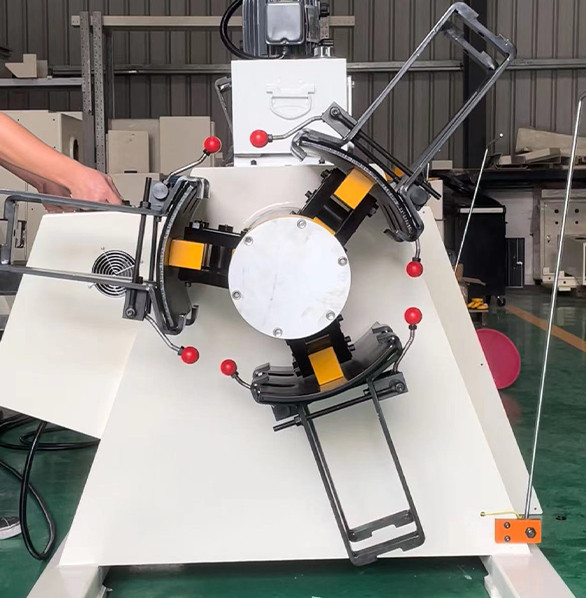
A coil feeding line only pays off above a certain number of parts per setup, and 1,500 is usually below it.
An appliance bracket job came in at 1,500 pieces, 1.5 mm SPCC, 150 by 140 mm, nested eight across a 1,240 mm strip. The plant had a 400 t press and no coil line on that bay.
Both routes were quoted: buy coil and feed it, or buy blanks and load them by hand. The blanks won by 142 USD on the 1,500-piece run, and lost by 331 USD on a 15,000-piece run.
Two Ways to Get Metal Into the Same Die
Blank feeding means the material arrives cut to size, stacked, and an operator or a magazine places each piece against a gauge.
Coil feeding means a decoiler holds a 5 t coil, a straightener levels the strip, and a feed unit advances it by the progression length on every stroke.
The die does not care which route it is fed from. The plant does, because the two routes carry different fixed costs and different material yields.
At 50,000 parts a year the answer is settled by material and labour. At 1,500 parts it is settled almost entirely by setup time, which is why small lots so often go out as blanks.
The whole comparison is a break-even calculation, and the break-even on this job sat at 5,500 parts per setup.

What the Setup Actually Costs on Each Route
Setup is where the two routes separate. Both need a die in the press and a first-off check, so those hours cancel out.
What remains is the material handling chain, and it is four to five hours long on a coil line against one to two hours on a blank pallet.
| Setup step | Coil feeding line | Blank feeding | Where the difference bites |
|---|---|---|---|
| Material to the press | Crane or coil car, 5 t coil, 45 to 90 min | Forklift with pallet, 15 min | Needs a crane on that bay or a car on order |
| Threading the line | 20 to 40 min including scrap head | Not applicable | Every thread costs 3 to 5 m of strip |
| Straightener and gap setting | 45 to 60 min for a new gauge | Already flat from the blanker | Repeat jobs still need a gauge check |
| Feed programming and pitch | 20 to 30 min, plus pilot timing check | Gauge and stop only | Programming errors show up as scrap |
| First-off and adjustment | 45 to 60 min, 10 to 20 parts scrapped | 20 to 30 min, 3 to 5 parts scrapped | Scrap is charged at full material cost |
Added up at 65 USD an hour, the coil route carries about 4.5 hours, or 292 USD, before the first good part. The blank route carries 1.5 hours, or 98 USD.
That 194 USD gap is the number the rest of the comparison has to overcome. On a 1,500-part lot it cannot.
Setup cost is also the easiest number to underestimate, because the hours are spread across a shift change and nobody books them to the job.
The Break-Even Lands Near 5,500 Parts
Per part, coil material runs 0.199 USD and blank material 0.234 USD. The gap comes from the blank supplier's margin and the 23 percent price premium over coil.
Labour is the same on both routes at 30 SPM: about 0.036 USD per part, so it cancels out of the comparison and can be ignored.
Coil variable cost is therefore 0.235 USD per part against 0.270 USD for blanks. Each part recovers 0.035 USD of the 194 USD setup gap.
Divide 194 by 0.035 and the break-even is 5,543 parts per setup. Below that number, blanks are cheaper. Above it, the coil line wins and keeps winning.
| Parts per setup | Coil feeding, total | Blank feeding, total | Which route is cheaper, and by how much |
|---|---|---|---|
| 500 | 410 USD | 233 USD | Blanks, by 177 USD |
| 1,500 | 645 USD | 503 USD | Blanks, by 142 USD |
| 5,500 | 1,585 USD | 1,583 USD | Level, within 2 USD |
| 15,000 | 3,817 USD | 4,148 USD | Coil, by 331 USD |
| 50,000 | 12,042 USD | 13,598 USD | Coil, by 1,556 USD |
The shape matters more than the exact crossing point. The coil route is a fixed cost plus a thin variable advantage, so it rewards volume and punishes every extra setup.
Five runs of 1,500 parts carry five setups, which is 1,460 USD of extra fixed cost and no chance to recover it.
Material Yield Is Where the Assumption Usually Fails
Buyers assume coil is always cheaper per kilogram. It is cheaper per kilogram, and that is not the same as cheaper per part.
The bracket here nests eight across a 1,240 mm strip with a 145 mm progression. Gross area per part is 22,475 mm² against a 21,000 mm² part, a yield of 93.4 percent.
At that yield the coil advantage survives. At four across, with the same progression, gross area rises to 44,950 mm² and the yield falls to 47 percent.
Half the strip then leaves as skeleton scrap, and the material cost per part roughly doubles. The coil line that looked cheaper at eight across becomes the expensive route at four.
Nesting is decided by the die, not by the purchasing department, so the yield has to be measured from the strip layout before either route is priced.
Edge trim is the other quiet cost. A 15 mm trim each side on a 1,240 mm strip removes 30 mm of width, which is 2.4 percent of the coil before a single part is made.
Five questions usually surface once the numbers are on the table.
At 5,500 parts, does a coil feeding line beat blanks?
That is the crossing point on this job, where blanks carry a 23 percent price premium over coil. With a 10 percent premium the crossing falls to roughly 2,300 parts.
Does a coil line need 4.5 hours of setup before the first good part?
Four to five hours on an existing line with the die already set, of which 45 to 60 minutes is straightener and gap work on a gauge change.
Does 80 percent strip yield make coil feeding cheaper per part?
Yes, marginally. Below 70 percent the skeleton scrap eats the price difference and blanks win even at high volume.
Can a coil feeding line run pre-painted stock without marking it?
Only with polished rolls and reduced roll pressure. Most plants still buy pre-painted material as blanks to keep the coating intact.
Does a 5 t crane add 25,000 USD to a coil route that has none?
An overhead crane and runway for one bay runs 25,000 to 45,000 USD installed, which moves the break-even by 3,000 to 5,000 parts.
Jobs Where Blanks Win Regardless of Volume
Volume is not the only variable, and four job types stay on blanks at any quantity.
Thick high-strength material is the first. Levelling 6 mm HSLA 420 to a flatness spec needs a machine several times the price of one that handles 1.5 mm mild steel.
Coated and embossed stock is the second. Every roll contact is a chance to mark a surface the customer will see, and a blank supplier carries that risk instead.
Third is any part where flatness is guaranteed by the material supplier and the die cannot tolerate variation. Buying a certified blank moves the risk upstream at a known price.
Fourth is the plant with no crane, no floor depth and no space behind the press. The machine is not the only cost, and on a rented building the civil work alone can exceed the saving.
None of these are permanent. A plant that adds a crane and a second shift moves into coil territory on the same job.
The Second Job Changes the Answer
A single 1,500-part lot is the worst case for a coil route, because the setup is paid once and recovered on 1,500 pieces.
Two jobs on the same strip width share that setup. The second job's material changes, the die changes, and the 4.5 hours does not repeat.
That is why the real question is not how many parts are in this order but how many orders will run on this width over the next twelve months.
A plant that sees six jobs of 1,500 parts on the same 1,240 mm strip is looking at 9,000 parts against one setup, and the coil line wins comfortably.
A plant that sees one job and then a different width next month is looking at two setups, two threadings and two gauge changes.
Feed accuracy, and whether a progressive die can hold its tolerance on coil at all, is covered in our coil line knowledge base.
Five Checks Before the Quote Goes Out
- Measure the strip yield from the actual layout, not from the part weight
- Count the setups the order needs, then multiply by the 4.5 hour figure
- Check the blank supplier's premium against the coil price on the same gauge
- Confirm crane capacity and floor depth before the coil route is assumed
- List the other jobs on the same width over the next twelve months
Machine data for the models compared here is listed in the coil line equipment index, including the width and gauge ranges that decide which strip can be run at all.
FANTY has equipped more than 200 production lines across 60 countries. The plants that get this decision right tend to run the same arithmetic on every new order rather than once per machine purchase.
Where to go next
Feed method is a volume question dressed up as an equipment question, and the arithmetic above only holds while the strip yield does.
The coil line knowledge base covers the wider decision, from what a three-in-one machine does to where a separate line is the better purchase.
Read the coil line overview