Which Stamping Jobs Can Skip the Straightening Stage?
- Share
- publisher
- David Park - Senior Stamping Engineer, FANTY Machinery
- Issue Time
- Nov 11,2026
Summary
A leveling stage nobody needs is a $30,000 line item with its own maintenance routine. Four conditions decide whether cold-rolled coil can go straight into the feed rolls, and a bracket job at 48 mm feed ran eleven months without a stage until a second mill coil ended the experiment. The guide compares three arrangements, prices the die wear and scrap that follow the shortcut, and gives two shop-floor tests that settle the question before an order is placed.
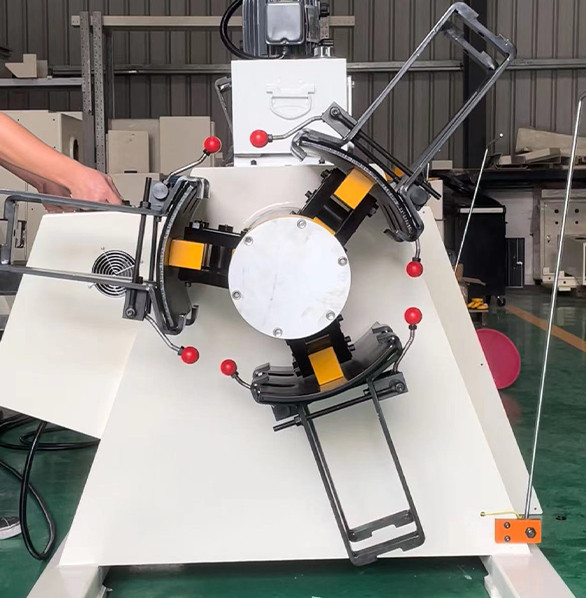
A leveling stage that nobody needs is a $30,000 line item that also adds a maintenance routine. On tight cold-rolled coil with short feeds, it can be left out without the die noticing.
The decision is not about machine quality. It is about how much shape error the incoming coil carries, how long the feed is, and what the part is expected to do after forming.
Here is how to separate the jobs that need straightening from the ones that only look like they do.
Which Jobs Tolerate Strip Straight From the Coil
Four conditions have to line up before skipping the stage is a real option. Miss any one and the saving turns into scrap.
- The coil is temper-rolled CR with a mill flatness claim inside 8 I-units, and the supplier holds it batch to batch.
- The feed is short: under roughly 60 mm, where the die pilots never see more than one strip pitch of accumulated error.
- The part is a bracket, clip or spacer where 0.2 mm of bow after forming is inside the drawing.
- The die has pilots that engage before the stripper loads the strip, so the strip is positioned rather than pushed.
Where all four hold, a line without a leveling stage runs the job. Where one fails, the question becomes how much of the failure the die can absorb.
The Die Absorbs More Than Most Buyers Assume
A progressive die is a shape-correcting device by accident. Pilots, gauges, strippers and lifters all act on the strip before the first punch lands.
Pilots pull the strip into position. A pilot entering a hole in the previous station moves the strip by up to a millimetre. That motion hides feed error, and it hides coil set along the feed direction.
Strippers flatten what they touch. A spring stripper applying 8 to 15 kN flattens a bow over the station footprint. The bow returns when the strip leaves.
Short pitches hide crossbow. A 45 mm feed advances the strip across 45 mm of surface. A 3 mm bow over that length barely changes the pilot position.
What the die cannot do is remove a coil set that runs the length of the strip. A die corrects a local error at a station. It does not correct a curve that repeats for forty metres.
Feed length is the amplifier. A 40 mm pitch samples a small window of the coil at each stroke. A 250 mm pitch samples six times as much, and every millimetre of that window reaches the pilots.
That is why the same coil can run clean on one press and badly on another in the same plant. The material did not change. The window did.

Three Feeding Arrangements Compared on the Same Job
The comparison below is drawn on one real job: 1.2 mm CR4, 320 mm wide, 48 mm feed, 180 strokes a minute, bracket for a cabinet frame.
| Arrangement | What it buys on the floor | Where the cost lands |
|---|---|---|
| Coil straight into the feed rolls | Shortest line, lowest price, one less maintenance point | No correction for coil set; supplier flatness claim becomes a production requirement |
| Single leveling stage before the feed | Handles ordinary crossbow and edge wave; tolerant of supplier variation | Adds 1.4 m of floor, roll cleaning, and a setup step on every gauge change |
| Leveling stage with adjustable back tension | Controls coil set along the strip as well as across it | Highest price, and the tension setting has to be retuned for each coil weight |
On that job, the first arrangement ran for eleven months on a supplier that held flatness tightly. The first coil from a second mill ended the experiment within two shifts.
The middle arrangement is what most plants end up buying. It is not chosen because the part needs it. It is chosen because the purchasing department cannot guarantee the coil supply will not change.
Where the Saving Disappears After Six Months
Skipping the stage saves capital and floor space. It rarely saves cost per part, and the reasons show up slowly.
Die maintenance climbs. A strip with residual bow enters the die at an angle. Punch edges on the entry side wear faster, and the sharpening interval drops from 180,000 strokes to 120,000.
Scrap moves from the coil to the press. A bad coil used to be caught at the leveler. Now it is caught at the first-article check, after the strip has been consumed.
Forming error compounds. A bracket with 0.15 mm of bow before forming comes out with 0.35 mm of twist after two bends. That twist is not correctable in the die without changing the bend allowance.
Set those three against the capital saving over five years and the arithmetic often reverses. On the job above, die maintenance alone consumed 60 percent of the annual saving.
Where the part is a flat blank with no bends and a generous drawing, none of that applies and the saving is real.
Blank jobs are also where the stage is easiest to justify on paper and hardest to justify in practice, because a flat part hides its bow until the customer stacks it.
Is a leveling stage still worth it at a 60 mm feed length?
Below roughly 60 mm, the pilot corrects most residual shape error and the stage earns little. Above 120 mm, the same error reaches the die uncorrected and the stage is normally justified.
Can a progressive die absorb 0.15 mm of crossbow without scrap?
About 0.15 mm over a 200 mm span with pilots engaged before the stripper. Beyond 0.3 mm, pilot wear and punch edge loading become measurable within 50,000 strokes.
Does skipping the stage change the 0.5 mm flatness a customer measures?
Yes, once the part has bends. A 0.1 mm pre-form bow becomes 0.2 to 0.3 mm of twist after two 90-degree bends, which fails most 0.5 mm flatness callouts.
What flatness claim should a coil order carry: 8 or 16 I-units?
8 I-units or better for a line without leveling, 16 I-units where a stage is installed. Write the measurement method into the order, because mills measure flatness differently.
Can a line be bought without the stage and upgraded later?
Usually yes, if the base is long enough and the drive has 20 percent headroom. Retrofitting into a frame that was never laid out for it costs 1.5 to 2 times the factory price.
Jobs Where the Shortcut Fails
Four job types should keep the stage regardless of what the arithmetic says.
Visible cosmetic panels. A 0.2 mm bow shows as a reflection break on a painted surface. No die correction hides it, and the customer sees it before the inspector does.
Lamination stacks. Stack height tolerance of 0.1 mm over 200 sheets leaves no room for per-sheet bow. Every sheet has to arrive flat.
Long feeds over 200 mm. At that length the strip spans several stations and the pilots cannot correct across the whole span.
Coil bought on price rather than specification. If the purchasing team will switch mills to save $40 a tonne, the line needs a stage to survive that decision.
Seasonal variation belongs on that list too. Coils stored in an unheated bay through a cold month behave differently on the first pass than the same coil did in summer.
How to Measure Flatness Before You Commit
Two tests settle the question on your own floor, and neither needs a metrology lab.
- Cut a 300 mm sample from the outer wrap, lay it on a surface plate, and measure the gap under a 200 mm straightedge with feeler gauges.
- Lay a 1 m length on the floor and measure the lift at each end. That number is coil set, and it is the one a leveler with back tension exists to remove.
- Run the same sample through the die at the intended feed length and measure the part, not the strip.
| Measurement on the sample | What it predicts | Where the reading misleads |
|---|---|---|
| Gap under a 200 mm straightedge | Crossbow the die has to absorb | Ignores coil set, which runs along the strip |
| End lift over 1 m | Coil set reaching the pilots | Reads low if the sample was cut from a loose outer wrap |
| Part flatness after forming | The number the customer will measure | One good part from one coil proves nothing about the next coil |
What a First-Article Run Proves and What It Does Not
A first article proves the die is set correctly for that coil. It proves nothing about the coil arriving next month.
Run the trial across three coils from different heats if the decision depends on it. A single-coil trial is how plants end up buying a line that works on the sample and fails on the production order.
Our coil line knowledge base sets out the flatness numbers that govern this decision, and the roll geometry behind them.
Dimensions and pass line heights for the three arrangements are published in our equipment data library.
Where to go next
Deciding whether to buy the leveling stage is half the decision. Setting it once it exists is the other half, and it is the part that gets skipped.
The coil line guide library carries the flatness guide on roll count, pitch, gap and penetration, starting from the spec the customer measures.