Why Does Straightening Put Edge Wave in Narrow Strip?
- Share
- publisher
- David Park - Senior Stamping Engineer, FANTY Machinery
- Issue Time
- Oct 29,2026
Summary
A 9-roll 3-in-1 straightener feeder left 1.1 mm of edge wave on 180 mm SPCC while the centre stayed flat, and the toolroom checked the die twice. This separates edge wave from centre buckle, runs a two-hour sequence from the coil tail to the lead wire, and shows how 12 mm of off-centre tracking and a roll crown cut for wider strip each contributed. It also explains why slit-edge wave cannot be straightened out, only hidden.
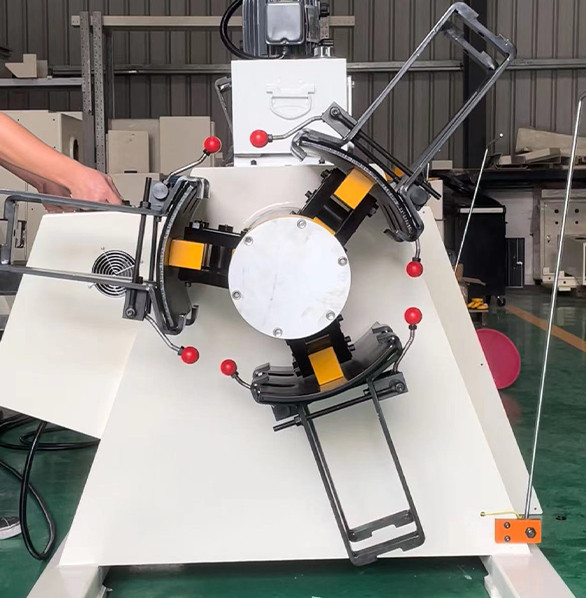
A hardware plant ran 180 mm wide, 0.8 mm SPCC through a 9-roll 3-in-1 decoiler straightener feeder and could not get the edges to lie down. The middle of the strip was flat.
Both edges waved, 1.1 mm high over a 300 mm pitch.
The toolroom had checked the die twice. Quality had rejected three coils. Nobody had measured the strip before it entered the machine.
Edge wave is one of the few flatness defects where the cause is usually within a metre of the last roll stand, and it is also one of the few where the coil can arrive already defective.
The difference between those two cases decides whether you adjust a machine or return material, and it takes about two hours to tell them apart.
The Defect That Looks Like a Coil Problem
The symptom is easy to describe and easy to misread. The strip leaves the machine with wavy edges and a flat centre, and the wave runs the full length of the coil.
Operators call it a coil problem because the wave sometimes disappears on the next coil and comes back on the one after. That pattern feels random, and it is not.
Wave height and pitch together define severity. A 1.1 mm wave over a 300 mm pitch is 0.37 percent, and visible edge wave on a painted or visible part usually starts around 0.3 percent.
Below that the strip looks acceptable on the machine and fails after blanking, because the wave flattens under the stripper and returns as a bow in the finished part.
Edge Wave and Centre Buckle Are Not the Same Thing
Both are flatness defects and both come off the same rolls, but they point at opposite settings. Treating them as one problem is why so many adjustments make things worse.
Edge wave means the edges are longer than the centre. Something has reduced the edge thickness, or the centre has been held back, and the surplus length has to go somewhere.
Centre buckle means the centre is longer than the edges. On narrow strip that is the usual result of roll deflection, because the load sits in the middle of a roll built for a wider strip.
A quick test separates them. Lay the strip on a surface plate and press one edge down. If the opposite edge lifts, the edges are long. If the centre lifts, the centre is long.
Getting this wrong is expensive in a specific way: adding penetration to remove edge wave makes it worse, and the operator concludes the machine is incapable.

Four Causes and What Each One Costs to Fix
On narrow strip, four causes account for nearly every edge wave case. They differ in signature, in the test that confirms them, and in what the fix costs.
| Cause | Signature | Confirming test | Where it costs you |
|---|---|---|---|
| Excess penetration | Wave grows as penetration rises | Reduce 0.05 mm and re-measure | Less flatness correction on thick strip |
| Strip tracking off centre | One edge wavy, one edge flat | Chalk line along the roll face | Guides must be reset for every width |
| Roll crown cut for wider strip | Wave at both edges, worse at speed | Lead-wire check across the face | New roll set, 3 to 5 weeks |
| Inherited from slitting | Wave present before the machine | Measure the coil tail by hand | Material claim, not a setting |
The first two account for most cases and cost nothing but time. The third needs parts. The fourth is not your machine's problem at all, and no amount of penetration will remove it.
A Diagnostic Sequence That Takes Two Hours
Work from the coil backwards. Every step below eliminates one cause, and the sequence is ordered so that the cheap tests come first.
- Measure the coil tail. Cut 2 m from the outside wrap and lay it on a plate. If it waves before it enters the machine, the defect is in the material.
- Chalk the roll face. Run 2 m with a chalk mark on the top roll and look at where the strip sits. A strip running 10 mm off centre loads one edge.
- Drop penetration by 0.05 mm. If the wave improves, you were over-rolling. If it worsens, the centre is being held and the edges are starved.
- Lead-wire the gap. Feed three soft wires across the width and measure them. A 0.03 mm difference across 180 mm is a parallelism fault.
- Run at half speed. Wave that shrinks with speed points at roll deflection or at a drive-related oscillation rather than at geometry.
What the Numbers Looked Like on a 180 mm Strip
The hardware plant ran 38 mm work rolls with 0.30 mm of penetration. That is 37 percent of strip thickness, which is normal for 0.8 mm material on a 9-roll head.
The chalk test showed the strip running 12 mm off centre, because the edge guides had been set for a 200 mm coil and never reset. One edge was carrying about 8 percent more reduction than the other.
Resetting the guides and dropping penetration to 0.22 mm took the wave from 1.1 mm to 0.5 mm. The remaining wave only appeared above 90 SPM.
The residual wave was roll deflection. A 38 mm roll under 180 mm of strip at 0.22 mm penetration deflects enough to leave the edges under-rolled, and the effect grows with speed because the contact time shortens.
Swapping to a crowned roll set cut it to 0.2 mm, which held through the whole speed range and through three months of production.
The crown is matched to a width. A roll ground for 400 mm strip carries more crown than a 180 mm strip needs, so the centre is effectively over-rolled and the edges are left behind.
Plants that run several widths on one machine end up with a compromise roll and a permanent 0.2 to 0.3 mm of edge wave on the narrowest job. That is a design limit, not a setting error.
Where the width mix is stable, a second roll set is cheaper than a year of sorting. Where it changes weekly, the compromise roll and a slightly looser flatness spec are the honest answer.

When the Wave Was There Before the Coil Arrived
Slitting creates edge wave, and no straightener removes it. The slitter cuts a wide master coil into narrower strips, and the cut edge releases residual stress that was balanced in the parent coil.
The signature is specific. Wave appears within 30 mm of the slit edge, is uniform along the length, and does not change when you alter penetration by 0.1 mm in either direction.
A straightener can mask it, not fix it. Extra penetration stretches the centre to match the edges, which removes the visible wave and leaves a strip with locked-in stress that springs back after blanking.
That is why some plants report a flat strip at the machine and a bowed part at the press. The wave did not disappear; it moved downstream.
On 0.8 mm SPCC, an inherited wave of 0.4 percent is usually a material claim. Below 0.2 percent it is cosmetic and the die will not care.
Proving the Fix Without a Shadowgraph
A 1 m strip sample on a granite plate, a 300 mm steel rule and a feeler gauge will settle most arguments. Shadowgraphs are better and rarely available on the floor.
Lay the sample flat, put the rule across the wave, and measure the gap under the rule at the peak. Record height and pitch, not just "wavy".
Photograph the sample next to the rule. Two photos, one before and one after, do more for a setting sheet than a paragraph of description.
The roll geometry behind this case — roll count, pitch and the penetration that suits each gauge — is set out in the coil line guide library.
How much penetration should 0.8 mm SPCC run on a 9-roll head?
0.20 to 0.25 mm, which is 25 to 31 percent of thickness. The plant here started at 0.30 mm, and that was already producing edge wave on 180 mm strip.
At what wave height does edge wave become a reject?
Around 0.3 percent of pitch, so 0.9 mm over a 300 mm pitch. Below 0.2 percent most dies absorb it; above 0.4 percent it survives blanking as a bow.
Can extra penetration remove edge wave from slit coil?
It hides it. Stretching the centre by 0.05 mm removes the visible wave and leaves residual stress that springs back after blanking, which moves the defect downstream.
How much does a crowned roll set cost for a 180 mm line?
$4,000 to $6,500 depending on roll count and coating, with three to five weeks lead time. It is the only fix when deflection is the cause.
Does strip tracking really cause edge wave on a 180 mm strip?
Yes. Running 12 mm off centre loaded one edge about 8 percent harder and produced 0.6 mm of the 1.1 mm total wave, at zero cost to correct.
How much does a 38 mm roll deflect under 180 mm of 0.8 mm strip?
Enough to leave 0.5 mm of edge wave at 0.22 mm penetration, and more above 90 SPM as contact time shortens. A crowned set brought it to 0.2 mm.
Where to go next
This case sits in the flatness cluster, where roll geometry, penetration and the coil's own condition are diagnosed together.
If your wave survives a penetration change, the pillar page will show you which defects a straightener can remove and which ones it can only mask.
Read the flatness and roll geometry guide