Which Certifications Does an Imported NC Straightener Feeder Need?
- Share
- publisher
- David Park - Senior Stamping Engineer, FANTY Machinery
- Issue Time
- Aug 7,2026
Summary
CE, UKCA, listed components and the declaration of conformity, in the order a buyer meets them. What the declaration has to name, what customs asks for, and the one case where a correctly marked machine still leaves the integrator carrying the compliance duty.
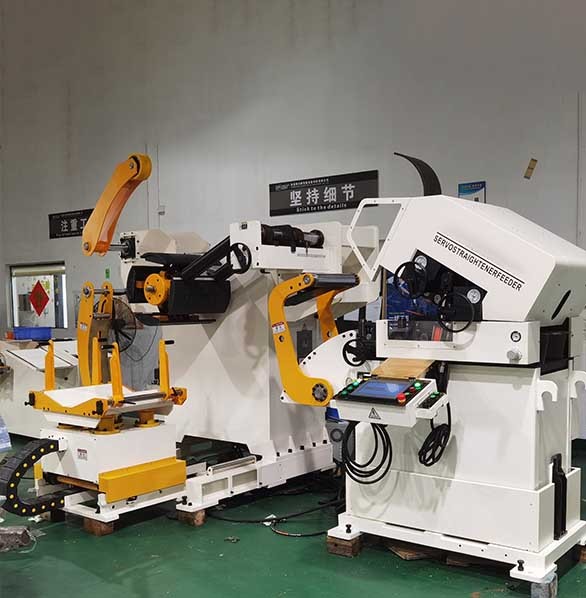
A coil feeder that runs perfectly in the supplier's workshop can still sit at a port if the paperwork behind it is thin. The machine is not the hard part of importing it. The marking and the documentation usually are.
This page covers which mark a destination market requires, what the declaration of conformity has to name, and what customs looks for.
It also covers the one case where a correctly marked machine still leaves you with a compliance duty.
Start With the Destination, Because the Mark Follows the Market
There is no single international certificate that covers a coil line everywhere. What you need to obtain is determined by where the machine will be installed, and the requirements differ more than most buyers expect.
European Union and EEA. A CE mark under the Machinery Directive 2006/42/EC applies to machines placed on the market up to and including 19 January 2027.
From 20 January 2027 the Machinery Regulation (EU) 2023/1230 applies instead, with no parallel period during which either text may be used. A non-EU manufacturer also needs an economic operator established in the Union.
Great Britain. For machinery, CE marking has been recognised indefinitely in Great Britain since the 2024 amendment to the product safety regulations, so UKCA is an alternative rather than a replacement.
Northern Ireland follows EU rules and requires CE.
United States and Canada. There is no federal machinery mark equivalent to CE.
What buyers encounter is an expectation that electrical components are listed by a recognised testing laboratory, and that the electrical design follows the industrial machinery standard.
A factory acceptance test is increasingly written into the purchase order.
| Destination | What is normally required | Who signs it off | Where it costs you |
|---|---|---|---|
| EU / EEA | CE mark, EU declaration of conformity, technical file held and producible, EU economic operator named | The manufacturer, by self-declaration for most machinery; a notified body only for listed categories | Self-declaration is cheap but puts the whole risk on you if the file is thin. Notified body routes add weeks. |
| Great Britain | CE accepted indefinitely for machinery; UKCA optional | The manufacturer | Buying a second mark you do not need is the most common wasted spend here |
| Northern Ireland | CE required. UKCA alone is not valid | The manufacturer, with an EU-based economic operator | A Great Britain-only compliance plan does not cover it |
| United States | Listed electrical components, industrial machinery electrical design, often a witnessed acceptance test | The component listing body and, in practice, your own engineer at the test | The acceptance test is where schedule slips, because it happens after the machine is built |
| Other markets | Regional marks or registration, varying by country | Local bodies | Each market has its own lead time, and they do not run in parallel by default |
What the Declaration of Conformity Has to Name
The declaration is a legal document, not a marketing sheet, and customs or a market surveillance officer reads it as one. Four things have to be on it.
Who is declaring, and where they are established. The manufacturer's name and address, plus the authorised representative in the destination market where one is required.
The machine, identified specifically. Type, model and serial number. A declaration that names a product family but not the unit is the most common weakness in supplier paperwork.
The legislation applied, and the standards used to meet it. The directive or regulation, and the harmonised standards relied on. For a coil line these typically cover the machine itself and its electrical equipment.
A signature, a place and a date. Signed by someone with authority to bind the manufacturer, dated at or before the machine is placed on the market.
Behind the declaration sits a technical file: drawings, a risk assessment, electrical schematics, component listings, test records and the operating manual.
The file is normally retained rather than shipped, but it has to be producible on request, and its absence is what turns a routine check into a stopped shipment.
It is worth checking what arrives in the crate against what the order promised.
The list of documents a machine should ship with, and the ones buyers commonly find missing, is set out separately in the document checklist for an NC straightener feeder.
If you buy a partly completed machine, expect a declaration of incorporation rather than a declaration of conformity.
That is correct practice, not a gap in the paperwork, but it changes who is responsible for the finished line.
Why a Marked Machine Does Not Make Your Line Compliant
This is the case that catches experienced buyers, and it is worth reading before you place the order rather than after installation.
Integration can create a new machine. When a decoiler, straightener and feeder are tied into a press with shared safety circuits, the finished assembly is often treated as a machine in its own right.
Whoever puts it together can take on the manufacturer's duties for that assembly.
Those duties are substantial. A fresh risk assessment, guarding around the interfaces, safety circuit design, and the marking of the final assembly.
The technical file has to cover the combination rather than the individual units.
The incoming mark does not travel. The builder of the feeder is responsible for the feeder as supplied.
Nobody upstream carries the conformity duty for a line you assembled, and no clause in a machine purchase order transfers it back.
Where documentation genuinely misleads is subtler than a fake certificate.
A declaration or type examination that covers a standard configuration may not cover your unit once options are added, or once a different control platform is specified.
If your machine differs from the one described, the paper may be valid and still not describe your machine.
Because integration duties sit with whoever builds the line, the specification itself is worth getting right before the order.
The coil line guide library covers the configuration decisions that decide how much of the line you end up owning.
What Customs Asks For, and What a Missing Document Costs
The file that clears a machine is short, and every item on it is ordinary. Commercial invoice, packing list, bill of lading, certificate of origin, and the conformity documentation where the destination requires it.
What causes trouble is mismatch rather than absence. A description on the invoice that does not match the machine on the crate gives an officer a reason to look closer, and a look closer costs days.
Container free time is typically five to seven days at destination. After that, daily charges accumulate per container, and a line of coil equipment can occupy more than one.
Two weeks of avoidable delay on a two-container shipment is a real number, and it never appears in the machine quote you compared.
Marks have to be physically on the machine before it ships, visibly and legibly.
Retrofitting a mark at destination is not a paperwork exercise, because the assessment behind it has to be done by someone competent for that market.
Customs charges are the part of the budget that is hardest to estimate from a machine quote.
The landed cost breakdown for an NC straightener feeder sets out where each of them appears between the factory gate and your dock.
Who Does the Work, and What It Adds to the Schedule
Most of the cost of compliance is schedule, not fees, and the schedule is what buyers underestimate.
Straight self-declaration. The manufacturer produces the declaration and assembles the technical file. Cost is inside the machine price and there is no additional lead time, provided the file is genuine.
Third-party involvement. Where a notified body or a local assessment body is needed, testing and review commonly add several weeks, and that is before any finding is corrected and re-tested.
A design that fails once can cost a quarter.
Assessment at destination. Field evaluation of an imported machine is possible, but it is priced per unit, scheduled around an inspector's availability, and cannot be started until the machine is physically installed.
The 2027 transition. Machines placed on the market before the January 2027 cut-off follow the current directive.
Anyone ordering in late 2026 with shipment in 2027 should settle in writing which text the machine will be declared against, because a slipped delivery date can change the answer.
How to Tell a Certificate That Will Not Survive a Review
Most papers you are handed are genuine. The problem is usually that they describe something slightly different from what you bought.
| What you were handed | What it should look like for your order | Where it falls apart |
|---|---|---|
| A certificate naming a product family | A declaration naming the type, model and serial number of your unit | Added options or a different control platform may put your machine outside the described configuration |
| A declaration signed before the design was frozen | A document dated at or after the final configuration | A revision between signature and shipment leaves the paper describing a machine that was never built |
| A conformity declaration for a partly completed machine | A declaration of incorporation, which is the correct document in that case | Treating it as a full declaration hides the fact that the assembly duties are now yours |
| A test report in a language you cannot read | A report whose scope, standards and results you can check | You cannot verify what you cannot read, and a translation made later is not the same document |
Where the risk is concentrated is worth a check of its own, and a factory visit is the most direct way to test whether the documentation matches the build.
The criteria are set out in the factory audit checklist for an NC straightener feeder.
What to Settle in Writing Before the Machine Ships
- Name the destination market and the mark required. One line in the purchase order, agreed before the price is fixed, prevents a late change in scope.
- Name who signs the declaration, and who is the economic operator. If an EU representative is needed, decide who provides one and at whose cost.
- Require serial-number-specific documentation before shipment. A draft declaration and a technical file index, delivered while you still hold the balance payment, is a far stronger position than a promise after dispatch.
- Get a photograph of the data plate before the container is sealed. It takes a minute and settles every later argument about whether the mark was affixed.
- Decide who pays for any assessment at destination. Left unallocated, this cost lands on the buyer every time.
- State the documentation language. A manual in a language your operators cannot read is a training problem and, in some markets, a compliance problem.


Do I need a CE certificate to import a coil feeder into the EU?
Usually not a certificate. Most machinery is self-declared by the manufacturer, so what you need is the CE mark, a declaration of conformity that names your machine, and a technical file that can be produced on request.
A notified body is mandatory only for the listed categories.
Does a UKCA mark replace CE in Great Britain?
Not for machinery. CE has been recognised indefinitely in Great Britain since the 2024 amendment, so UKCA is an option rather than a requirement.
Northern Ireland is a separate case and requires CE, with a UKCA mark alone not being valid there.
How much extra lead time does a third-party assessment add?
Four to ten weeks is a realistic planning figure, and that assumes nothing fails.
A design that needs correcting and re-testing can add a further eight weeks or more, which is why the assessment is worth starting before the machine is finished.
What does the January 2027 change mean for a machine I order now?
Machinery placed on the market up to and including 19 January 2027 is declared against the current directive. From 20 January 2027 the new regulation applies, with no overlap.
If your shipment date sits close to that boundary, state in the contract which text the machine will be declared against.
Can the supplier send the declaration after the machine ships?
Insist on the draft declaration and the technical file index before you release the final payment, typically the last 10 to 20 percent.
Documentation delivered after the balance has cleared is documentation you have no leverage to correct.
What happens if the mark is missing when the shipment arrives?
The container can be held, and the assessment needed to affix the mark has to be done for that market by someone competent to do it.
It is almost always slower and more expensive than getting it right before dispatch, and in some cases the machine cannot be marked at destination at all.
Where to go next
Compliance sits inside the landed cost, not beside it, and it is one of the line items that most quote comparisons leave out. The cluster overview collects the guides that cover the rest of the sequence.
Open the coil line guide libraryRelated reading
- how much floor space a coil line needs
- how to select the right model
- what each specification line really costs
Part of the the coil line guide library — the full library of coil handling, straightening and feeding guides from FANTY.