Why Does an NC Straightener Feeder Chatter at 180 SPM?
- Share
- publisher
- David Park - Senior Stamping Engineer, FANTY Machinery
- Issue Time
- Oct 24,2026
Summary
Chatter that starts at a specific speed is a measurement, not a mystery. This article separates five causes that sound identical, from an over-tight roll gap to a loose base anchor, and shows how mark spacing on the strip identifies which roll is responsible. It also explains when the noise is arriving from the press or the die rather than the machine, and the four adjustments worth making before calling for service.
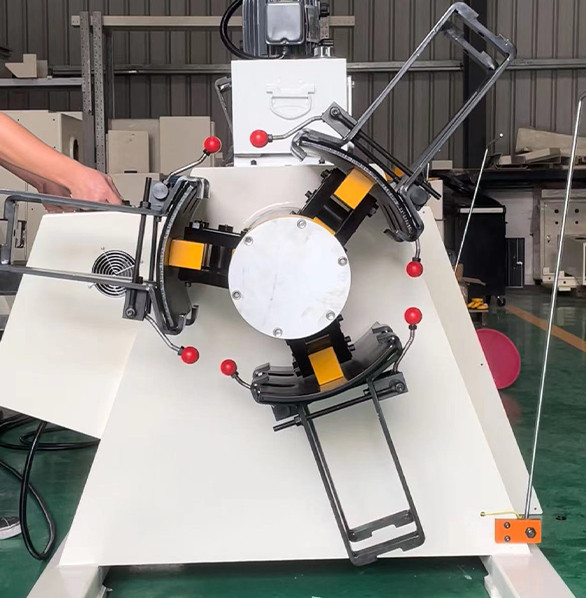
At 150 strokes per minute the line is quiet. At 180 it starts a hard, rhythmic knock that you can feel through the floor, and by 200 the strip edge is marked.
An NC straightener feeder that chatters above a threshold speed is telling you which component has run out of stiffness, and the speed itself narrows the list.
The Speed Where the Noise Starts Is the Clue
Chatter has a threshold, and the threshold is a measurement. Note the exact SPM where the noise begins, because each cause has a characteristic onset band.
This job was 2.5 mm SPHC, 1,250 mm wide, running a 320 mm feed. The knock appeared at 178 SPM and disappeared again below 160.
Speed-dependent noise points away from anything that is simply worn out. Wear produces a constant mark; resonance and slip-stick only appear when the excitation frequency matches something.
The excitation frequency is easy to estimate. At 180 SPM with a 320 mm feed the strip passes the rolls 180 times a minute, which is 3 Hz.
If the base or the foundation has a natural frequency near 3 Hz, the line amplifies that excitation instead of damping it.
Write the onset speed on the setup sheet. If it moves lower over the next three months, a stiffness is degrading and you have a trend rather than an incident.


Five Causes That Sound Identical
The knock from a loose base bolt and the knock from an over-penetrated roll set are hard to tell apart by ear. Each one has a check that takes under 20 minutes.
| Cause | What confirms it | Where it costs you |
|---|---|---|
| Roll gap too tight | Strip thickness at exit below nominal by 0.03-0.05 mm | Roll and strip both wear; marks appear at low speed too |
| Roll bearing runout | Dial indicator shows more than 0.05 mm on the roll face | Marks repeat at roll circumference pitch, not feed pitch |
| Drive coupling backlash | Audible knock on each start, not at steady speed | Feed length drifts 0.1-0.3 mm over a run |
| Brake stick-slip at the decoiler | Tension gauge needle oscillates with the knock | Strip stretches and relaxes; flatness suffers downstream |
| Base or anchor looseness | Anchor bolt torque below spec, shim gaps visible | Everything else gets adjusted trying to fix it |
Start with the gap because it is the cheapest measurement. A 0.05 mm change in roll gap moves the exit thickness and the strip tension at the same time.
Then check runout. A roll with 0.08 mm of runout on a 90 mm diameter produces a mark every 283 mm of strip, which is easy to confuse with a feed pitch problem.
Runout also changes the effective roll radius, so feed length varies slightly with each revolution. At a 320 mm feed that variation stays under 0.1 mm, but it is measurable.
Mount the indicator on the roll face, not the shaft. Shaft runout tells you about the bearing; face runout tells you what the strip actually sees.
Measure the mark spacing and divide by pi times the roll diameter. If the number comes out at a whole number of revolutions, the roll is the source.
Do the same arithmetic for the feed rolls and the pinch roll.
Each has a different circumference and therefore a different mark spacing.
A sheet with three circumferences saves an afternoon. The arithmetic is trivial; remembering which roll is which is not.
Write the circumference of each roll on the machine frame in paint marker.
It sounds crude and it survives three shift changes without being lost.
Reading the Strip After the Run
The strip keeps a record of the diagnosis, and it is more reliable than the sound. Pull two metres after a run at the chattering speed and lay it on a bench.
Marks spaced evenly along the length point to a rotating component. Marks that wander point to tension oscillation or a loose base.
Marks on one edge only suggest a roll that is not parallel to the pass line. That is a setup error, not a wear problem, and it usually appears after a roll change.
Check parallelism with a feeler gauge at both ends of the roll gap. A 0.1 mm difference across a 1,250 mm face is enough to mark one edge.
This is the most common fault after a roll change on a 3-in-1 decoiler straightener feeder, and it is also the easiest to correct.
Set parallelism cold, then re-check after twenty minutes of running.
The frame moves a little as it comes up to temperature, and the gap follows it.
| Speed band | What the line does | Where it misleads |
|---|---|---|
| Below 120 SPM | Quiet, marks invisible | Operators conclude the machine is fine |
| 150-180 SPM | Audible knock, marks faint | Written off as normal for the speed |
| 190-220 SPM | Hard knock, visible edge marks | Blamed on the die or the material |
Photograph the strip and keep the sample. When the same job returns next quarter, the comparison takes a minute instead of a shift.
Label the sample with date, speed and roll set.
An unlabelled strip in a drawer is worthless six months later.
Keep three: one clean, one at onset, one at full chatter. That set tells the next engineer more than any written report.
Chatter That Comes From Outside the Machine
Not every knock at speed belongs to the straightener. A press with a worn slide, a die with a badly timed snap-through, or a foundation shared with another press will all transmit vibration into the line.
Run the line with the press stopped and the strip threaded. If the noise disappears, the machine is being excited from outside and adjusting roll settings will not help.
Snap-through shock is the usual culprit on thick material. A 2.5 mm blank sheared in one stroke releases stored energy that travels back through the strip into the rolls.
Adjustment has a ceiling of its own.
A five-roll machine cannot fully level 3 mm material with severe coil set, no matter how the gap is set, and forcing it produces exactly the chatter you are trying to remove.
Be honest about that boundary before spending a week on roll settings. Some jobs need more rolls or a different machine, and the noise is the machine telling you so.
A 3 mm coil with visible crossbow will not come out flat from a five-roll machine at any speed. Accept the limit and plan a second pass or a different process.
The same applies to strip width. A 300 mm strip on a 1,500 mm machine behaves differently from a full-width coil, and the roll loading is not symmetric.
Centre the strip on the machine, not on the die.
An off-centre strip loads one side of every roll and produces exactly the one-edge marking described above.
Four Changes to Make Before You Call Service
Four changes fix most speed-dependent chatter, and they cost a shift rather than a service visit. Work through them in order and record what moved.
- Open the gap 0.05 mm and re-check the exit thickness. Over-penetration is the most common cause and the easiest to reverse.
- Re-torque the anchors to the foundation drawing and shim any gap over 0.1 mm. Loose feet turn a stiff machine into a spring.
- Check brake tension at the decoiler across a full revolution. A tension needle that swings 20% is feeding the chatter.
- Swap the suspect roll bearing if runout exceeds 0.05 mm. A bearing is a cheap test compared with a week of production loss.
The flatness side of the same setup, from roll count to penetration, is covered in the guide to 3-in-1 decoiler straightener feeder selection and setup.
For the accuracy budget that shows how much of the error belongs to the rolls and how much to everything else, read the coil line guide library.
A 0.1 mm roll gap error and what it costs in scrap is worked through in this field case.
These four come back from the press floor whenever a line starts knocking.
Model capacities, roll counts and thickness ranges for the straightener feeder range are listed by coil width.
At what SPM should a straightener feeder run quietly on 2.5 mm steel?
Most 5-roll machines run clean to about 180 SPM on 2.5 mm SPHC. Onset below 150 SPM points to a mechanical fault rather than a speed limit.
How much roll runout is acceptable?
Under 0.05 mm measured on the roll face. At 0.08 mm the marks become visible at 180 SPM and the bearing is already on its way out.
Can a 5-roll machine level 3 mm material with heavy coil set?
Not fully. Above roughly 2.5 mm with strong coil set, the roll count limits what gap and penetration can achieve, and forcing it produces chatter.
How do I tell a roll mark from a die mark?
Measure the spacing. A mark every 283 mm on a 90 mm roll is roll-generated; a mark at the feed pitch of 320 mm comes from the die or the feed.
Where to go next
Chatter is one symptom inside the flatness and accuracy question that runs from the coil to the die.
The setup parameters that decide whether a 3-in-1 line can hold a flatness spec are in our coil line knowledge base.
The Coil Line Guide Library